


Updated 3 months ago
Two-Stall Portable Restroom: Privacy, Anti-Vandalism & Ventilation Explained
admin
admin
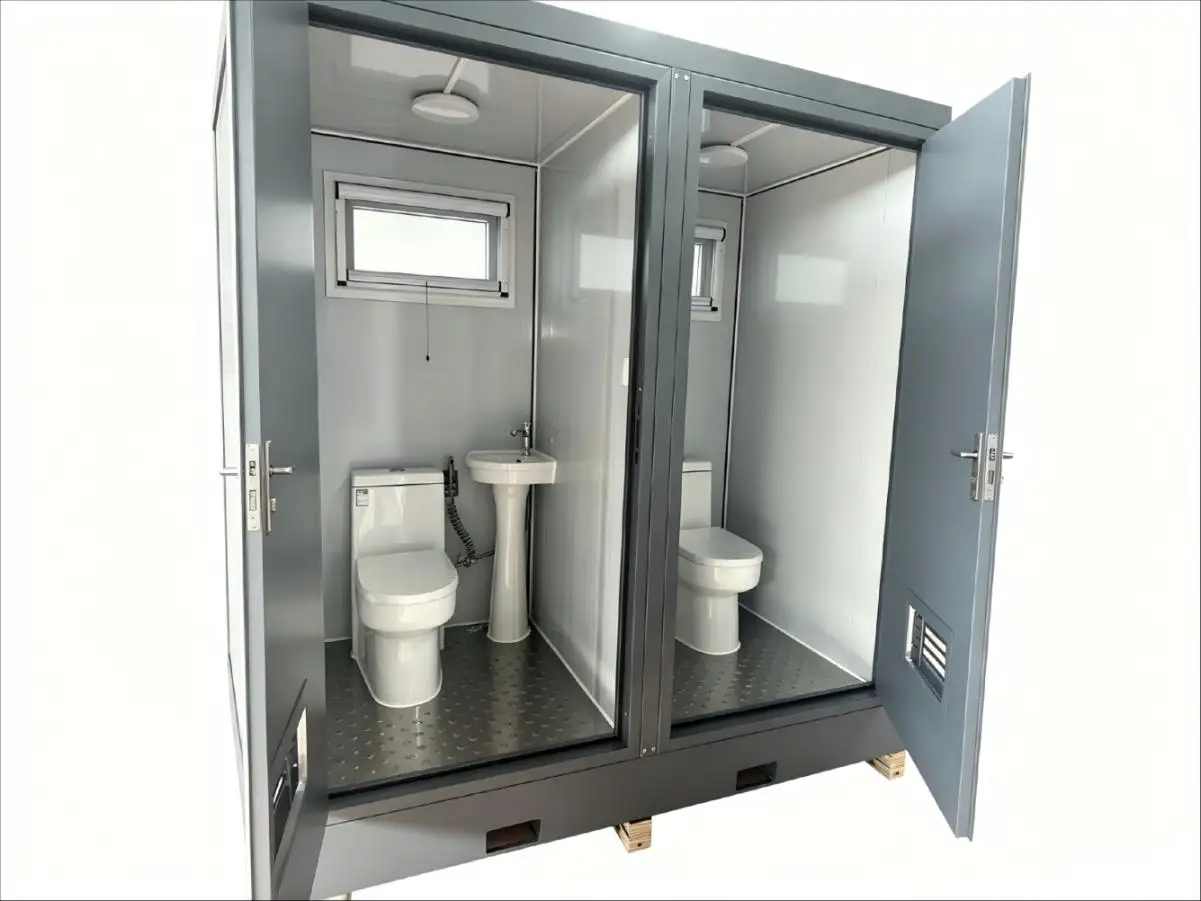
Two-Stall Portable Restroom
A two-stall portable restroom is useful when a site needs more capacity without placing two separate units. The key is not only having two toilet compartments, but making each stall private, durable, ventilated, and easy to service. SAUDIND Technology's double-seat modular units, such as the TBOX KS-W2, are designed for construction sites, public areas, and events where user flow, privacy, and daily cleaning all matter.
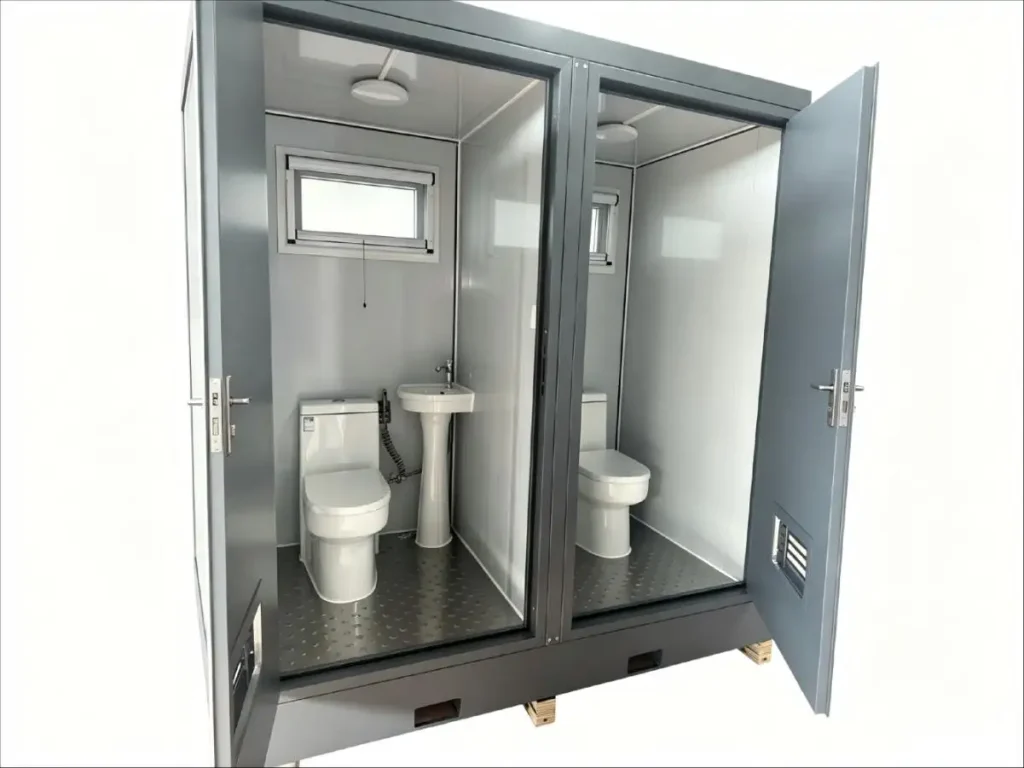
The sections below explain how the partition, doors, floor, fixtures, and ventilation path work together to support two independent restroom spaces inside one portable unit.
1. Privacy: More Than Just a Wall
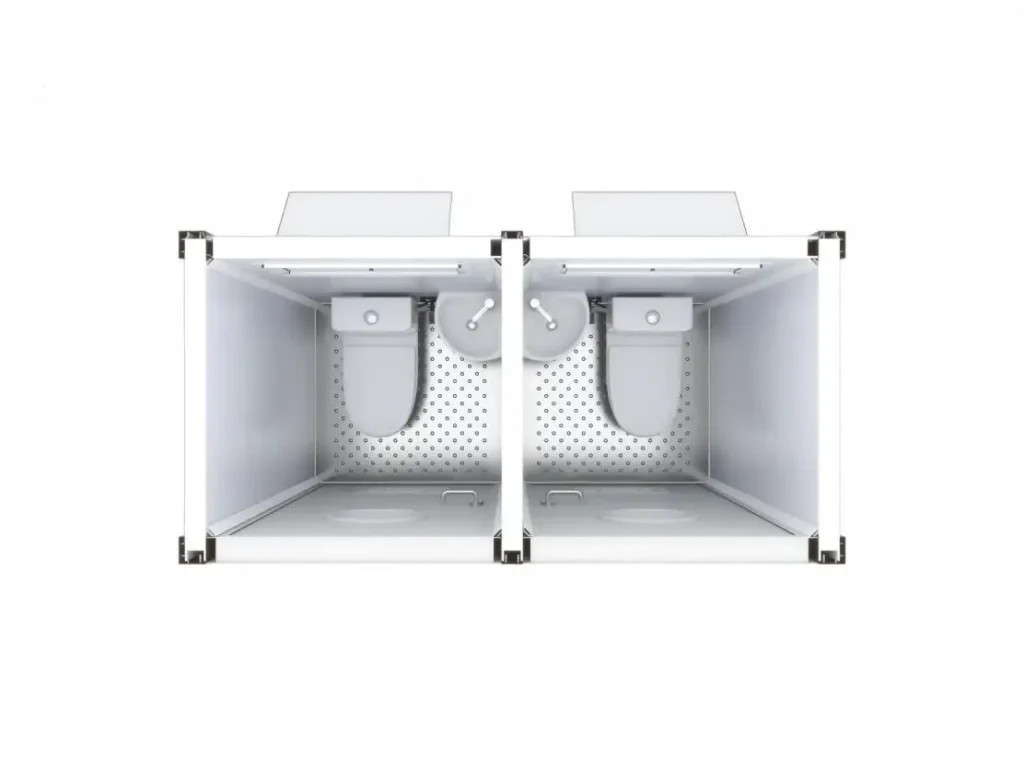
Privacy in a two-stall portable restroom starts with the central divider, but it also depends on door fit, sightline control, and how each stall is entered and used. SAUDIND Technology uses full-height, close-fitting panels to reduce visual gaps and limit sound transfer between the two compartments.
•Floor-to-ceiling separation: The partition extends from the 304 stainless steel floor to the roof, leaving no peeping gap while maintaining structural integrity.
•Sound-dampening core: The partition is made of the same color steel foam board as the exterior walls, reducing flush noise by approximately 25-30 dB between stalls.
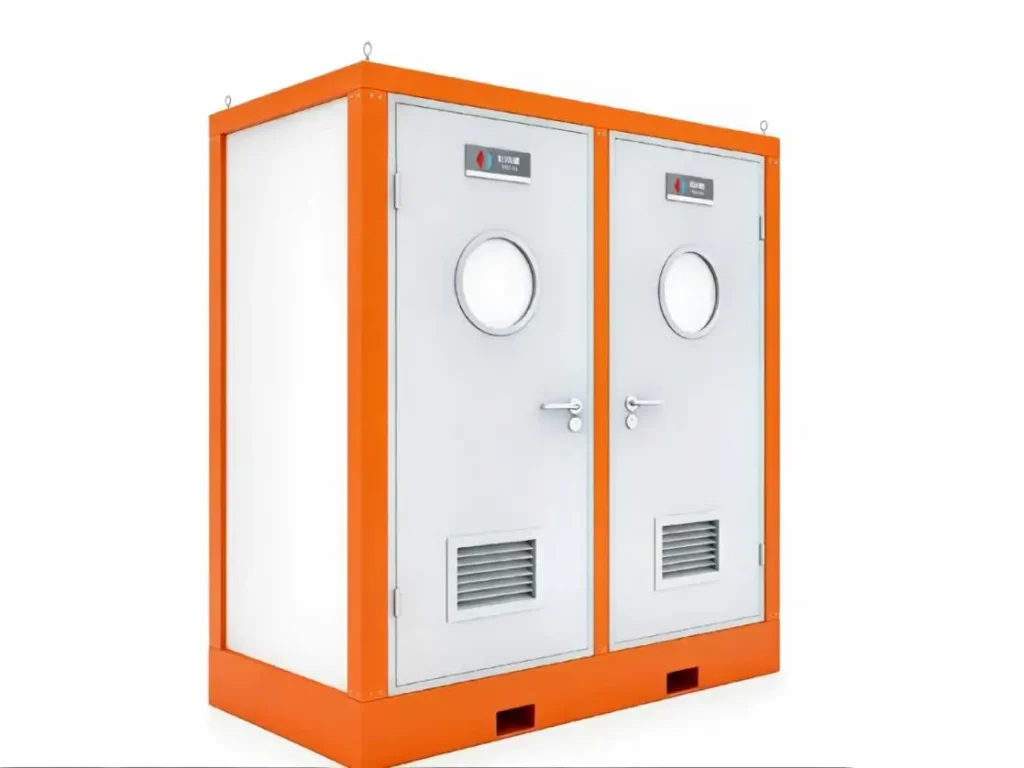
•Independent locking doors: Each stall is fitted with a heavy-duty steel door that includes a louver (for ventilation) and a privacy indicator – users never need to guess if the other stall is occupied.
•Ceramic fixtures per stall: Each stall has its own ceramic toilet and triangular pedestal basin, so users do not need to share fixture space and cleaning teams can service each compartment separately.
In practice, this design means two strangers can use the unit simultaneously without feeling exposed, making the Two-Stall Portable Restroom ideal for busy transit hubs, construction sites, and outdoor festivals.
2. Anti-Vandalism: Built to Resist Abuse
Portable restrooms in public or unattended areas are exposed to scratches, impacts, forced entry, and rough daily use. SAUDIND Technology addresses these risks with scratch-resistant finishes, reinforced structural materials, and details that are harder to pry open or damage.
•Electrostatic-painted steel frame: The underlying skeleton is coated via electrostatic spray, creating a hard, chip-resistant layer that withstands kicks and tool impacts.
•Color steel foam board walls: The outer and partition walls are made of impact-resistant metal skin over a rigid foam core – difficult to puncture or dent, and easy to wipe clean.
•304 stainless steel floor: Unlike plastic or aluminum floors, 304 stainless steel is non-porous, slip-resistant (with embossed patterns), and impervious to chemicals, cigarettes, or sharp objects.
•Graffiti-resistant and antimicrobial surface options: Interior surfaces can be treated to reduce permanent marker adhesion and support hygiene management, helping cleaning teams maintain the unit in high-use public environments.
•Ceramic toilets and basins: Ceramic fixtures provide a smooth, hard surface that resists staining and routine cleaning wear better than many lightweight materials, helping the unit stay presentable over repeated service cycles.
These features make SAUDIND's Two-Stall Portable Restroom a low-maintenance option for high-risk environments like nightlife zones, remote parking lots, and temporary worker camps.
3. Ventilation: The Unseen Airflow Engineering
Odor control is a key concern in any enclosed portable restroom. In a two-stall layout, ventilation must move air through both compartments without reducing privacy. SAUDIND combines door louvers, top-hung windows, and optional exhaust support so airflow follows the stall layout instead of fighting it.
•Louvers in each steel door: Every stall door has a louver near the bottom, allowing fresh air to enter while blocking visual access.
•Top-hung restroom window above each stall: The upper part of each exterior wall includes a hopper window that can be left open for continuous natural exhaust – hot, humid air rises and exits.
•Cross-flow path created by the partition: The central divider guides incoming air from the door louvers upward and outward through the windows, preventing odor from drifting into the adjacent stall.
•Ceiling-mounted voice-activated light (with ventilation assist): The standard sensor light can be paired with an optional exhaust fan; motion or voice activation triggers both illumination and gentle air extraction.
•Stainless steel flush gun for targeted cleaning: Site staff can rinse specific areas during service, helping remove residue and control odor when the unit has been used heavily.
With the right service schedule, a SAUDIND two-stall portable restroom can support high-use conditions, including 200+ uses per day, while passive airflow helps control odor without relying only on mechanical fans or external power. Solar upgrades are also available when active ventilation is required.
4. The Integrated Design: How All Three Elements Work Together
Privacy, anti-vandal protection, and ventilation are connected design decisions. A partition that blocks sightlines must still allow airflow, while durable materials must remain easy for cleaning teams to service.
•Partition as a structural brace: The thick foam-steel divider doubles as a lateral support for the frame, increasing overall rigidity against rocking or tipping.
•Ventilation without privacy loss: Louvers and windows are positioned high (windows) or low (louvers) – both out of the line of sight from outside, so fresh air flows without exposing the user.
•Easy cleaning for durability: The 304 stainless steel floor and ceramic fixtures support frequent wash-down cleaning, while anti-vandal surfaces reduce the time needed for graffiti removal and surface repair.
•Modular flexibility: The same two-stall layout can be adapted for accessible (ADA) or parent-child configurations, while keeping the partition's anti-vandal and ventilation properties intact.
This integrated thinking is why SAUDIND's Two-Stall Portable Restroom is specified for long-term deployments – from city parks and construction sites to scenic spots and emergency relief zones.
5. Why SAUDIND Technology's Approach Matters for Your Project
Choosing a Two-Stall Portable Restroom is a practical decision. Choosing one designed by SAUDIND means you also get:
•Real-world durability: The electrostatic-painted steel frame, 304 stainless steel floor, and ceramic fixtures are selected for frequent use, repeated cleaning, and rougher public-site conditions.
•Lower operating costs: Shared plumbing and IoT-ready monitoring reduce water use and maintenance visits by up to 35% compared to two single units.
•User confidence: Better privacy and ventilation make users more willing to choose the facility, which helps reduce complaints and improves the overall restroom experience on site.
•Regulatory support: The design can be customized for local accessibility, hygiene, signage, solar power, touchless controls, and anti-vandal requirements where applicable.
Whether you manage a 5,000-person music festival, a high-rise construction project, or a public park, SAUDIND's two-stall portable restroom gives you two private compartments in one unit, with materials and ventilation designed for repeated public use.
Get a Free Quote for Your Two-Stall Portable Restroom
SAUDIND Technology provides full technical documentation, layout customization, and compliance support. Contact us today to discuss your project requirements.
GET FREE QUOTE – Share your application (construction, event, tourism, etc.) and we will send you a specification sheet with pricing.
FAQs
Q1: Does a Two-Stall Portable Restroom offer real privacy between stalls?
A: Yes. Floor-to-ceiling partitions and sound-dampening foam steel walls reduce visual gaps and noise transfer between stalls.
Q2: How is the partition vandalism proof?
A: Denting or scratching is difficult because the partition contains color steel foam board that is impact resistant and framed with an electrostatic steel frame.
Q3: What is the anti vandal material used in the floor?
A: It is made from 304 stainless steel which is non porous, slip resistant, and resistant to chemicals, cigarettes and tool tips.
Q4: Is it easy to clean the partition?
A: Yes – Smooth, graffiti-resistant surfaces can be wiped or power-washed quickly without damage.
Q5: Does ventilation rely on electricity?
A: No – Passive airflow via door louvers and windows works naturally; optional solar-powered fans are available.
Written by
admin