


Updated 3 weeks ago
Detachable Portable Restroom vs Traditional Portable Toilet
admin
admin
Detachable Portable Restroom
A contractor purchases portable toilets for an 18-month construction project. Six months later, the workforce moves to another site. The toilets must be transported, repositioned, connected and inspected again.
This is where the choice between a Detachable Portable Restroom and a traditional one-piece portable toilet becomes more complicated than comparing purchase prices.
At SAUDIND, we recommend considering transport volume, structural connections, utility requirements and maintenance costs together. A detachable design can be an economical design for multiple projects, but repeated assembly adds costs that should be evaluated prior to ordering.
1. Why Project Duration and Relocation Frequency Change the Cost
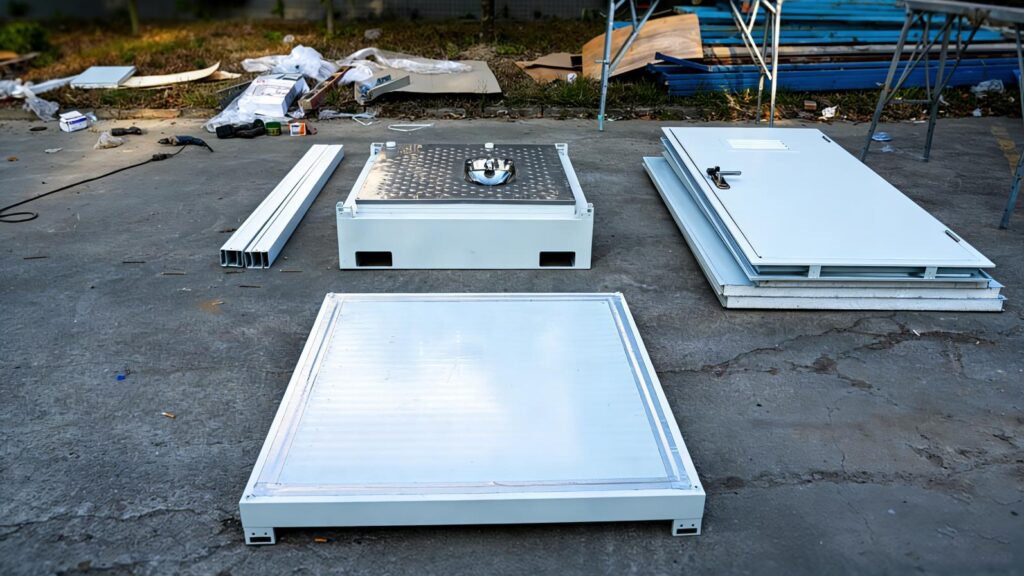
A conventional portable toilet is shipped largely assembled. A Detachable Portable Restroom, in contrast, ships elements that are structured for transportation and assembly.
The financial consequences of the differences depend on three factors:
•Frequency of relocation: With more moves come greater opportunities to save on transports, but greater assembly costs as well.
•Distance of transport: For long-distances, the savings in transport volume can far outweigh the costs of assembly.
•Duration of use: For long-term uses, the costs of servicing, including component replacements, can outweigh the costs of assembly and transport for the first use.
A traditional rented unit may be a better economic choice for a short-term project. For contractors moving portable restrooms between projects, a Detachable Portable Restroom may be a better economic choice when savings in freight, storage or component replacement outweigh the costs of additional assembly and inspection.
2. How the Detachable Steel Frame Affects Structural Durability
Connections Between Frames and Performance of Wall Panels
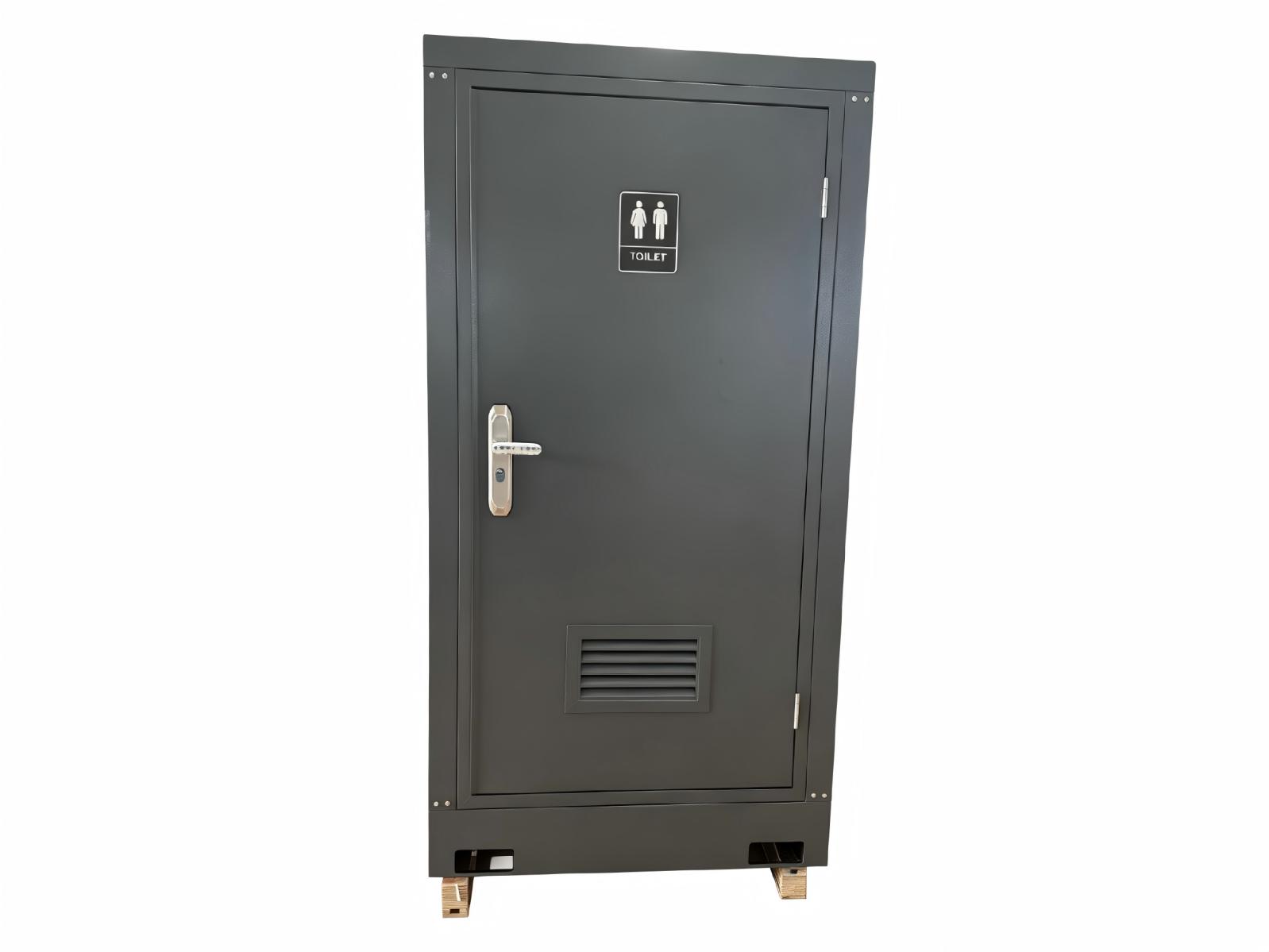
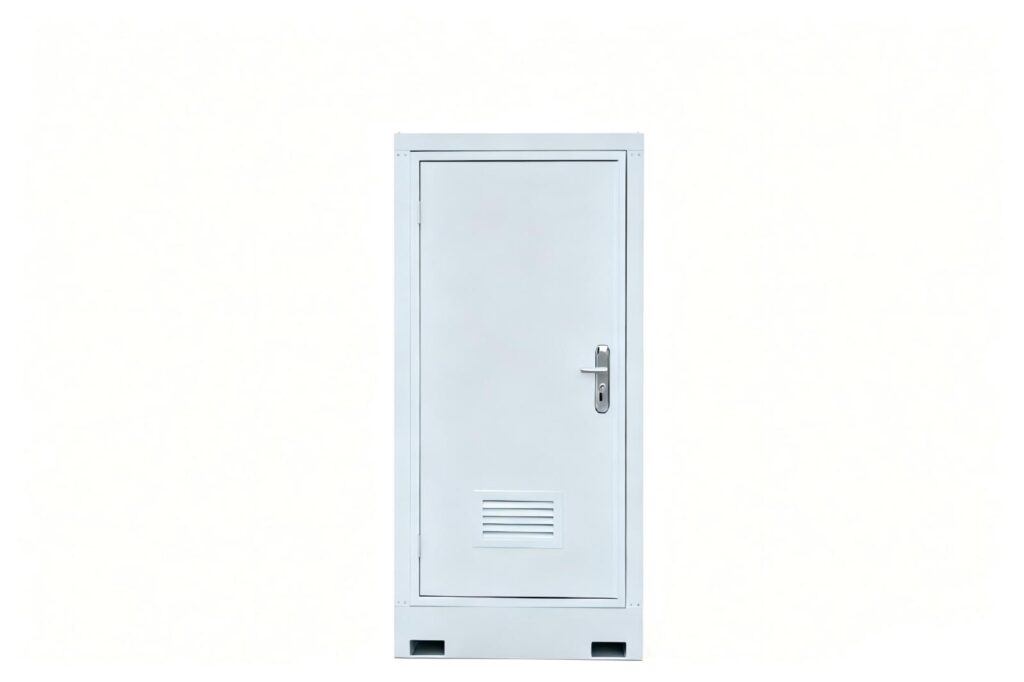
The TBOX KS-S1 (Stainless) model by SAUDIND uses an electrostatically painted steel frame with insulated color-steel wall panels.
The following problems may occur as a result of the above design:
•Fastener integrity: Misalignment can result in a lack of contact, and seals may be compromised. Missed connections may occur.
•Joint sealing: Sealing and caulking of panel interfaces must prevent rainwater from getting in and leakage of cleaning water.
•Coating protection: Exposed steel around connections can affect corrosion resistance.
•Wall panel insulation: Wall panels do very little to insulate against the heat of the sun and cannot eliminate the need for ventilation.
A Detachable Portable Restroom should therefore be assessed for both assembled structural stability and its condition after repeated relocation.
Why SAUDIND Uses 304 Stainless Steel in Wet Areas
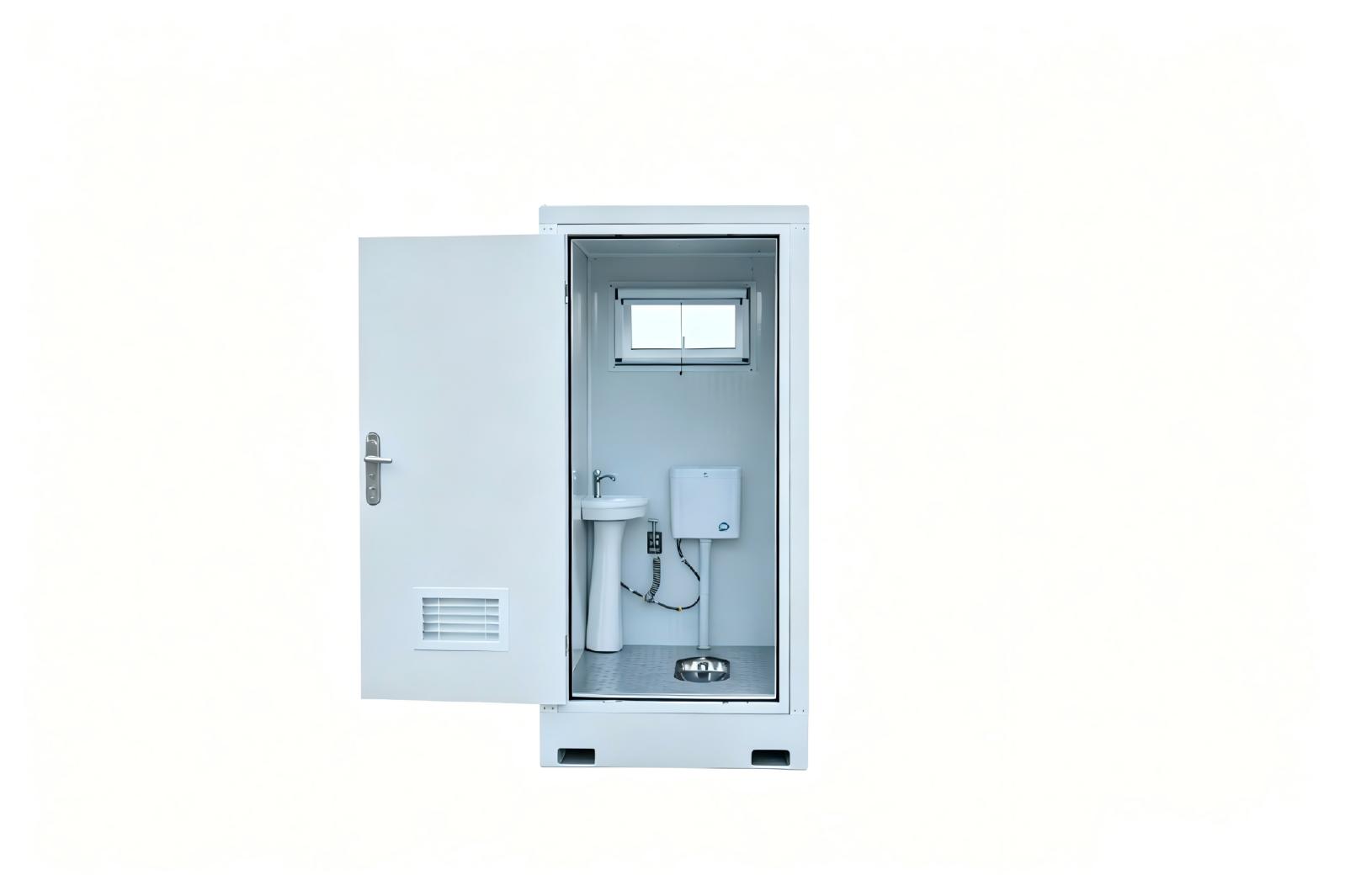
The KS-S1 includes a 304 stainless steel floor and integrated squat toilet.
304 stainless steel develops a protective passive oxide layer, making it suitable for many regularly cleaned wet environments. However, prolonged chloride exposure, standing water and aggressive cleaning chemicals can cause localized corrosion.
When compared to molded polymer flooring, stainless steel has distinct benefits with regard to repairability, resistance to temperature and to various chemicals. Actual slip resistance is dependent on numerous factors, including surface finish and testing. Material grade by itself is not a good indicator.
3. Detachable Portable Restroom vs Traditional Portable Toilet: Technical Comparison
| Evaluation Factor | Detachable Portable Restroom | Traditional One-Piece Toilet |
| Shipping | Disassembled, the toilet may take up less space during transport | As an assembled unit, it takes up more space during transport |
| Installation | Requires assembly of a frame, alignment and sealing of joints | May include less structural assembly |
| Repairability | Replacement of fittings and panels | Repair of the shell depends on molded construction |
| Relocation | Disassembly and reassembly require labor | Whole unit loading and unloading |
| Waste management | Depends on the drainage system | May include self-contained waste tanks |
| Long-term cost | Sensitivity to transport and joint maintenance | Sensitivity to use, rental and service costs |
Does Flat-Pack Transport Always Save Money?
Not necessarily.
Shipping costs depend on packed dimensions, gross weight, stacking restrictions, loading equipment and freight rates. A detachable cabin occupies less space only when its actual packing arrangement permits higher loading density.
Compare freight cost per installed toilet position, not merely transportation cost per shipment.
4. Does Your Site Have the Water, Drainage and Ventilation Required?
The Detachable Portable Restroom must match the infrastructure available at its destination.
Flush Water and Wastewater Disposal
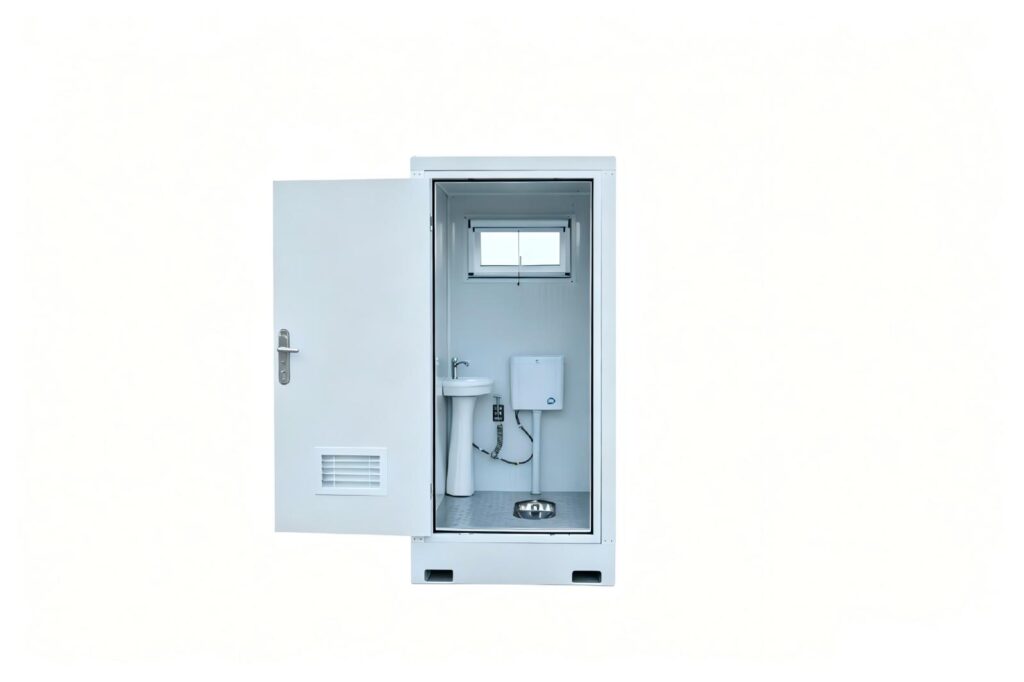
SAUDIND's KS-S1 offers a stainless steel squat toilet, ceramic wash basin and sanitary fittings. Customers must make the required water and drainage connections.
For building sites that do not have permanent sewage systems, an approved external holding tank or wastewater treatment plant may be considered.
A basic wastewater estimate is:
Daily wastewater = toilet uses × wastewater volume per use + cleaning discharge
The calculation should include relevant handwashing discharge and account for peak shifts.
Tank capacity, collection frequency, pump-out access and permitted disposal methods must be checked separately. The KS-S1 should not be assumed to contain an integrated wastewater tank.
Worker Capacity and Hot-Climate Conditions
Beyond the three main checks, three more checks are important:
•Sanitation capacity: The number of units should be sized using the number of workers, overlapping shifts and applicable toilet provisions.
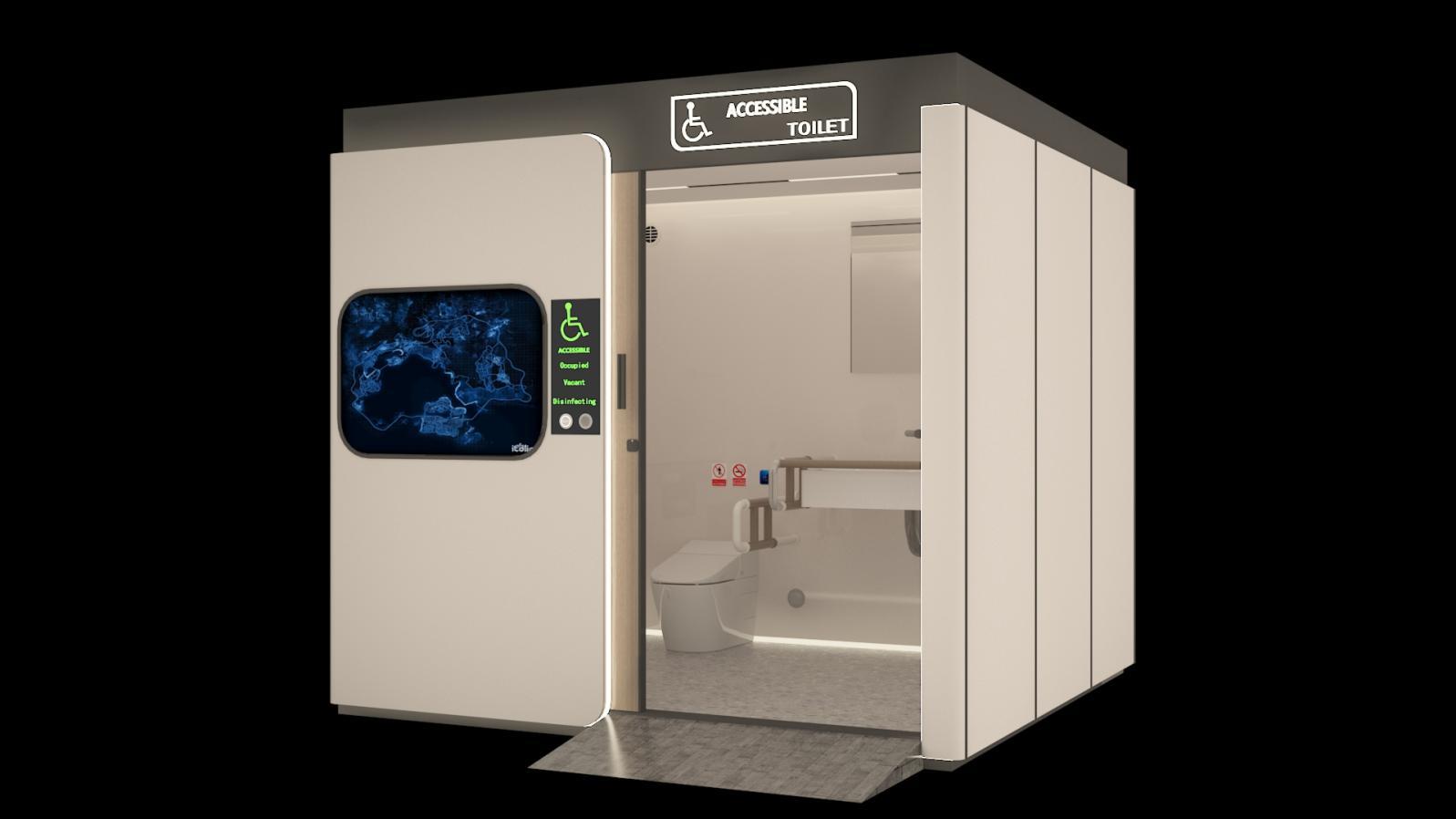
•Accessibility: While a squat toilet may be acceptable to the targeted workforce, it does not replace an accessible toilet where required.
•Thermal conditions: The KS-S1, with its louvers and top-hung window, allows natural cross-ventilation. Hot, dusty or poor-ventilation conditions may require supplemental ventilation or shading.
5. What Maintenance Is Required After Reassembly?
A Portable Restroom requires inspection after each move and especially if the components have been handled a lot.
Installation and Maintenance Checklist
•Check ground bearing conditions, support level and frame alignment.
•Inspect fasteners, joints and door operation.
•Verify sealing at wall-to-floor joints.
•Test flush connections, water and drainage for leaks.
•Inspect coating and joints for corrosion, and floor for defects.
•Check safety of electrical connections, lights and ventilation.
•Request approved procedures and instructions for fasteners, spare parts, and for warranty.
Repeated relocation capability of the product should be substantiated with documented procedures and/or testing rather than an unsubstantiated service-life claim.
6. Which Standards and Product Documents Need Verification?
For Saudi construction projects, the applicable provisions of Saudi Plumbing Code SBC 701 should be reviewed for plumbing systems. SBC 702 may be applicable to a private wastewater disposal system that falls within its scope.
Accessibility, Electrical Safety, Fire and Sanitation Capacity may be other project-specific requirements.
Before approving a Detachable Portable Restroom, request:
•Material certificates and wall-panel fire-performance information, where applicable.
•Packed dimensions, weight and assembly drawings.
•Floor slip-resistance and coating test evidence, where specified.
•Water connection diagrams and drainage requirements.
•Installation inspection records and maintenance instructions.
A material certificate does not establish compliance of the complete restroom installation.
7. When Does a Detachable Portable Restroom Offer Better Long-Term Value?
The most meaningful comparison is done using Total Cost of Ownership (TCO).
TCO = Purchase or Rental Cost + Freight + Installation + Utilities + Servicing + Repair + Disposal - Residual Value
Calculate both options using the same time period and model different relocation frequencies.
A Detachable Portable Restroom is cost effective when savings in freight, storage or component replacement outweigh the costs of additional assembly and inspection. For short-term projects with waste servicing, conventional rental toilets are likely to be the better alternative.
•Provide a quantity for the number of toilets required and the user groups.
•Provide the expected duration of the project and the number of moves expected.
•Evaluate site conditions with respect to access and water and wastewater infrastructure.
•Describe the shipping and unloading destination.
•Assess the owner/user responsibility for maintenance, and identify the spare parts provided.
Refer to SAUDIND's TBOX KS-S1. This is an example of a steel-framed squat mobile toilet to assist you in assessing your project.
Share your project requirements with SAUDIND so the team can assess the technical requirements and provide an offer based on the actual site conditions.
FAQs
Q1. What Is the Difference Between a Detachable Portable Restroom and a Traditional Portable Toilet?
A Detachable Portable Restroom uses separable structural components for transportation and reassembly. Traditional one-piece toilets generally require less on-site structural assembly. SAUDIND's TBOX KS-S1 uses a detachable steel-frame construction.
Q2. What Materials Does SAUDIND Use in Its Detachable Portable Restroom?
SAUDIND's TBOX KS-S1 features an electrostatically painted steel frame, foam-core color-steel wall panels, a 304 stainless steel floor, and an integrated stainless steel squat toilet.
Q3. Can SAUDIND's Detachable Portable Restroom Reduce Transportation Costs?
Potentially. Its detachable construction allows alternative packing arrangements. Actual savings depend on packed dimensions, loading capacity, freight distance, handling requirements, and the number of units shipped.
Q4. How Many Times Can a SAUDIND Detachable Portable Restroom Be Relocated?
The KS-S1 specifications do not establish a maximum relocation cycle count. Buyers should request assembly instructions, connection inspection requirements, and available durability evidence before planning repeated deployments.
Q5. Does SAUDIND's Detachable Portable Restroom Include a Wastewater Holding Tank?
An integrated wastewater holding tank is not specified in the published KS-S1 configuration. Buyers should confirm drainage connections and evaluate an appropriate wastewater storage or disposal system for their site.
Written by
admin