


Updated 3 weeks ago
Why Choose a Stainless Steel Portable Toilet with Anti-Slip Flooring?
admin
admin
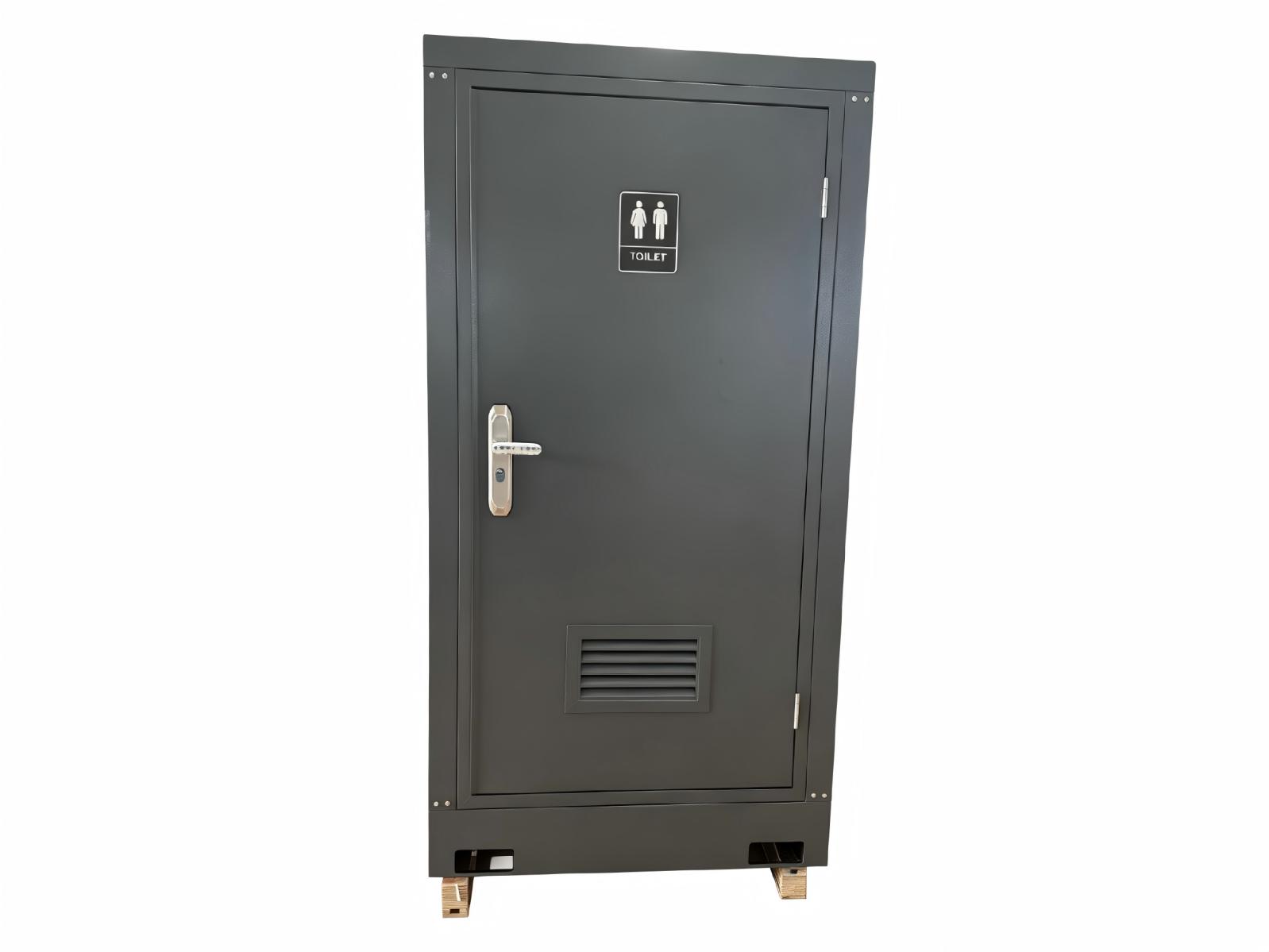
Stainless Steel Portable Toilet
Wet boots, sand, and washdown water often meet on a construction-site restroom floor. A Stainless Steel Portable Toilet needs a walking surface that provides traction, drains water, and withstands cleaning. Embossing alone does not prove wet slip resistance.
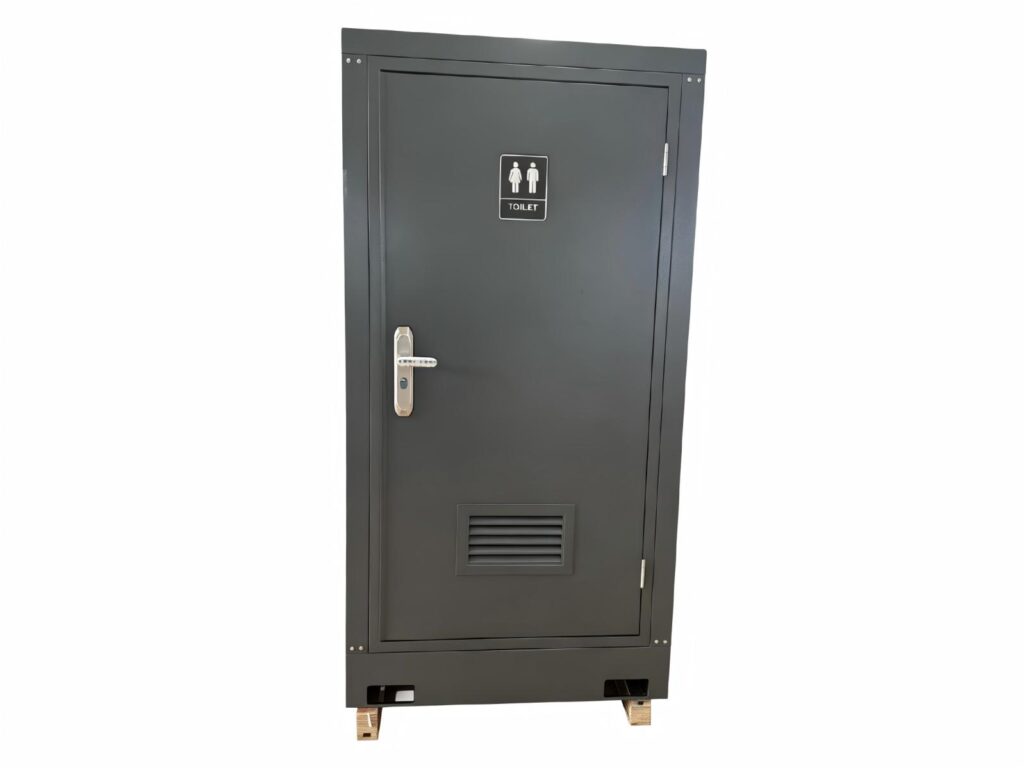
Why Does a Stainless Steel Portable Toilet Floor Become Slippery?
Risk of slip varies depending on footwear, contamination and flooring types.
•Water film: A lubricating film of water can separate the sole from the steel surface.
•Mud, soap and dust: Fine particles or detergents can alter friction; deposits can block recesses in texture.
•Wear and cleaning: Abrasive cleaning can remove high points, and residues from poorly rinsed cleaners can remain on the sole.
A Stainless Steel Portable Toilet used by people wearing safety boots requires different test conditions from a shower unit used barefoot.
How Does Anti-Slip Stainless Steel Flooring Actually Work?
Embossing creates raised contact points and potential channels for moisture. Surface microtexture also affects traction. Deep patterns may trap debris; patterned steel does not grip every sole equally.
| Flooring Surface | Technical Advantage | Limitation to Check |
| Smooth stainless steel | Accessible, easy-to-wipe surface | Wet traction may be inadequate |
| Embossed stainless steel | Raised contact geometry | Wet grip and dirt accumulation |
| Mechanically textured 304 steel | Integral texture without a separate coating | Cleaning effort and surface wear |
| Anti-slip coated metal | Additional surface friction | Coating adhesion and chemical resistance |
For a Stainless Steel Portable Toilet, compare test results for the specified flooring finish, not a photograph of a diamond pattern.
Why Choose 304 Stainless Steel for Portable Toilet Flooring?
Grade 304 forms a chromium-rich passive film, useful in washed sanitary interiors when cleaning chemicals are compatible.
Two terms are vital in procurement:
•Corrosion resistance and slip resistance are unrelated to each other. The alloy grade or bright metal finish does not determine slip resistance.
•Floor load rating cannot be determined from steel grade alone. The behavior of a floor under transport vibration and foot loads also depends on reinforcement spacing, thickness of flooring sheets, welded joints, and frame connections.
Cleaners based on hypochlorite and chlorides can promote pitting and crevice corrosion. Use cleaners that are compatible with the material being used and control the time of contact. Rinse the surface after use. Inspect the drain edges and seams for residue.
Anti-Slip Flooring and Drainage: Why Both Are Needed
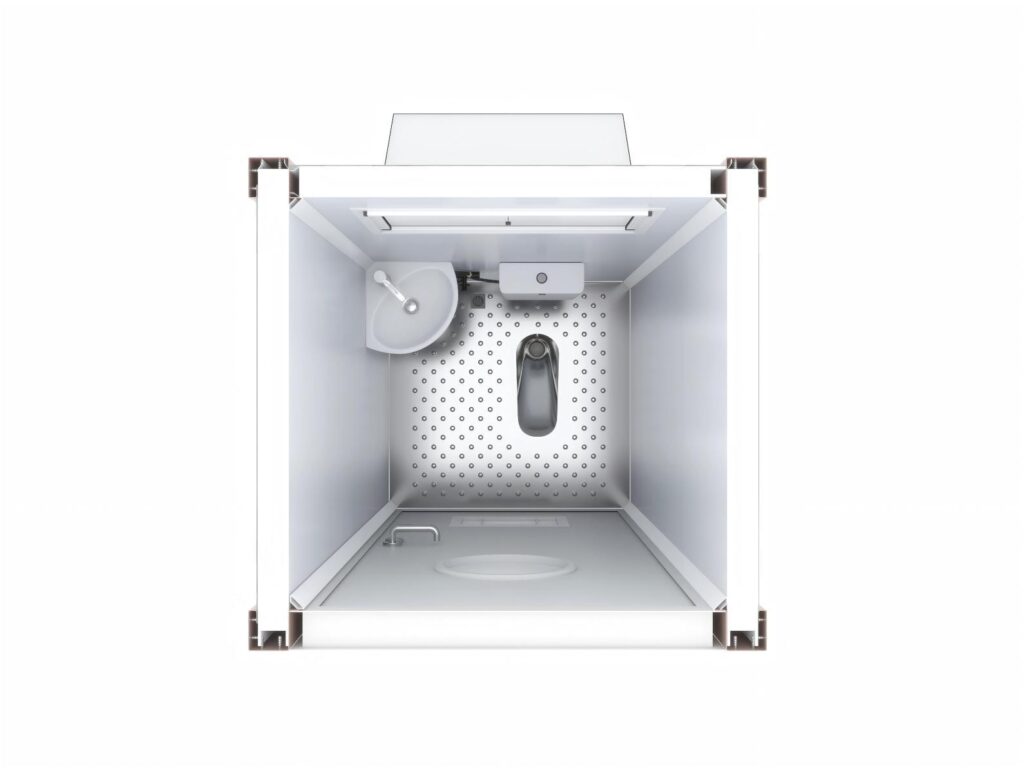
A stainless steel portable toilet floor with a textured surface can still be slippery if water is allowed to accumulate.
Four Critical Floor Design Details
•Floor slope and low spots: Does the installed floor direct clean water to the drain after leveling?
•Drain and Trap: Is the outlet accessible? Is the connection to the drain compatible with site plumbing?
•Joints and Penetrations: Are seams and cutouts along the wall and frame sealed?
•Threshold and Support: Is the entry point to the cabin rigid, and does it avoid a trip hazard?
A commissioning washdown can reveal ponding or leakage.
Where Is Anti-Slip Flooring Most Important?
Different applications expose a Stainless Steel Portable Toilet to different contaminants and maintenance conditions.
| Application | Typical Exposure | Main Flooring Requirement |
| Construction sites | Mud, wet boots, abrasive grit | Traction and debris removal |
| Worker camps | Frequent traffic and washdowns | Drainage and joint durability |
| Outdoor events | Spills and variable footwear | Wet grip and cleaning access |
| Remote industrial sites | Dust and limited maintenance | Serviceability and wear resistance |
| Toilet-shower units | Frequent wetting and bare feet | Barefoot traction and drainage |
For shower configurations, footwear-based slip-test results cannot automatically establish barefoot safety.
How to Evaluate a Stainless Steel Portable Toilet Before Ordering
Request a testable specification for the flooring rather than a mere "non-slip" claim.
Technical Procurement Checklist
- Material and Finish: Verify the flooring is made of 304 stainless steel, review floor thickness, surface texture, and determine if a coating has been applied.
- Wet Slip Resistance: Ask for testing pertinent to the situation (e.g. pendulum testing), and include the method, slider, the contaminant used in the testing, and results of the test.
- Structural Drawings: Consider floor supports and the layout of drainage, joint sealing and threshold geometry.
- Operating Conditions: Identify the expected type of footwear, the cleaning agents to be used, anticipated occupancy, and exposure to salt and/or grit.
5. Acceptance Inspection: Agree on drainage acceptance criteria, limits for visible defects, and the inspections required.
SAUDIND Stainless Steel Portable Toilet: Flooring and Cabin Design
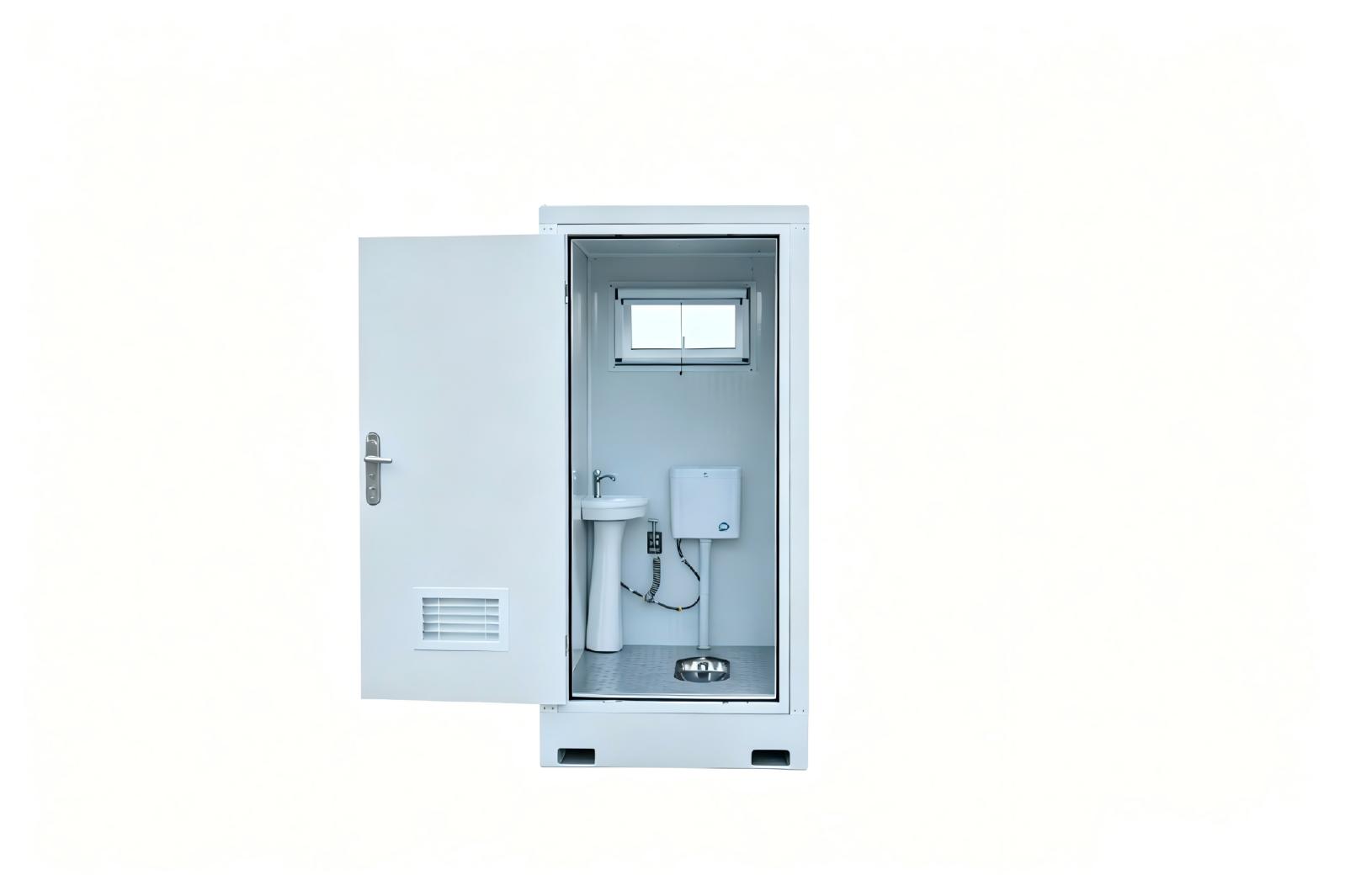
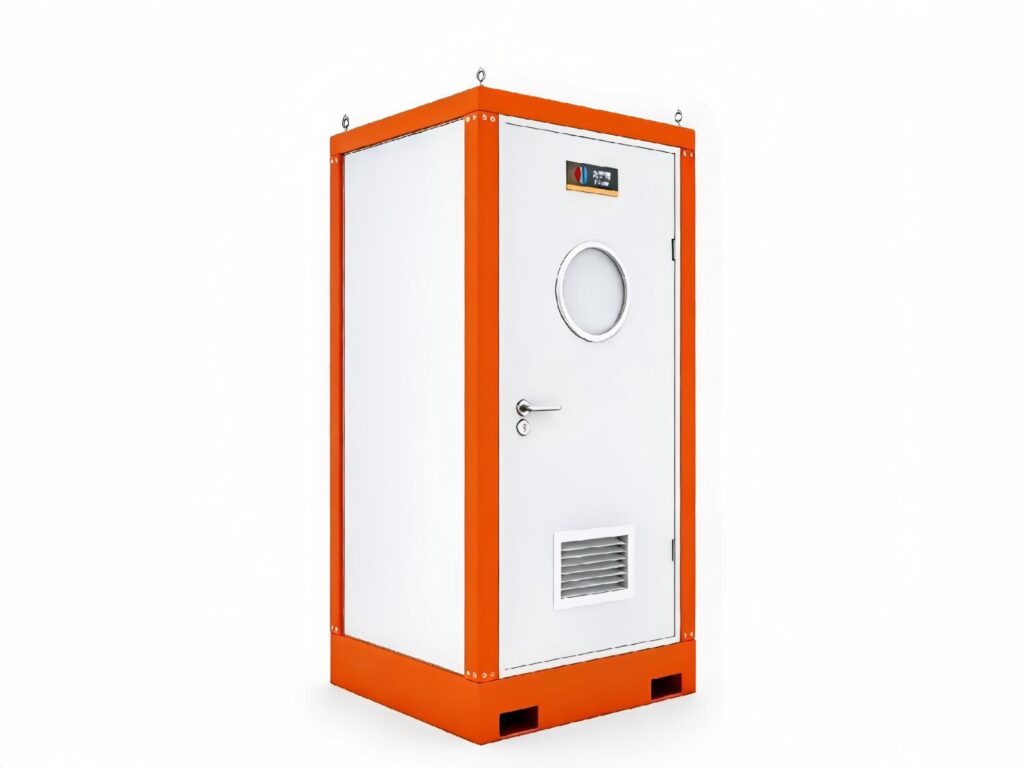
At SAUDIND, our TBOX KS-S1 (Stainless) detachable Stainless Steel Portable Toilet includes an anti-slip 304 stainless steel floor and integrated 304 stainless steel squat pan.
Key Construction Features
•Flooring: Anti-slip 304 stainless steel floor.
•Structural frame: Electrostatically painted steel.
•Wall panels: Foam-insulated, colour-coated steel panels.
•Sanitary fixtures: Stainless steel squat pan, wash basin, flushing tank, and floor drain.
•Ventilation: Louvered door and top-hung window.
•Installation: Detachable cabin structure for temporary facilities.
This configuration is for construction sites, industrial work sites, and project camps.
The configuration identifies the anti-slip floor material, but doesn't establish a numerical wet-friction rating. Surface details, test evidence, drainage and installation conditions will be addressed during the quote process.
Specify the Floor, Not Just the Material
A Stainless Steel Portable Toilet is a complete system: surface traction, drainage, corrosion control, structural support and cleaning all must work together.
Explore SAUDIND's portable restroom solutions and share your site conditions with our team to discuss a possible TBOX configuration, and the technical details worth verifying before purchase.
FAQs
Q1. Is every 304 Stainless Steel Portable Toilet floor slip-resistant?
No. Grade 304 identifies the stainless steel alloy, not its wet surface friction.
Q2. Does embossed flooring eliminate slip hazards?
No. Footwear, mud, detergents, and standing water can still reduce traction.
Q3. How should anti-slip performance be verified?
Request testing relevant to expected wet or contaminated conditions, with the method and results documented.
Q4. Can a shower cabin use the same slip-test results?
Not necessarily. Barefoot and footwear contact conditions require separate consideration.
Q5. Does SAUDIND supply a Stainless Steel Portable Toilet?
Yes. SAUDIND offers the detachable TBOX KS-S1 (Stainless), featuring an anti-slip 304 stainless steel floor and squat pan. Project-specific requirements should be confirmed.
Written by
admin