


Updated 4 weeks ago
Portable Toilet for Roadside Rest Areas: Family-Friendly Design
admin
admin
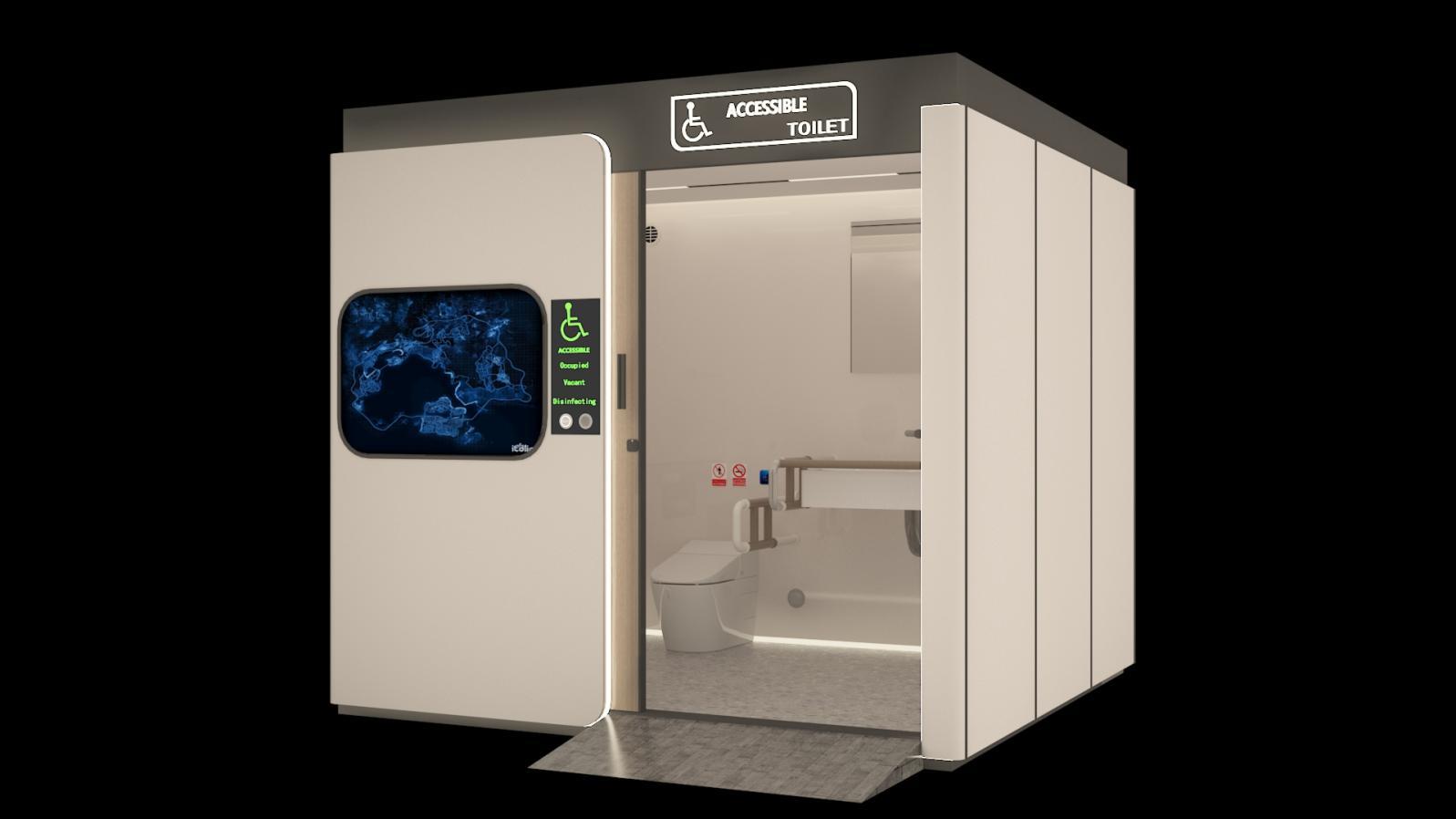
Portable Toilet for Roadside Rest Areas
A caregiver opens the baby-changing table while another child waits beside the door. The table clears the wall when folded, but when lowered, does it obstruct wheelchair access or the route to the wash basin? That clearance determines whether a Portable Toilet for Roadside Rest Areas works for families—not a brochure's fixture count.
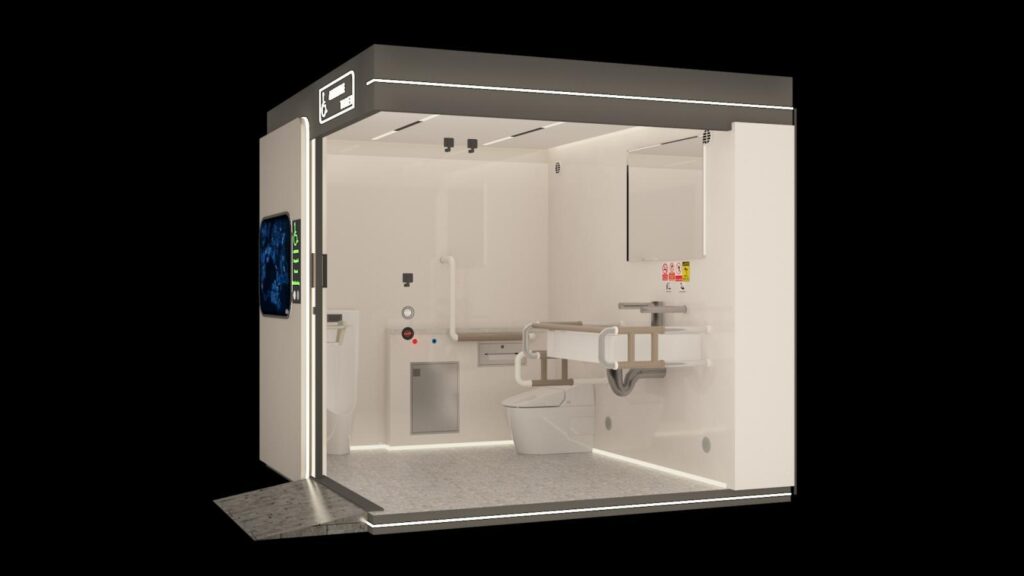
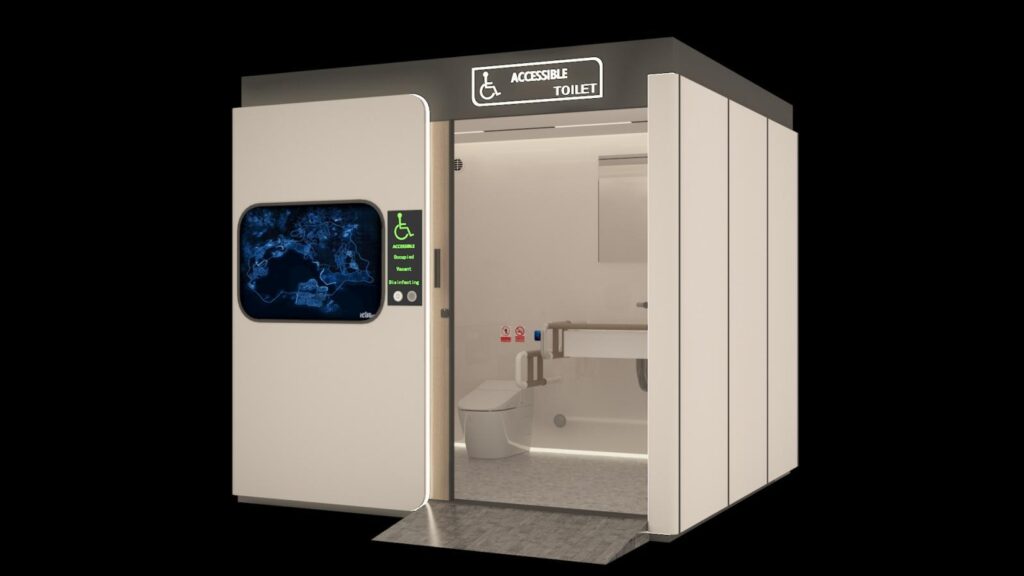
At SAUDIND, we assess family-friendly design as a combination of accessible space, safe water, reliable sanitation, and realistic site operation. Our TBOX GS-A1 Accessible Portable Restroom provides a useful reference: it includes a foldable toilet, foldable nursing table, ceramic basin, and child-lock hot-water outlet.
1. Start With the Family's Actual Route Through the Restroom
A parent may enter with a stroller, assist a toddler, change an infant and wash their hands all during the same visit, using different parts of the floor each time.
•Entry: Check door width and opening force as needed. Allow adequate clearance for an approach from various directions.
•Caregiving: Provide a changing station with a clear approach for the caregiver.
•Assisted toileting: Provide a clear approach for a caregiver and wheelchair transfer and turning space.
•Exit: Keep stroller parking, bags and waste bins away from doors.
A multi-purpose stall may be occupied for longer than a standard toilet. At busy stops, a separate family room and accessible toilet can serve competing needs better than a single combined unit.
2. What Foldable Fixtures Change—and What They Do Not
Changing Table and Toilet Geometry
Foldable equipment releases floor area when stowed. It does not eliminate the clearance required when deployed. Ask for two dimensioned layouts showing the nursing table and toilet in their operating and stored positions, including hinge sweep, caregiver standing area, and approach to the basin.
For the changing table, confirm rated working load, wall or frame anchorage, locking action, edge protection, and cleaning compatibility. Hinges should be inspected for looseness; labels should state intended use. Never infer load rating from the enclosure's overall structure.
Child-Safe Water and Assisted Use
The GS-A1 includes a hot water supply system with a child lock. Thermostatic control and a child lock do not certify an anti-scald device. Specify the required outlet temperature and protective device in the project documents.
The unit also contains an occupied/vacant status display, an emergency call system, anti-glare lighting and a low-level fresh-air system. Check if alerts reach a staffed location, if nursing surfaces are illuminated appropriately, and how the system performs during cleaning.
3. Compare Configurations Before Selecting the Restroom
| Decision | Option A | Option B | Selection Test |
| Baby-changing surface | Foldable: saves stored space | Fixed: fewer moving joints | Open-position clearance and inspection burden |
| Room arrangement | Combined family/accessible stall | Separate family and accessible rooms | Peak demand, privacy, and footprint |
| Sewage connection | Direct discharge | Vacuum discharge | Available drains, power, piping, and service support |
| Hot-water safety | Thermostatic control | Thermostatic plus verified outlet limiting | Scald-risk assessment and plumbing rules |
SAUDIND offers vacuum or direct sewage discharge for the GS-A1, with optional sewage-treatment equipment. A vacuum arrangement still needs power, servicing, and a lawful wastewater destination; direct discharge needs a compatible drainage connection. Neither choice is automatically suitable for an isolated highway site.
4. Match a Portable Toilet for Roadside Rest Areas to Traffic and Utilities
Interior Clearances vs. Exterior Dimensions
The GS-A1 exterior measures 2.23 × 2.84 × 2.38 m. These dimensions are useful for delivery and site planning but cannot establish internal accessible clearances.
Request a scaled floor plan showing net door opening, wheelchair turning and transfer areas, handwashing approach, changing-table deployment, and maintenance access.
Under US accessibility guidance, baby-changing tables must be evaluated as work surfaces and, where relevant, protruding objects. The stowed fixture cannot interfere with required clearances; deployed approach space must also be assessed.
Peak-Hour Capacity and Utility Demand
Capacity is another system requirement. As an initial screening calculation:
Average stall utilization = arrivals per hour × average minutes per visit ÷ (60 × number of stalls).
When there are 12 family visits per hour averaging 6 minutes each, and only 2 stalls are available, average facility utilization is 60% (12 × 6 ÷ (60 × 2) = 0.60). Queues may still form when arrivals cluster or visits take longer. Use observed peak traffic to assess the number of family facilities needed.
Assess hand washing and flushing demand together with water storage, sewage capacity, cleaning water, and service frequency. For rest areas in desert regions, air cooling and ventilation may also affect electrical loading.
5. Installation and Maintenance Around Moving Parts
GS-A1 Portable Toilet has an approx. ref. weight of 3,000 kg.
A loading and lifting plan needs to be completed before moving the unit. Also check approach ramps to the facilities for gradients. Verify water and wastewater connections and electrical hookups.
Routine checks should cover:
Changing-table hinges, latches, labels, and accessible clearances; water temperature at the outlet and child-lock operation; floor slip condition, drainage, high-touch surfaces, and diaper-waste collection; ventilation, lighting, occupied status, and emergency-call response.
The GS-A1 is described as having stone-slab flooring, exterior panels of aluminum with a fluorocarbon paint finish and interior walls of compact-laminate. Cleaning agents and finish durability shall be verified against the material specifications supplied.
6. Verify Safety Before Calling the Restroom Accessible
2010 ADA Standards have specific requirements for clearance of obstructions and the baby-changing surface. Safety of commercial diaper-changing tables is addressed in ASTM F2285-22. For US projects, check the adopted plumbing code, including the IPC where applicable, for outlet-temperature limits and required protective devices; 120 °F is not a universal limit for public handwashing outlets.
Local approvals and codes will mean other markets require additional work. A product named as being "accessible" is not a certification. Final acceptance is granted by the jurisdiction. Provide component test evidence, final acceptance criteria and installation instructions.
7. Make the Procurement Brief Specific
When sourcing a Portable Toilet for use at Roadside Rest Areas your procurement brief should request:
•Expected peak hour demand.
•A clear layout showing wheelchair and stroller access and the location of a diaper-changing table (if provided).
•Water, electrical, and sewer service (drainage and waste water removal).
•Compliance documentation, spare parts, and a service contract. Warranty.
SAUDIND's TBOX GS-A1 Accessible Portable Restroom provides a base design for a roadside sanitation facility for families. Share your site plan and utility locations with SAUDIND so its proposed design can be reviewed against your safety and documentation requirements before ordering.
FAQs
Q1. Does SAUDIND Offer a Family-Friendly Portable Toilet for Roadside Rest Areas?
Yes. SAUDIND's TBOX GS-A1 includes a foldable nursing table, foldable toilet, ceramic wash basin, and child-lock hot-water outlet for family and assisted use.
Q2. Does the SAUDIND TBOX GS-A1 Include a Baby-Changing Table?
Yes. The GS-A1 includes one foldable nursing table. Buyers should confirm its rated load, deployed dimensions, and safety documentation before installation.
Q3. Is SAUDIND's Portable Restroom Wheelchair Accessible?
The TBOX GS-A1 is designed as a barrier-free restroom. Actual accessibility compliance depends on interior clearances, entrance design, installation conditions, and applicable local standards.
Q4. What Are the Dimensions of SAUDIND's TBOX GS-A1?
The published exterior dimensions are 2.23 m × 2.84 m × 2.38 m. Its reference weight is approximately 3,000 kg, subject to the actual configuration.
Q5. Does SAUDIND Provide Child-Safe Hot Water?
Yes. The GS-A1 features a constant-temperature hot-water outlet with a child lock. Project-specific temperature limits and anti-scalding requirements should be verified.
Written by
admin