


Updated 3 months ago
Eco-Friendly Portable Toilet: How Park Toilets Blend Ecology with Landscape Beauty
admin
admin
Eco-Friendly Portable Toilet
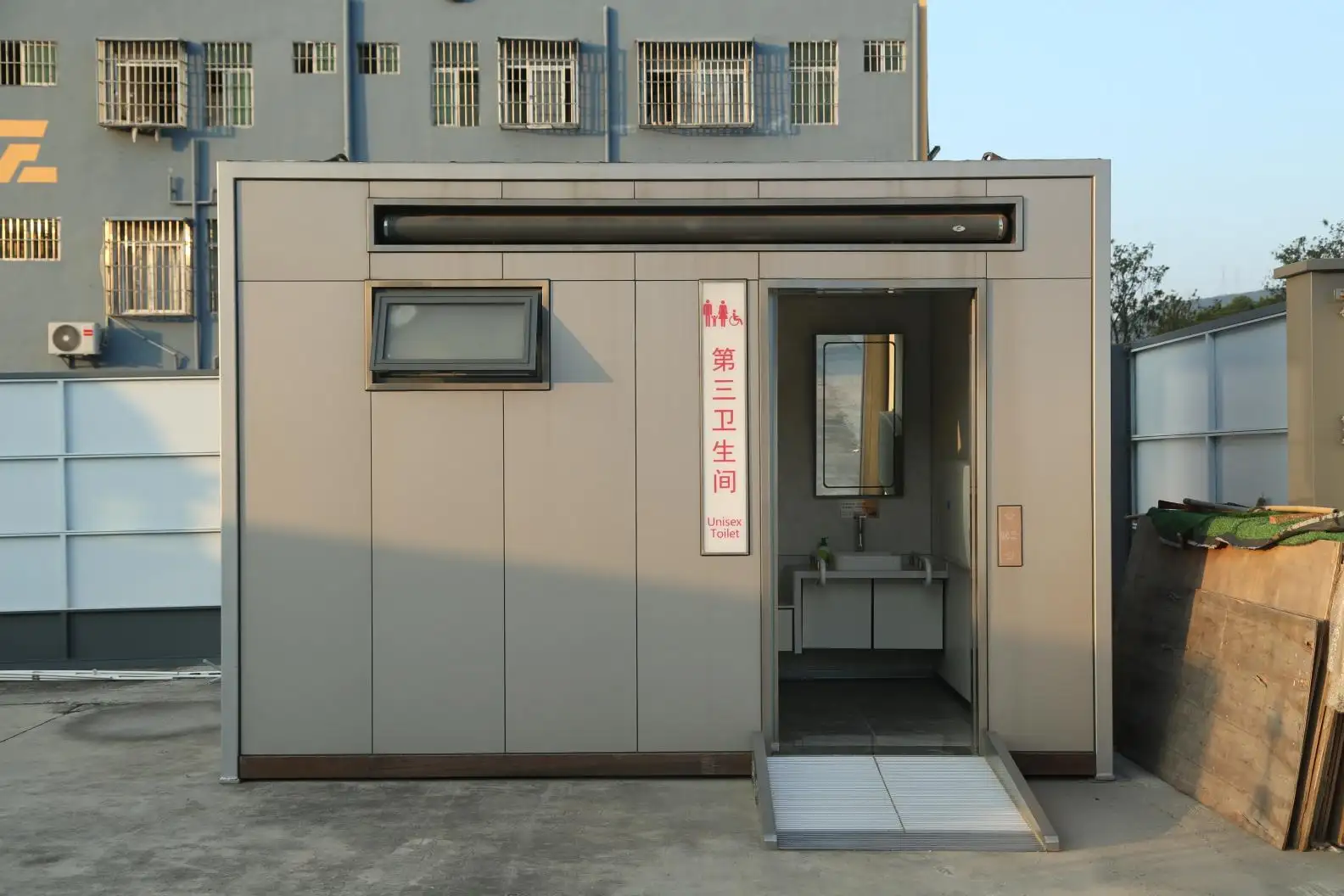
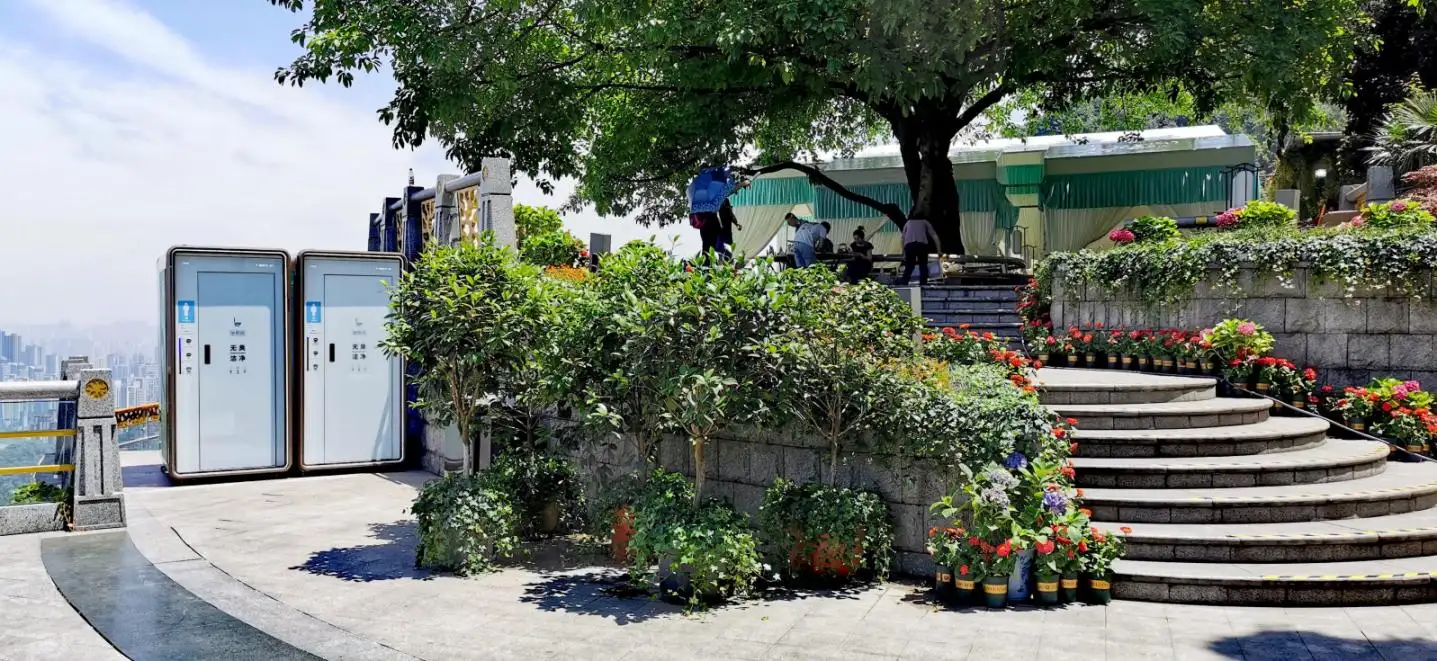
Parks need sanitation that protects the landscape while still giving visitors a clean and reliable restroom. An eco-friendly portable toilet should reduce site disturbance, limit water and energy demand, control odor, and fit the visual character of the park. Compared with a permanent concrete restroom, a modular unit can often be placed with less excavation and adapted to the site's utilities, visitor flow, and landscape design.
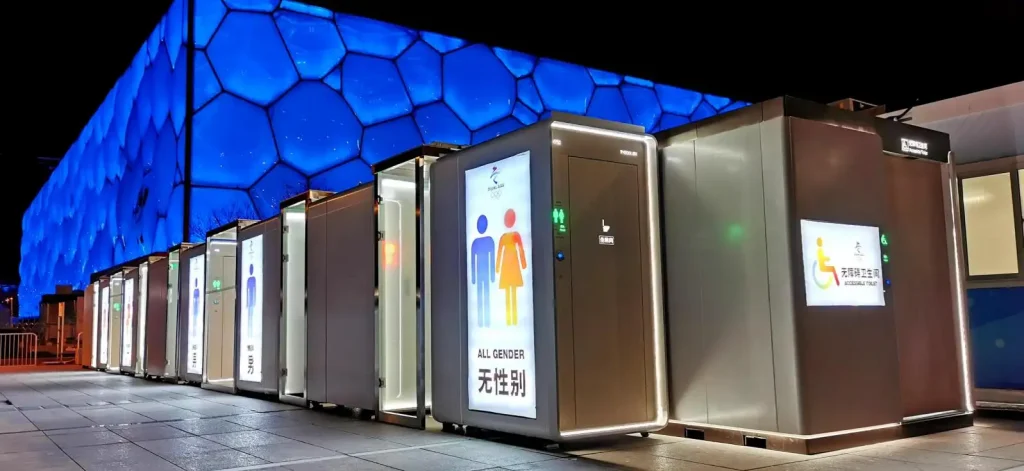
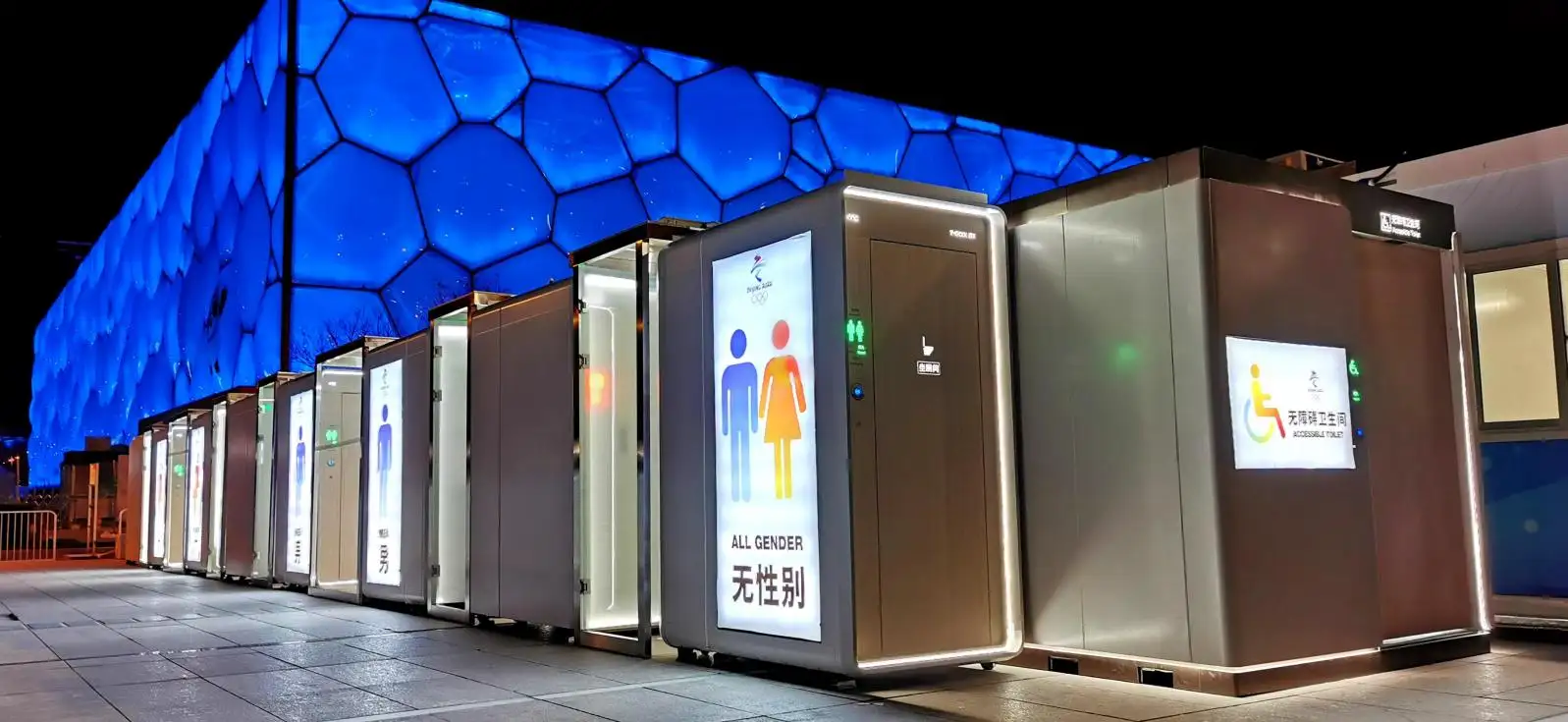
This article uses SAUDIND Technology's modular portable public restrooms to show how park toilets can combine lower-impact placement, water-saving systems, renewable power options, smart monitoring, and exterior designs that suit the surrounding landscape.
1. The Core Conflict: Sanitation vs. Scenery
Traditional park restrooms cause three major problems:
•Site disturbance when soil, paths, and planting areas must be opened for concrete foundations and plumbing lines.
•High operational costs due to water waste, the need for frequent cleaning and the costs associated with repairing vandalized restrooms.
•Visual pollution caused by permanent plastic or dull, gray, park restroom solutions that do not blend with the park's natural environment.
A design-based answer is an eco-friendly portable toilet that reduces site disruption while still meeting restroom needs. SAUDIND Technology's modular cabins can support faster placement with limited excavation, and their exterior finishes can be customized to match park aesthetics.
2. Material Innovation: Marrying Sustainability with Durability
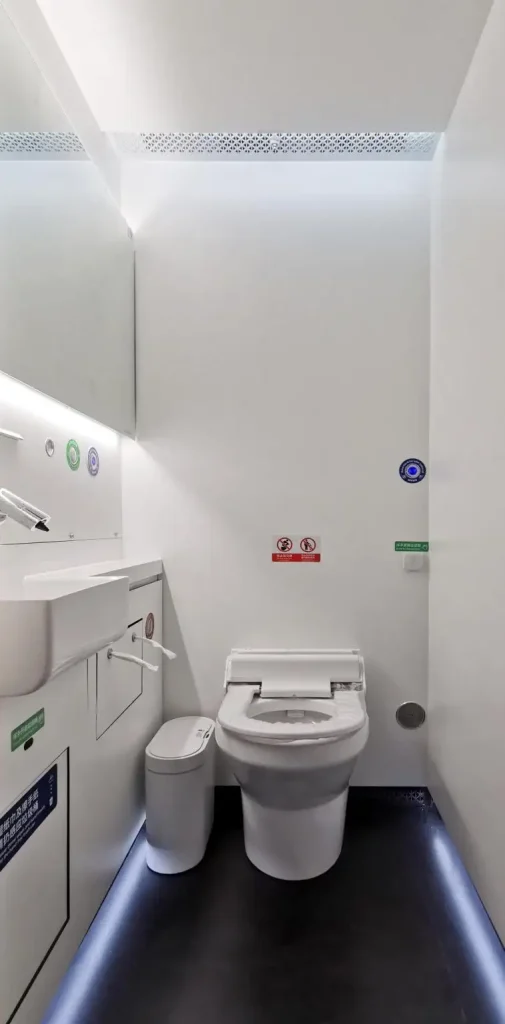
Material choice affects how easily a park restroom can be placed, maintained, and moved. Aluminum, for example, creates a lightweight and corrosion-resistant structure, with a total restroom weight of approximately 350 kg, which can reduce pressure on sensitive park areas compared with heavier permanent structures.
•Anti-graffiti and antimicrobial surface options: Treated surfaces can make cleaning easier and reduce the need for harsh cleaning methods in public park environments.
•Toli flooring + stainless steel chassis: Slip-resistant flooring and sealed structural details help reduce seepage risk, simplify cleaning, and support better odor control in high-use areas.
These materials allow an eco-friendly portable toilet to remain in place for longer periods with less visual and maintenance impact. Neutral or nature-inspired coatings help the unit sit more naturally within park landscapes.
3. Water and Energy: Closing the Loop
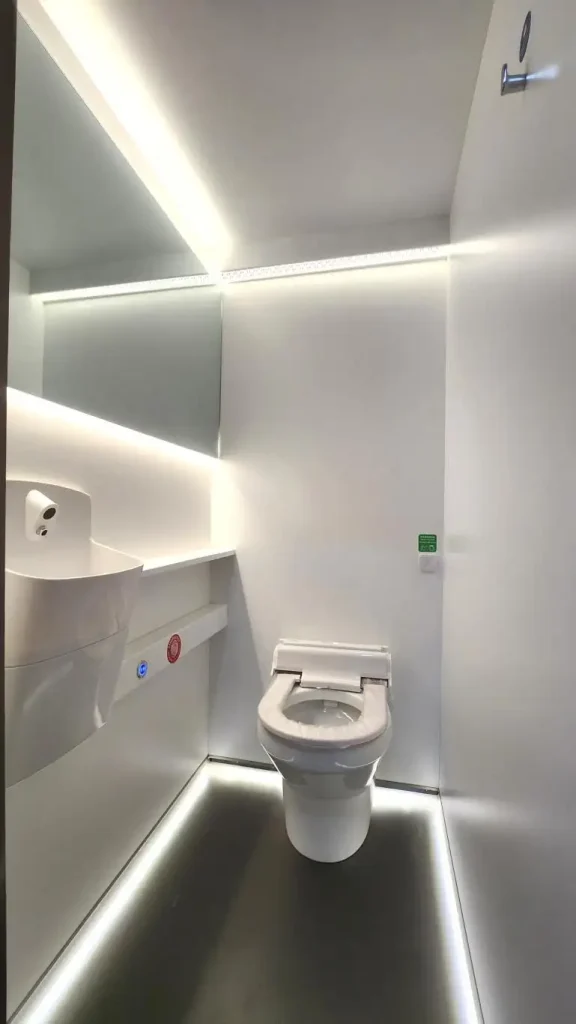
An eco-friendly portable toilet should reduce resource demand where practical, especially water use, power consumption, and the amount of site work needed for installation. SAUDIND's units support this through several integrated systems.
•Water-saving sanitary ware: Flush volume ≤ 3.5L per use, compared to traditional 6L toilets—cutting water use by nearly half.
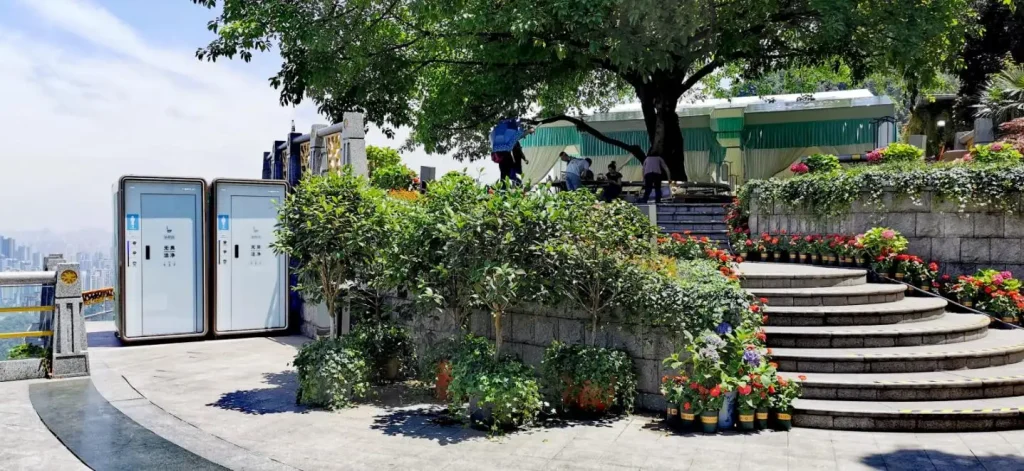
•Plug-and-play flexibility: T-BOX-A2 supports optional water and sewer connections, while T-BOX-A3 can be used where water and sewer access are not available. Placement should still consider service access, ground condition, visitor flow, and safety on hillsides or remote picnic areas.
•Renewable power readiness: Solar/grid/hybrid options power LED lighting (4000K, comfortable for eyes), air conditioning, and fresh air systems using only 0.6kW rated power.
•Demand-based intelligent control: Lighting and water systems activate when occupancy is detected, helping reduce unnecessary standby consumption between uses
With the right solar or hybrid configuration, an eco-friendly portable toilet can reduce dependence on external power and avoid extensive utility trenching in sensitive park areas. Actual operating time depends on power demand, usage level, weather, and service planning
4. Smart Management: The Invisible Guardian
IoT connectivity helps separate modern modular restrooms from basic portable toilets by giving operators visibility into use, supplies, air quality, and maintenance needs. SAUDIND's units can use cloud-based connectivity to support daily park restroom management.
•Real-time monitoring: Ammonia, temperature, and supply levels of tissue and sanitizer all have sensors and alerts for actual maintenance.
•Remote control & predictive maintenance: Facility managers can control the ventilation and/or the deodorization cycle and replace components prior to failure, all from the phone.
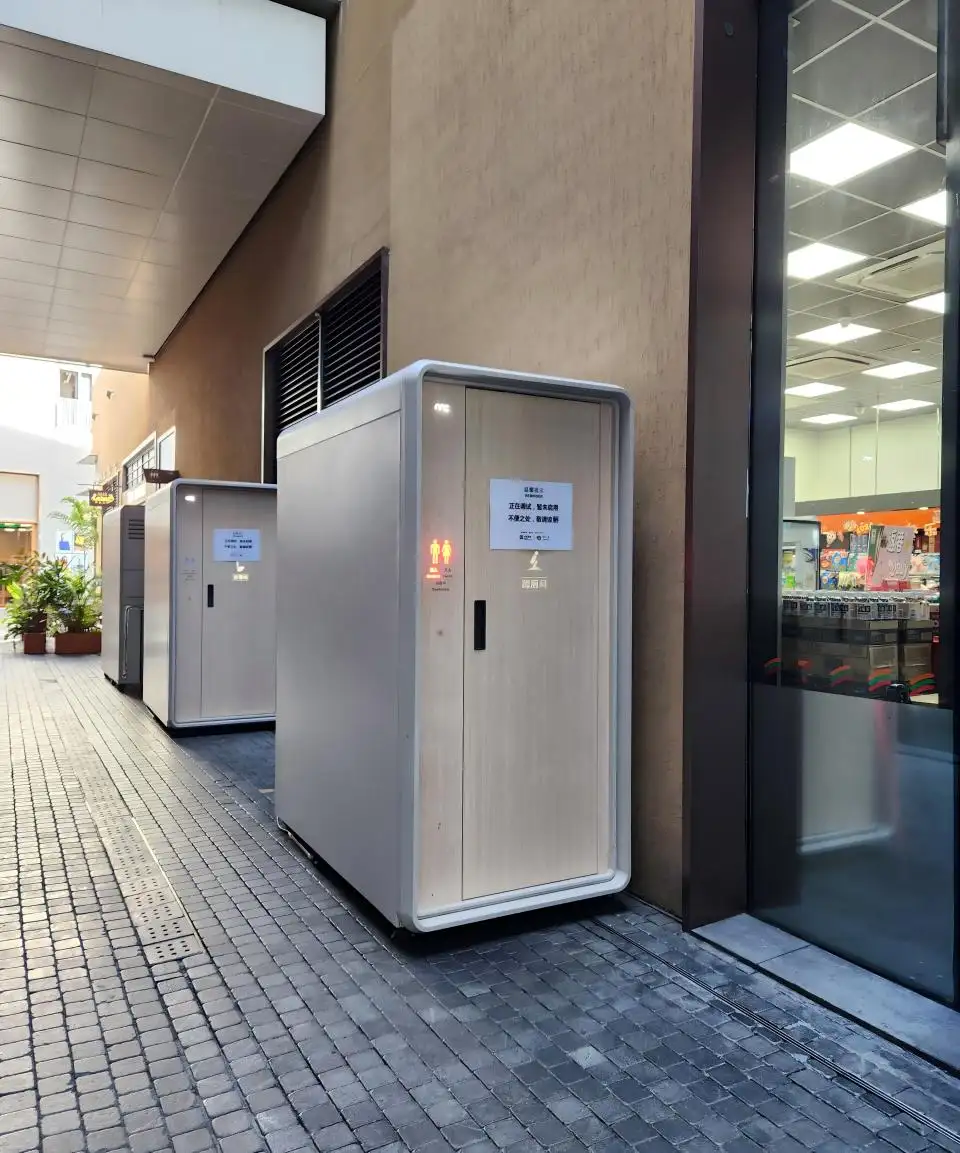
•Occupancy indicators: A green/red indicator at the door eliminates confusion in the queue and improves user flow; no additional signs required.
This smart layer works in the background so park users mainly notice that the restroom is available, maintained, and easier to use without drawing attention away from the surrounding landscape.
5. Odor Control and Hygiene: A Pleasant Experience
A foul-smelling restroom can quickly damage the visitor experience in a park. SAUDIND uses three design layers to help manage odor and hygiene in portable public restroom settings.
•Streamlined airflow arrangement: Air enters low and stale air is exhausted high, achieving natural convection without any fan noise.
•Auto-deodorization system: This system can be set to operate at specific time intervals or can be activated based on air quality sensors. This system utilizes plant-based deodorization.
•Touchless hygiene design: Non-contact sensors can automate flushing, soap dispensing, and hand drying, reducing shared touch points in high-use public restrooms.
A cleaner, touchless restroom experience makes visitors more likely to use the facility, helping park managers protect surrounding planting areas, trails, and public spaces.
6. More Than A Toilet
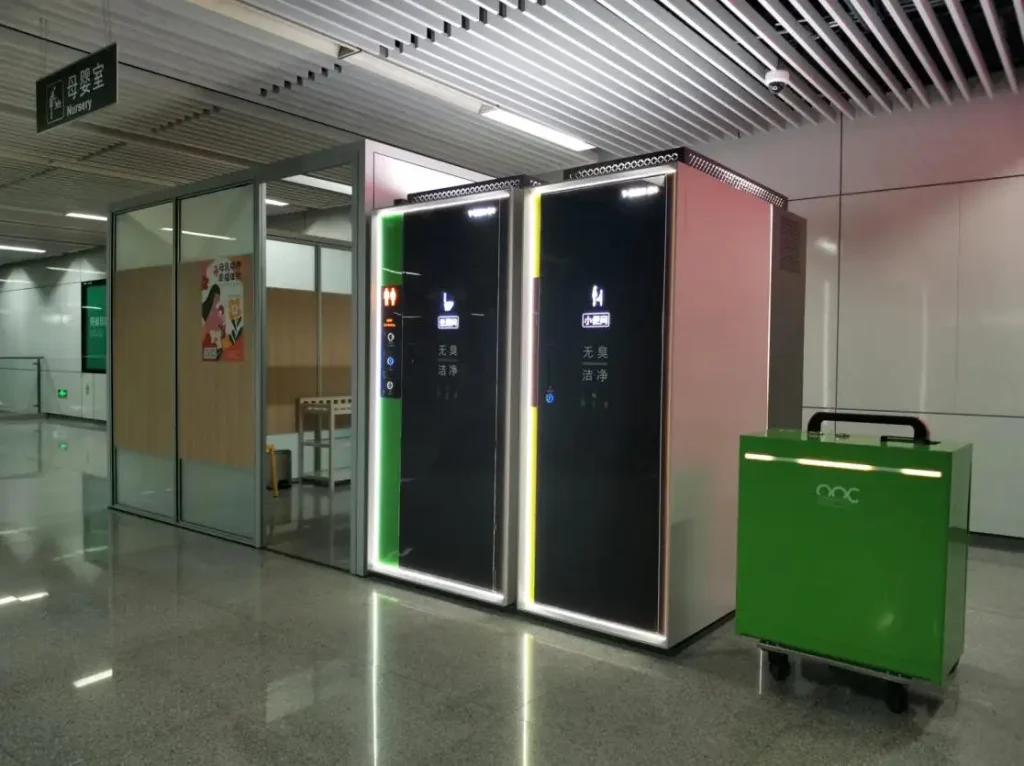
An Eco-Friendly Portable Toilet should not just be a toilet. SAUDIND has created modular designs that allow for extensions and integrations such as:
•Nursing Rooms: A quiet space for parents with infants that has a changing table and handrails.
•Emergency aid points: A help button and automated external defibrillator can turn part of the portable toilet unit into a basic emergency support point.
•Clean-up supply rooms or closets for park staff: small design solutions that mitigate the need for separate utility buildings.
These features can be integrated into a portable toilet as small as 1450mm L x 970mm W.
7. Aesthetic Customization
Each park has different design and environmental requirements. A coastal park may need stronger wind resistance, while a historic park may require classic-style lighting or exterior finishes. SAUDIND Technology can adjust exterior materials, colors, and layout details around those site conditions.
•Customized exterior: A choice in coating, color, and material (aluminum, composite panels) or even a choice in regional or national styles.
•Customized Dimensions & layout: choice between single-stall, multiple-stall, or modular designs with separate accessible partitions.
All of these design features make the Eco-Friendly Portable Toilet not an eyesore but a design element in the planned landscape or park.
8. Popularity of Modular Construction for Parks
Here are the key points for managers:
•Fast setup: With suitable access, ground conditions, and service planning, a unit can be placed and prepared for use in under 60 minutes.
•Flexible: Can be moved to a new location. Modular toilets can be switched on-location with the unit empty.
•Reduced cleaning and repair pressure: Smart diagnostics, anti-vandal surfaces, and antimicrobial surface options can help maintenance teams respond faster and keep the unit in better condition
•Earth Friendly: Conservation and renewables focus with a reduced construction footprint and modular toilets help achieve green certification.
The T-BOX series (A1, A2, A3) from SAUDIND Technology provides completely urban models and fully remote, off-grid models for use in all ranges of parks.
Final Thoughts
From the older portable models, the design and framework of the Eco-Friendly Portable Toilet has taken a giant leap into a new era in which how modular public restrooms, like the ones designed by SAUDIND Technology, balance scientific thinking, design agility, and smart integration to enhance park restroom infrastructure.
By combining eco-friendly materials, IoT management, water/energy conservation, and customizable design, these units prove that public toilets can be both functional and beautiful—hidden in plain sight, working silently for the environment.
For park authorities, the next step is clear: evaluate your site's water and sewage access, choose the right plug-and-play model (T-BOX-A2 or A3), and customize the exterior to match your landscape. The result is a cleaner park, happier visitors, and one more step toward a low-carbon, people-oriented city.
FAQs
Q1: Are these toilets easy to keep clean and odor-free?
A: Yes – streamlined airflow, auto-deodorization, and antimicrobial surfaces (99.99% effective) ensure a fresh and hygienic interior.
Q2: Can the exterior design match a park's natural landscape?
A: Absolutely – full customization of color, coating, and material (e.g., wood-grain or green panels) helps the unit blend into any environment.
Q3: Why is SAUDIND's Portable Toilet "smart"?
A: Thanks to IoT, you can monitor, control, and perform predictive maintenance remotely and in real-time via an app or dashboard.
Q4: Is it an efficient use of energy to run air conditioning in a park restroom?
A: It is efficient. The system is "smart," meaning it only consumes energy when the unit is occupied, and the design allows for a flexible solar/grid hybrid system that maintains a max total consumption of 0.6kW.
Q5: Can a single unit serve more than just a toilet?
A: Yes – capacity can be extended to include nursing rooms, emergency aid points, or even park staff offices.
Written by
admin