


Updated 3 months ago
How a Smart Public Toilet Helps Operators Manage Hygiene and Maintenance
admin
admin
Smart Public Toilet
What Does "Self-Care" Mean for a Public Restroom?
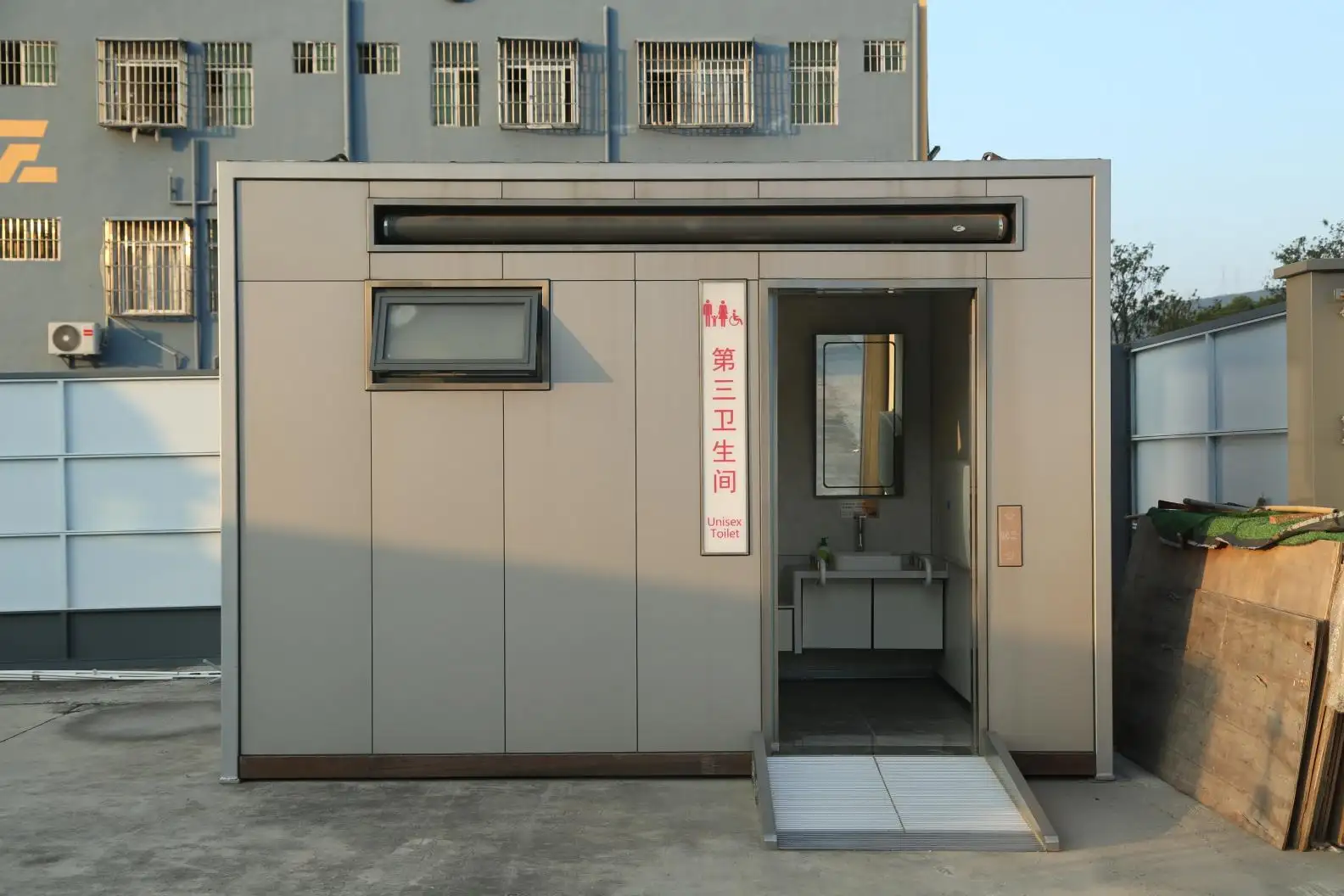
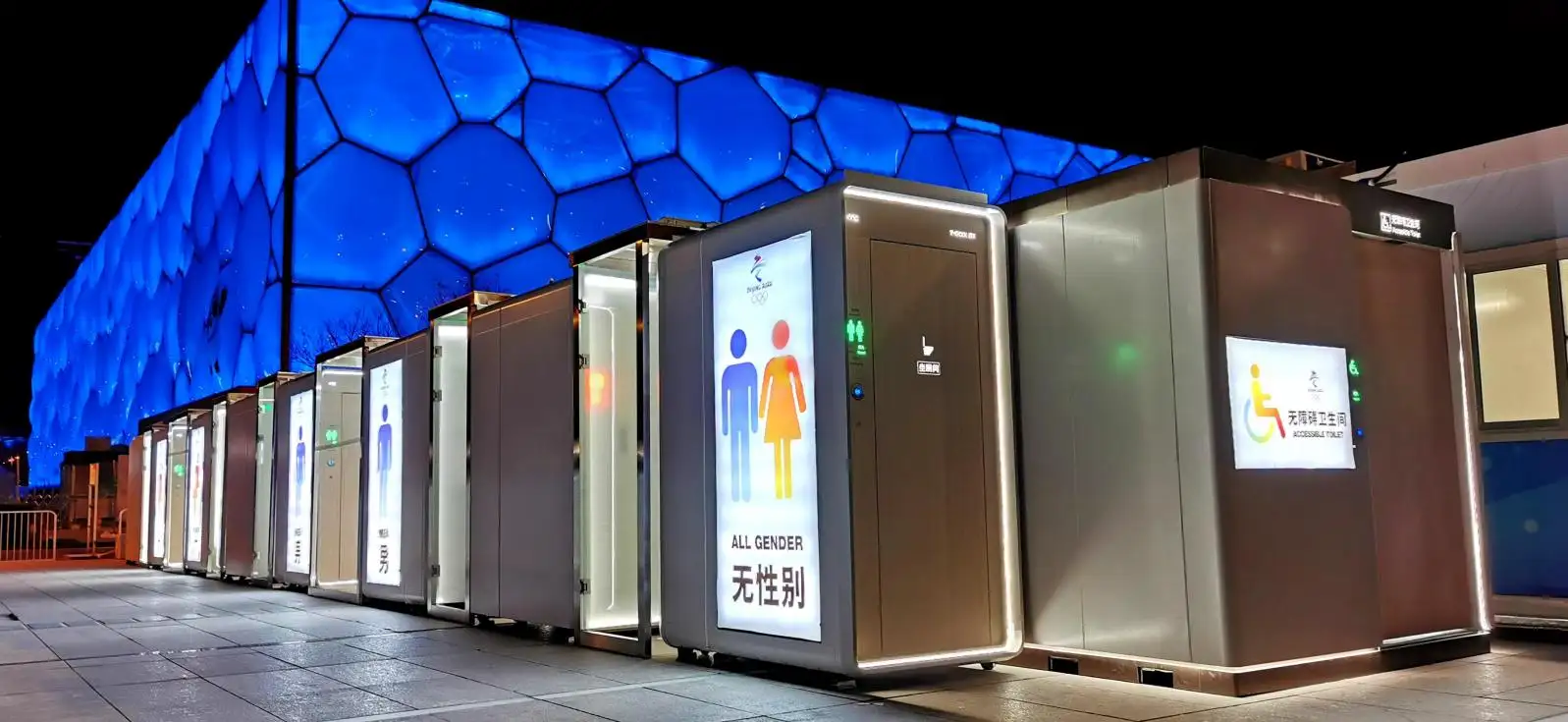
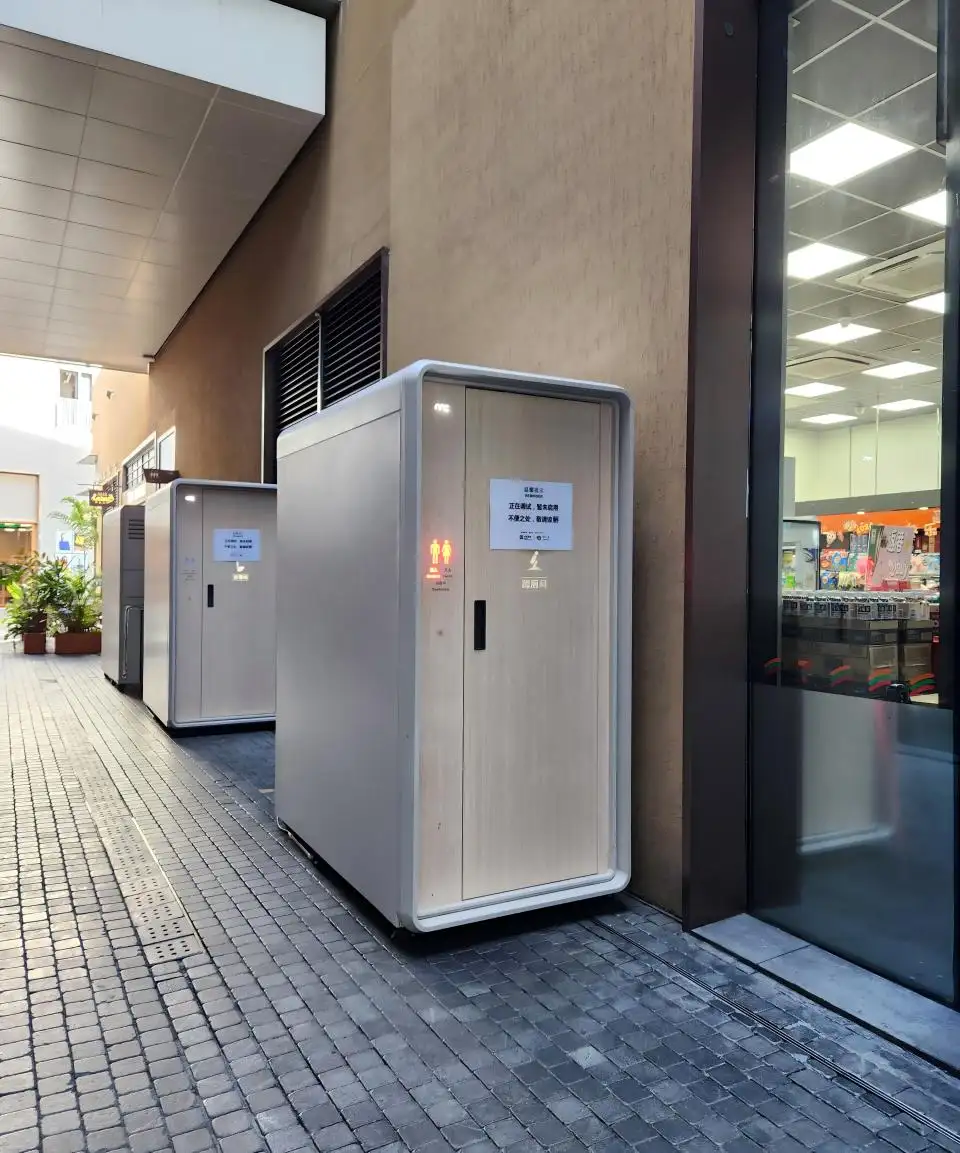
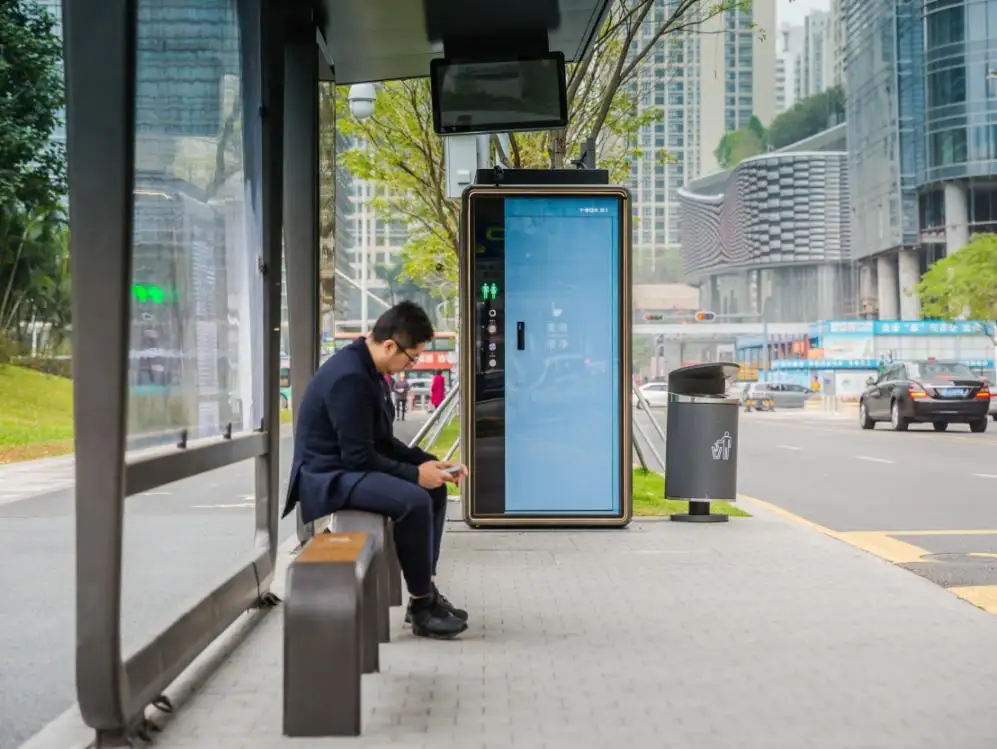
A smart public toilet is a restroom equipped with sensors, controls, and connectivity that help operators monitor occupancy, air quality, consumables, equipment status, and maintenance needs. It does not replace facility staff, but it gives public works teams better information for cleaning, repair, and service planning.
Smart public toilets can monitor air quality, usage frequency, consumables, and equipment behavior, helping operators decide when inspection or maintenance is needed. Manual checks still matter, but they can be guided by real-time data instead of relying only on fixed patrol schedules. This article uses SAUDIND Technology's Smart Public Toilet TBOX system as an example.
The goal is to show how smart toilet systems support facility managers while also improving the restroom experience for public users.
1. Sensing the Environment
The first layer of a smart public toilet is the sensor system. Sensors should collect operating data without interfering with privacy or normal restroom use. In a public restroom, the most useful sensor data usually covers occupancy, air quality, consumables, and equipment status
•Occupancy status: Infrared or ultrasonic sensors can show whether each stall is available, helping users find an open stall and helping operators understand peak-use patterns.
•Air quality: Gas and humidity sensors can monitor ammonia levels, odor conditions, temperature, and relative humidity. This allows the ventilation or deodorization system to run when conditions require it instead of operating at full power all day.
•Supply stock levels: Sensors in tissue and soap dispensers can alert maintenance teams when supplies are running low, reducing unnecessary refill trips and helping prevent empty dispensers during busy periods.
•System status: Flush valves, LED drivers, HVAC fans, and other components can report abnormal cycles, power draw, or performance changes so maintenance teams can diagnose issues earlier.
All this information flows to a central processing unit inside the Smart Public Toilet. The unit then decides which actions to take autonomously and which events to forward to a remote dashboard.
2 – Connecting to the Cloud (IoT Basics)
A Smart Public Toilet becomes "smart" when it can share its sensor data with a management platform. SAUDIND Technology designs the TBOX series to be IoT-ready out of the box. Once connected to a standard Wi-Fi or cellular network, the unit can perform three useful functions:
•Real-time status updates: Operators see occupancy, temperature, and equipment health on a single screen for all deployed units.
•Remote parameter adjustment: Air conditioning temperature, fresh air circulation rate, and LED lighting schedules can be changed from any connected device.
•Automatic alert generation: The system creates a service ticket as soon as a sensor detects a consumable low or a component behaving irregularly.
This connectivity turns a standalone Smart Public Toilet into part of a larger, responsive network. For cities managing dozens of restrooms, this shift from scheduled rounds to event-driven maintenance is a noticeable improvement in resource allocation.
3 – Managing Air Quality Without Constant Attention
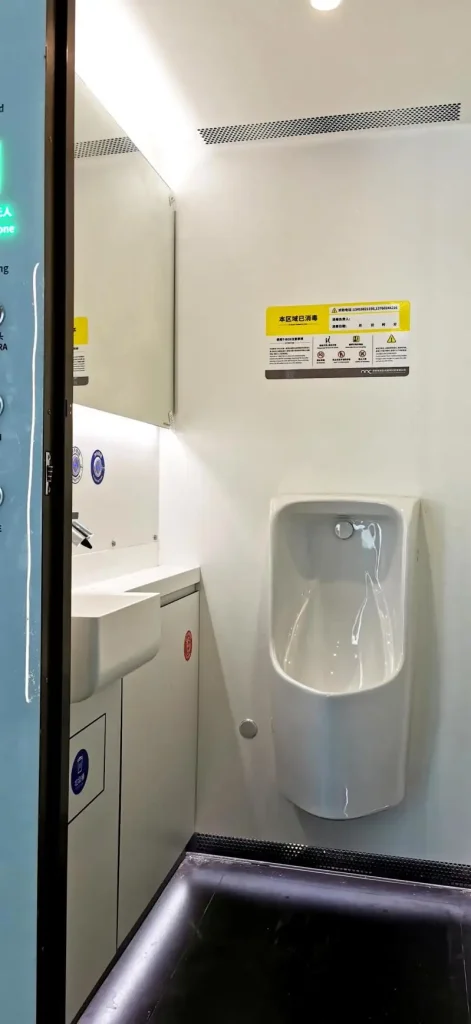
One of the most appreciated features of a modern Smart Public Toilet is its ability to keep indoor air fresh without running fans 24/7. SAUDIND's TBOX units integrate a fresh air system and a deodorization module that work together:
•Deodorization: The system pulls air through a filter that reduces volatile compounds and particulates, rather than simply masking smells.
•Fresh air intake: A different duct brings in outside air to avoid the stuffiness typical of enclosed restrooms.
•Conditional activation: Instead of the system operating at all times, the ventilation can be activated by gas sensors or by an occupancy cycle.
This allows the smart public toilet to balance energy use with air quality. Users experience a cleaner restroom environment, while operators have a better chance of addressing odor issues before complaints increase.
4 – Using Energy and Water Efficiently
A Smart Public Toilet also learns to manage its utility consumption. The TBOX series has a rated power of 0.6kW (with 0.4kW for air conditioning), which is moderate for a fully conditioned unit. The system can be programmed to:
•Reduce HVAC activity during low-traffic hours without turning off completely.
•Switch lighting to a dimmed "standby" mode when the stall is vacant for a set period.
•Use a water-saving flush mechanism (≤ 3.5 liters per cycle) that meets modern conservation standards.
For locations without external water or sewage, SAUDIND offers configurations such as the T-BOX-A3, a plug-and-play Smart Public Toilet that operates entirely off-grid. This flexibility allows a Smart Public Toilet to be placed in remote parks, construction sites, or event grounds where permanent utility connections are not available.
5 - Predictive Maintenance: Learning from Patterns
Predictive maintenance is one of the most useful smart toilet functions. The system can compare current equipment behavior with normal performance data and flag unusual patterns, giving maintenance teams a chance to inspect parts before a small issue becomes a service outage.
Examples include:
•Time taken for the flush valve to close: the system will flag a wear issue when the time taken to close the valve exceeds the benchmark time by an average of 0.2 seconds.
•Motor current on the fresh air fan: A gradual increase in current draw may mean a filter is clogged or there is bearing friction.
•Door latch cycle count: The system can trigger a maintenance reminder after the latch reaches a preset number of cycles.
Predictive maintenance helps reduce unexpected outages. Instead of discovering a problem only after an "out of order" sign appears, operators can receive advance warnings when a component shows signs of wear or abnormal behavior.
6 - Modular Choices for Different Site Needs
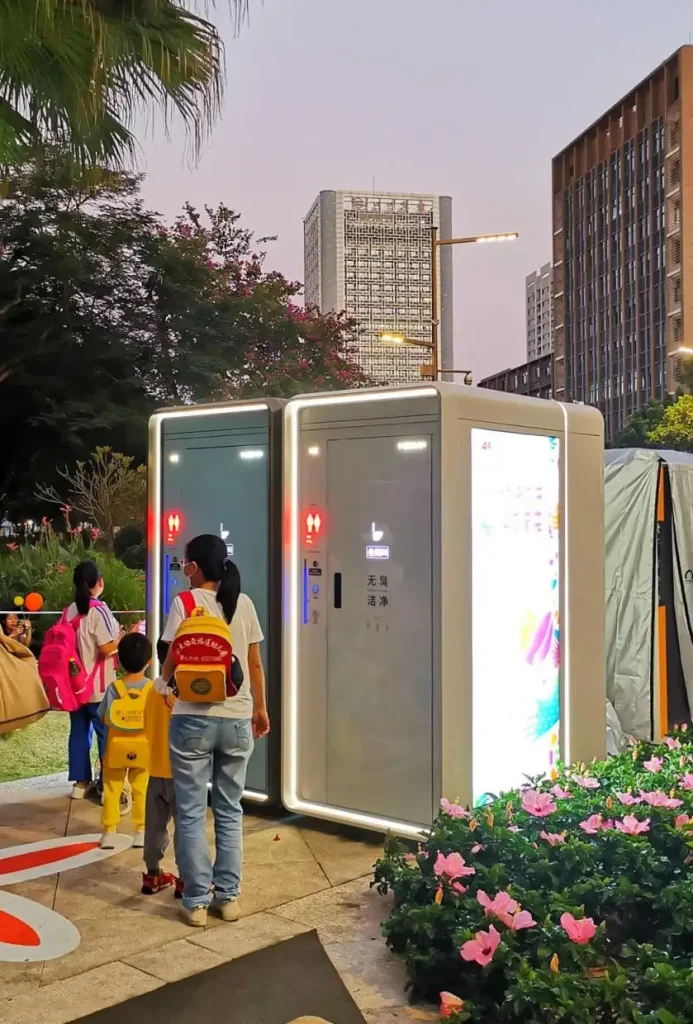
Utility access varies by site, so SAUDIND Technology offers three Smart Public Toilet configurations. This helps planners choose a model based on whether the location has full municipal utilities, partial connections, or no water and sewage access.
•T‑BOX‑A1: Requires external water and sewage connections. Ideal for locations with full municipal infrastructure.
•T-BOX-A2: A plug-and-play model that can optionally connect to water and sewage. It includes an external operation and maintenance module and can be used in sites with limited utilities, provided that access, servicing, and placement conditions are planned.
•T-BOX-A3: A fully self-contained plug-and-play Smart Public Toilet that operates without any water or sewage connection, offering the greatest placement freedom.
All three models share the same 350kg approximate weight, aluminum exterior and interior, Toli flooring, stainless steel chassis, and 4000K LED lighting. Standard amenities include a water-saving toilet, hook, flush button, handrail, tissue box, and integrated storage table. Smart features include air conditioning, help button, occupancy indicator, fresh air system, and deodorization system.
7 – Built for People and Cities
A Smart Public Toilet is not only about electronics. SAUDIND pays attention to the physical experience as well. The interior dimensions (from 1065mm L x 900mm W x 2150mm H for the sit-down version) provide enough space for comfortable use. The help button and handrails are standard, supporting accessibility for elderly and disabled users.
From a city planning perspective, a smart public toilet can support lower-impact public sanitation when its materials, water-saving fixtures, energy controls, and modular structure are planned together. Recyclable aluminum, reduced flush volume, controlled ventilation, and movable installation can help cities adapt restroom capacity without committing every site to permanent construction
What the Future Holds for Self-Caring Public Toilets
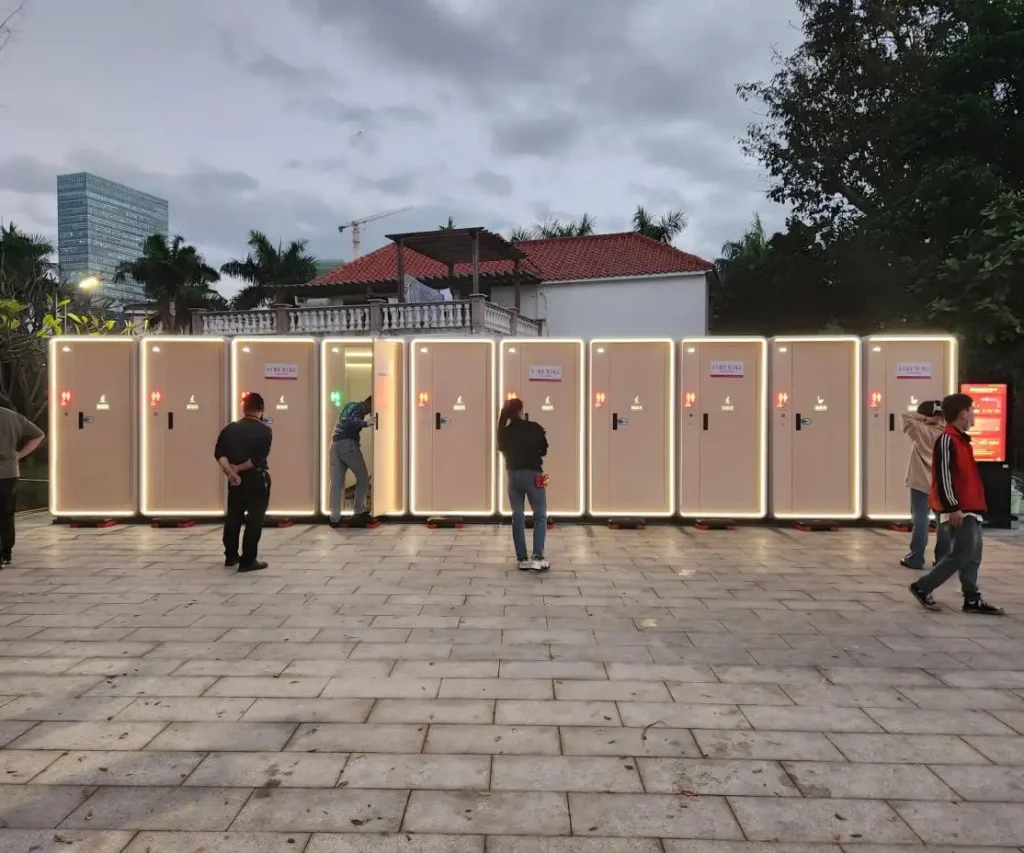
As IoT platforms become more common in city infrastructure, a Smart Public Toilet will likely integrate with other urban systems. For example:
•Traffic management: High usage at a restroom near a stadium could be correlated with event schedules, allowing pre-event cleaning crews to be dispatched automatically.
•Public Safety: Using a Help Button will send alerts to local security or first responders.
•Environmental reporting: Smart public toilets can report water and energy use at the unit level, giving operators better data for conservation planning and maintenance decisions.
SAUDIND Technology continues to refine its TBOX series to stay aligned with these trends. The current offering already provides a solid foundation: a Smart Public Toilet that senses, connects, reports, and adapts, giving operators better visibility and users a more reliable facility.
Learn More About SAUDIND's Smart Public Toilet Solutions
To review detailed specifications, download size drawings, or request a quote for the TBOX-GE-S1 or any other model in the TBOX series, visit the SAUDIND Technology product page. For broader context on public sanitation and smart city development, resources from the World Toilet Organization and the ISO 30500 standard for non-sewered sanitation systems offer useful reference material.
FAQs
Q1. Can TBOX operate when there is no water or sewage connection?
A. TBOX-A3 is designed for sites without fixed water or sewage connections. It can operate as a plug-and-play unit when water supply, waste handling, power, and service access are planned for the site.
Q2. How does the system notify the maintenance staff?
A. Smart toilets can send real-time notifications to cloud dashboards or mobile apps, including occupancy status, consumable levels, equipment alerts, and sensor readings.
Q3. Is it possible to move the unit after it has been installed?
A. Yes. The unit weighs about 350 kg and has an aluminum frame, so it can be relocated with suitable truck access and lifting equipment when the site is prepared.
Q4. How is the deodorization system designed?
A. The deodorization system uses filtration to reduce odor, VOCs, and airborne particles, while the fresh air system supports air exchange inside the restroom.
Q5. What are the included smart features in TBOX?
A. TBOX smart features can include air conditioning, a help button, an occupancy indicator, a fresh air system, a deodorization system, and remote monitoring options depending on the model configuration.
Written by
admin