


Updated 3 months ago
The Smart Temporary Restroom Unit: Modular & Detachable
admin
admin
Temporary Restroom Unit
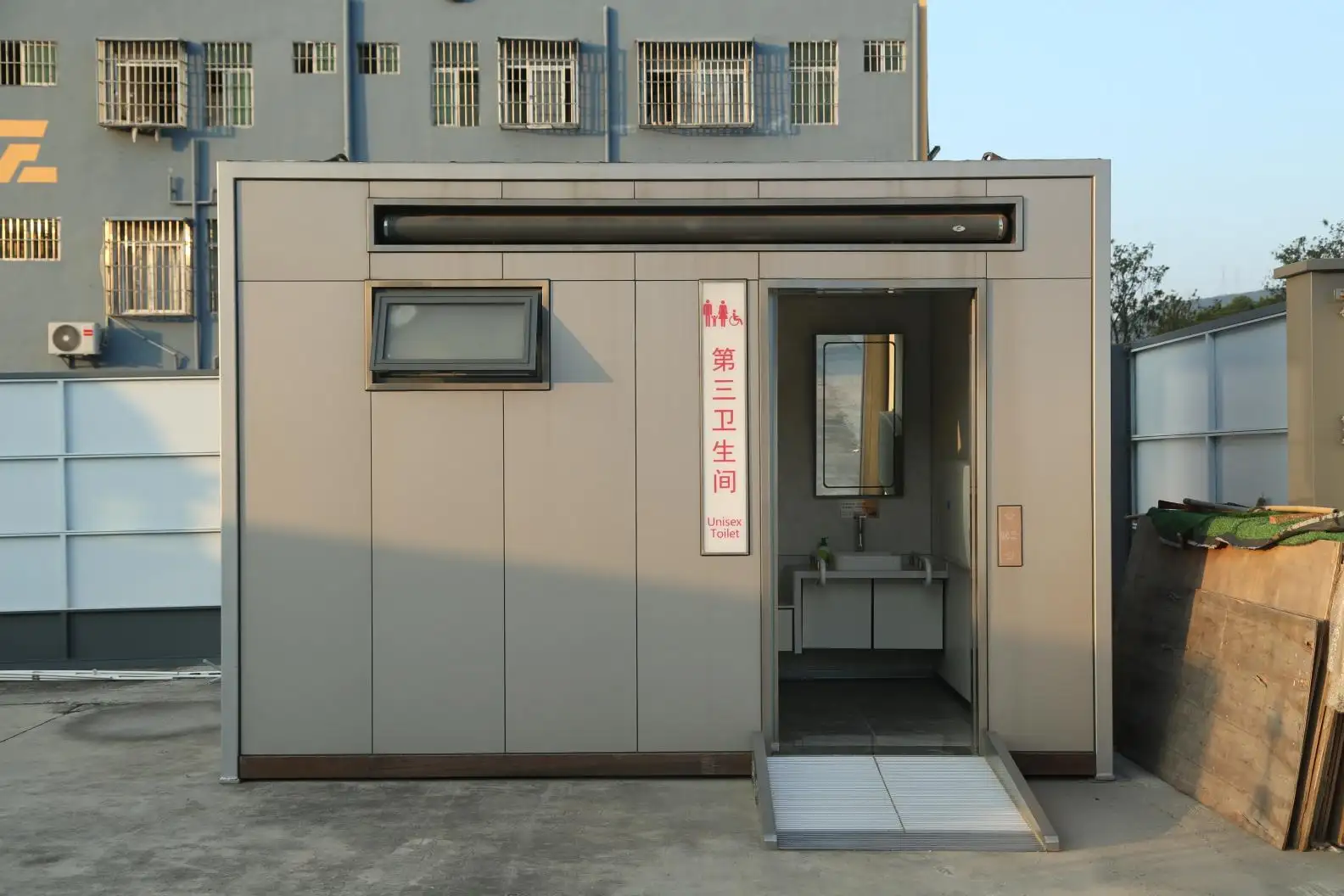
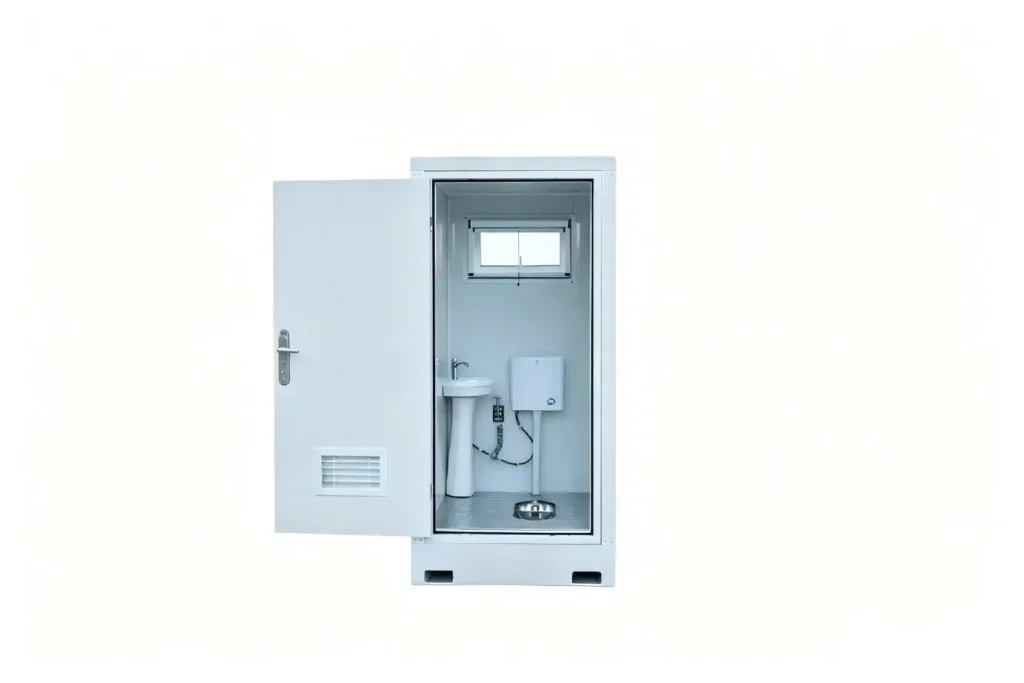
A temporary restroom unit is no longer limited to a heavy one-piece plastic cabin. For construction sites, events, public works, and temporary facilities, modular restroom units are easier to transport, assemble, service, and relocate. SAUDIND Portable Toilets Technology's TBOX KS-1 uses detachable components, stainless steel fixtures, and optional smart monitoring to give site teams a more practical temporary sanitation option.
1. What Constitutes a Detachable Temporary Restroom Unit?
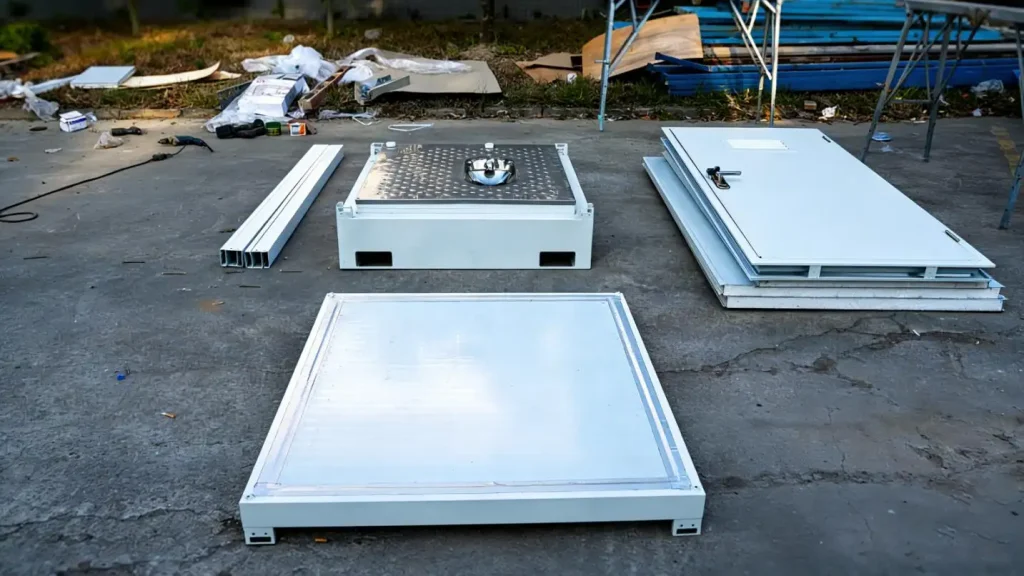
A detachable temporary restroom unit is built from separate wall, roof, floor, door, and fixture modules that can be assembled on site and taken apart when the project ends. Unlike one-piece fiberglass or rotational-molded cabins, modular units rely on standard dimensions, mechanical joints, and replaceable parts, so they are easier to move, repair, and configure for different sites.
•Modularity enables a reduction in shipping volume: a fully disassembled unit can be up to 70% smaller, therefore requiring 70% less space on a shipping vehicle.
•Assembly can be done on site: components that are flat packed can be transported by a crew of 2 to areas that are remote or difficult to access where a standard shipping trailer is unable to fit.
•Selective replacement is achieved by modular designs: vandalism of one panel requires only that panel to be replaced.
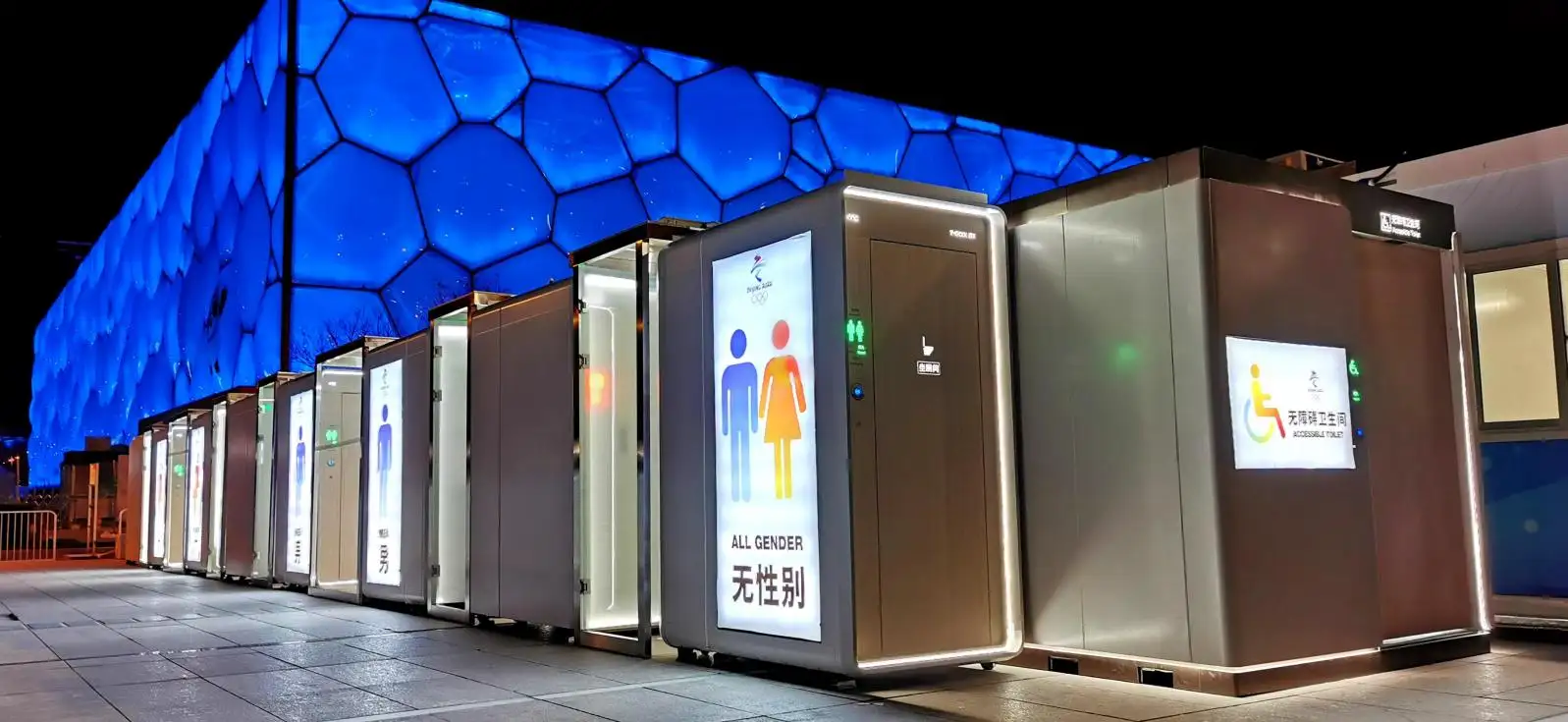
•Modularity enables multiple units to be linked: units can be linked to create multi-stall temporary restroom units or units that contain washrooms and storage rooms.
2. What is a Reliable Modular Portable Toilet?
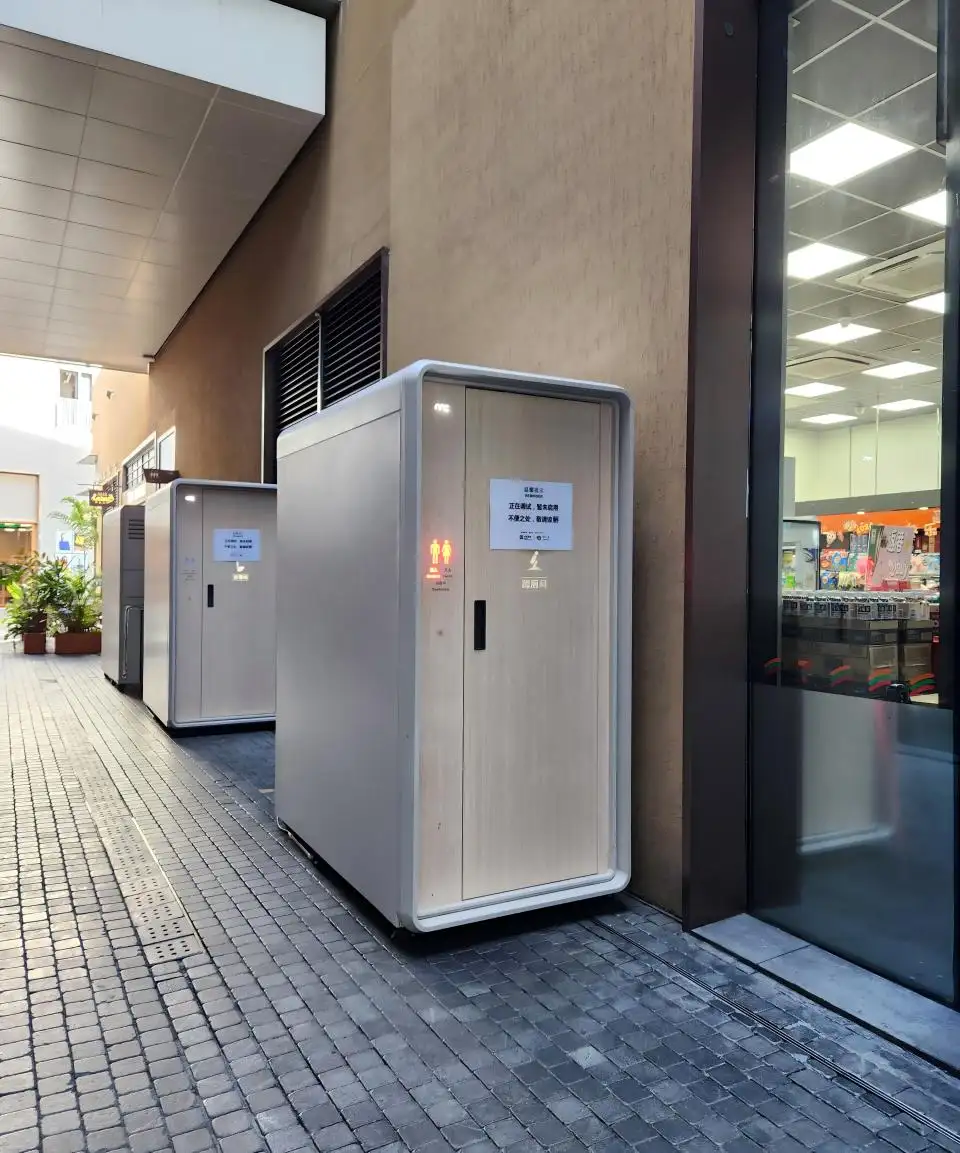
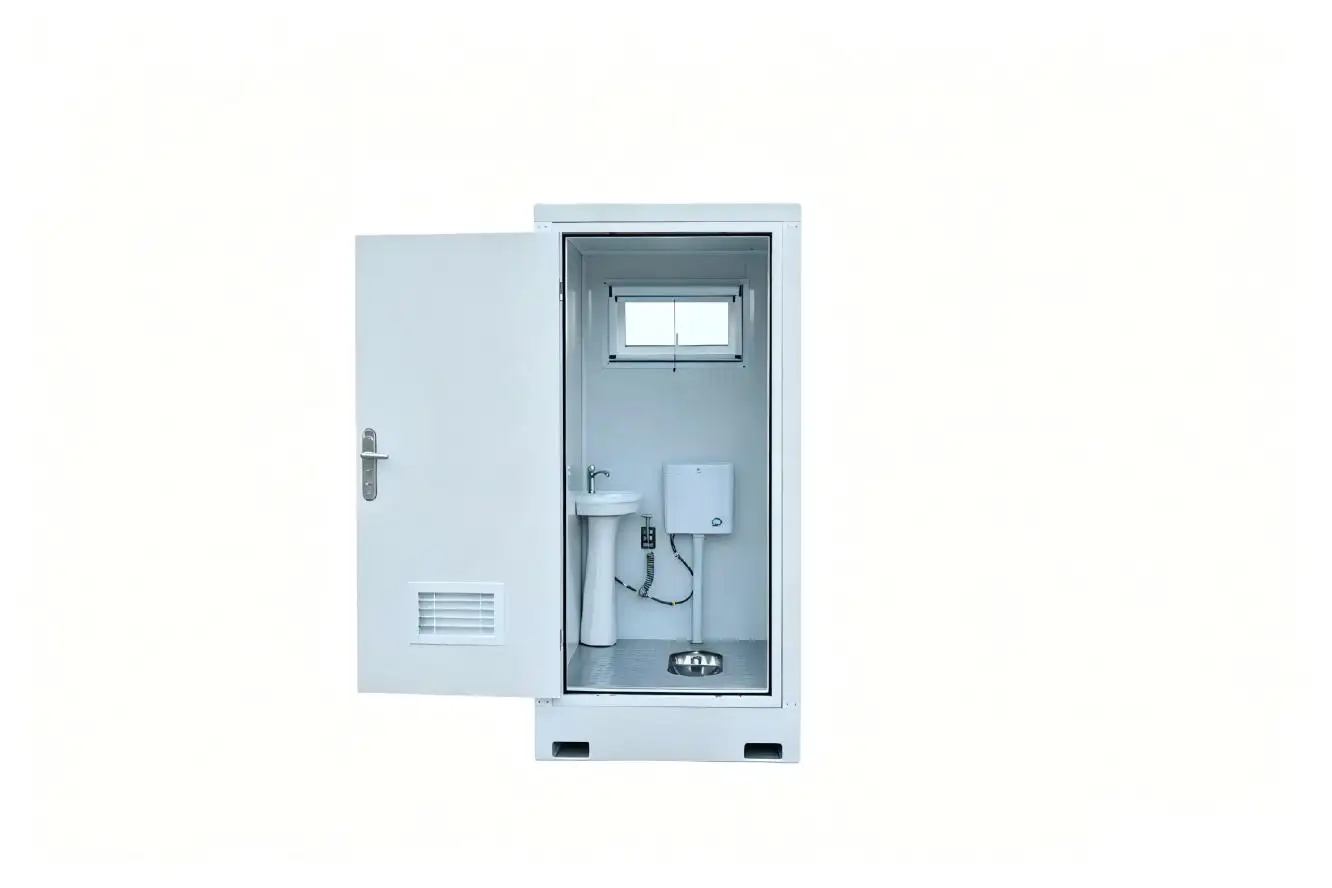
SAUDIND Portable Toilets Technology's TBOX KS-1 (Stainless) applies modular portable toilet design to a more durable site unit. Its structure combines movable components with stainless steel contact surfaces, so the restroom can be transported and installed without losing the cleaning, strength, and daily-use performance required on busy sites.
•The unit is suitable for construction sites, outdoor events, transport hubs, and temporary public areas where restroom capacity may need to move as foot traffic or work zones change.
•The frame uses an electrostatic coating process to improve resistance to rust and corrosion during outdoor use, especially in wet, coastal, or frequently cleaned environments.
•Insulated steel foam board walls: The foam core maintains comfortable relative temperatures for the interior, while the steel skin is graffiti-resistant and dent resistant.
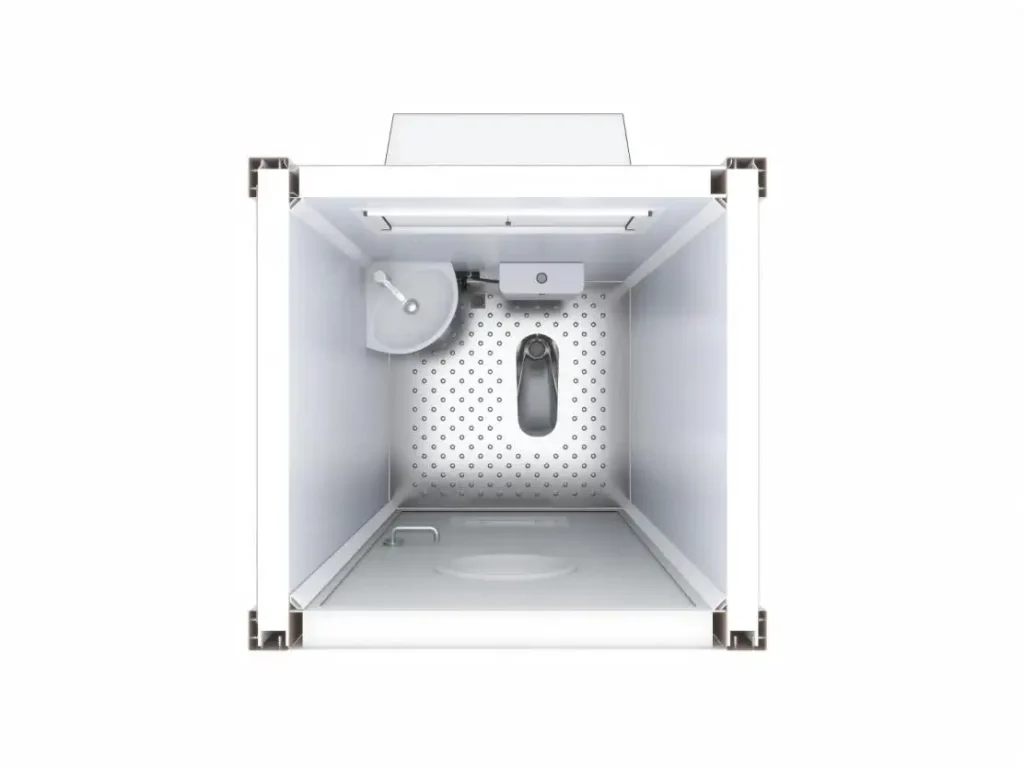
•304 stainless steel flooring bears the weight: The 304 stainless steel floor provides a non-porous, anti-slip surface that supports wheelchair access, heavy daily use, and frequent washing without easy deformation.
•304 stainless steel integrated squat toilets eliminate cracked bowls: Due to the absence of hairline fractures, the stainless steel squat toilet bowls do not contain spaces that can trap bacteria and are therefore easier to clean and do not leak.
3. Transport Ease and Speed of Installation: The Detachable Advantage
Fast installation is one of the main reasons site teams choose a detachable temporary restroom unit for events, construction projects, and public works. The TBOX KS-1 is designed with tool-light connections and pre-assembled modules so crews can position and commission the unit with less on-site fabrication.
•Two workers can complete assembly in under 30 minutes: The steel frame uses bolted corner joints, and wall panels slide into grooved channels without welding.
•Forklift pockets and lifting rings simplify maneuvering: Even on uneven ground, the unit can be placed precisely using common construction equipment.
•Interchangeable panels reduce spare part inventory: Operators stock only a few types of wall, door, and roof panels to service an entire fleet.
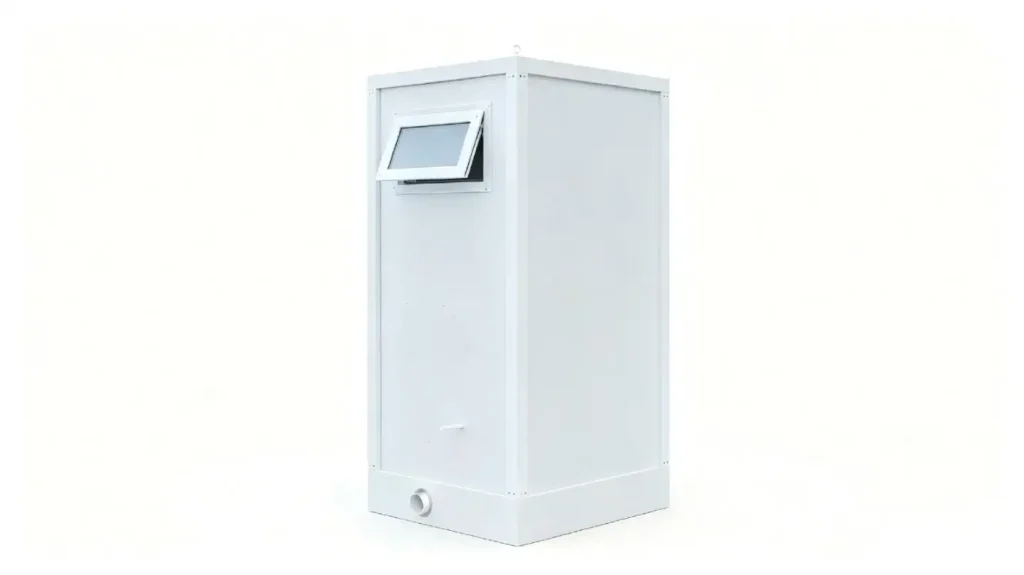
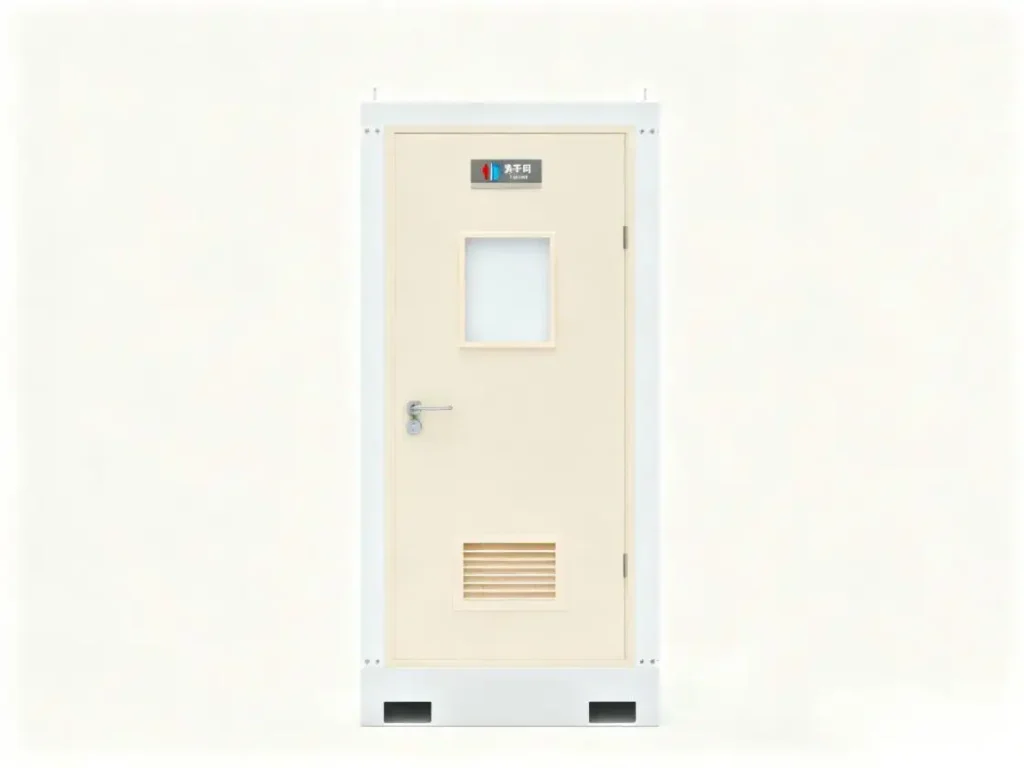
•Top-hung restroom window and louvered steel door pre-install at the factory: On-site work involves only connecting the water supply, drainage, and electrical quick-connectors.
4. SAUDIND Portable Toilets Technology's TBOX KS-1: A Detailed Look at Materials and Finishes
The TBOX KS-1 is purpose-built for demanding environments. Every surface and accessory is selected to minimize cleaning time, resist vandalism, and comply with international hygiene standards.
•304 stainless steel floor and squat toilet: Both resist urine corrosion, cleaning chemicals, and physical impact, maintaining a sanitary surface for over a decade.
•Triangular Ceramic pedestal wash-basin: The triangular ceramic pedestal wash basin uses a compact corner-friendly shape to save interior space while keeping the surface smooth and easy to wipe down.
•Fluorocarbon paint Aluminum door: The fluorocarbon-painted aluminum door is designed for outdoor exposure, helping the surface resist UV light, temperature changes, and repeated cleaning.
•Voice activated ceiling light: The voice-activated ceiling light turns on automatically when a user enters, reducing the need to touch a physical switch.
•Signage and Stainless-steel faucet: High-contrast signage makes the restroom easier to identify, while the stainless steel lever faucet can be operated by hand or elbow for cleaner use in busy public or worksite settings.
5. Beyond the Physical Structure: Smart and Eco-Friendly Features
A modern temporary restroom unit can also support smart operation. In the TBOX KS-1, IoT functions are used to monitor occupancy, usage, ventilation, and service needs, helping operators plan cleaning, tank emptying, and daily maintenance more efficiently.
•Occupancy and real-time usage sensors show whether the restroom is in use and how often it is being used, giving managers better data for cleaning schedules, consumable checks, and holding-tank service.
•Facility managers can adjust ventilation or start a deodorizing cycle from a mobile device when usage is high, odor control is needed, or the unit has been closed for a period of time.
•When no motion is detected, a solenoid valve can shut off the water supply automatically, reducing leakage and helping cut water waste by as much as 40%.
•Solar-ready power inlet: The unit is designed to use a solar panel with a battery on the units roof.
•The 99.99% antimicrobial coating is applied to high-touch areas to help reduce microbial activity on contact surfaces, while regular cleaning and disinfection still remain necessary for daily operation.
6. When a Detachable Temporary Restroom Unit is more Effective than Others
Permanent restroom construction can take months because of civil work, permits, drainage, water supply, and utility connections. A modular temporary restroom unit is useful when a site needs restroom capacity before permanent facilities are ready, during a short event, or while infrastructure is being repaired or upgraded.
•Construction site: As work zones change, these Units can be relocated. One TBOX KS-1 can serve 50 employees in a day and can be relocated in 2 hours.
•Outdoor event and festival organizers can scale the number of units according to attendance, event duration, food and beverage service, and peak traffic areas, then dismantle and store the units after the event.
•Remote attractions for tourists: Detachable units can be flown in as flat pack units and assembled without the need for heavy construction equipment.
•Urban renewal projects: Modular restrooms can be placed in city parks or transit centers as temporary solutions.
•Emergency response for natural disasters: Non-Governmental Organizations (NGOs) pack flat-packs that can be built by volunteers without heavy construction skills.
7. Customization and Partnership Models for Every Need
SAUDIND Portable Toilets Technology supports different procurement and operating needs through flexible partnership models. Temporary restroom units can be customized by size, exterior color, interior fixtures, accessibility requirements, and power source, depending on how and where the unit will be used.
•Custom Purchase (direct sale): This model is best for municipalities and property developers who purchase permanent units and prefer specific branded units with Nursing rooms or specific accessibility features.
•Leasing services can be used for short-term or long-term projects that need delivery, setup, maintenance, and optional daily cleaning. This model is practical for seasonal businesses, event operators, and construction projects with a defined schedule.
•Under the agency cooperation model, SAUDIND Portable Toilets can integrate vending machines or digital advertising screens into the restroom structure, allowing operating revenue to help offset daily management and service costs.
Conclusion: The Detachable Design Is Here to Stay
For smart-city projects, event sites, construction projects, and temporary public facilities, detachable restroom design gives operators more control over transport, installation, maintenance, and future relocation. SAUDIND Portable Toilets Technology's TBOX KS-1 combines a stainless steel interior, modular assembly, optional IoT monitoring, and flexible partnership options, making it suitable for both short-term deployment and longer temporary infrastructure needs.
Get a free quote today to see how the TBOX KS-1 or other modular portable restrooms can solve your temporary sanitation challenges.
FAQs
Q1. What is the process for IoT smart management?
IoT smart management uses sensors to monitor occupancy, usage frequency, temperature, and equipment status. When abnormal conditions are detected, managers can receive alerts and remotely control linked systems such as ventilation, HVAC, or deodorization where those options are installed.
Q2. Will I be able to relocate the unit after I install it?
Yes. The detachable structure allows the unit to be disassembled, moved by lift or flatbed, and reassembled at another location when the site layout or project phase changes.
Q3. What does the TBOX KS-1 offer for a restroom?
The TBOX KS-1 offers a restroom with an integrated, easy-to-clean, stainless steel squat toilet.
Q4. Will the unit function in sub-zero conditions?
The unit's color steel walls are foamed-in-place to offer insulation. To keep the water from freezing, a heating system can be added.
Q5. What cleaning and maintenance does this require?
The stainless steel floor and toilet modules resist staining and are easier to wash after heavy use. Daily pressure washing is recommended for busy sites, and damaged panels can be replaced individually because of the modular structure.
Written by
admin