



Updated 3 months ago
Accessibility and Inclusive Design in Cabin-Type Public Restrooms
admin
admin
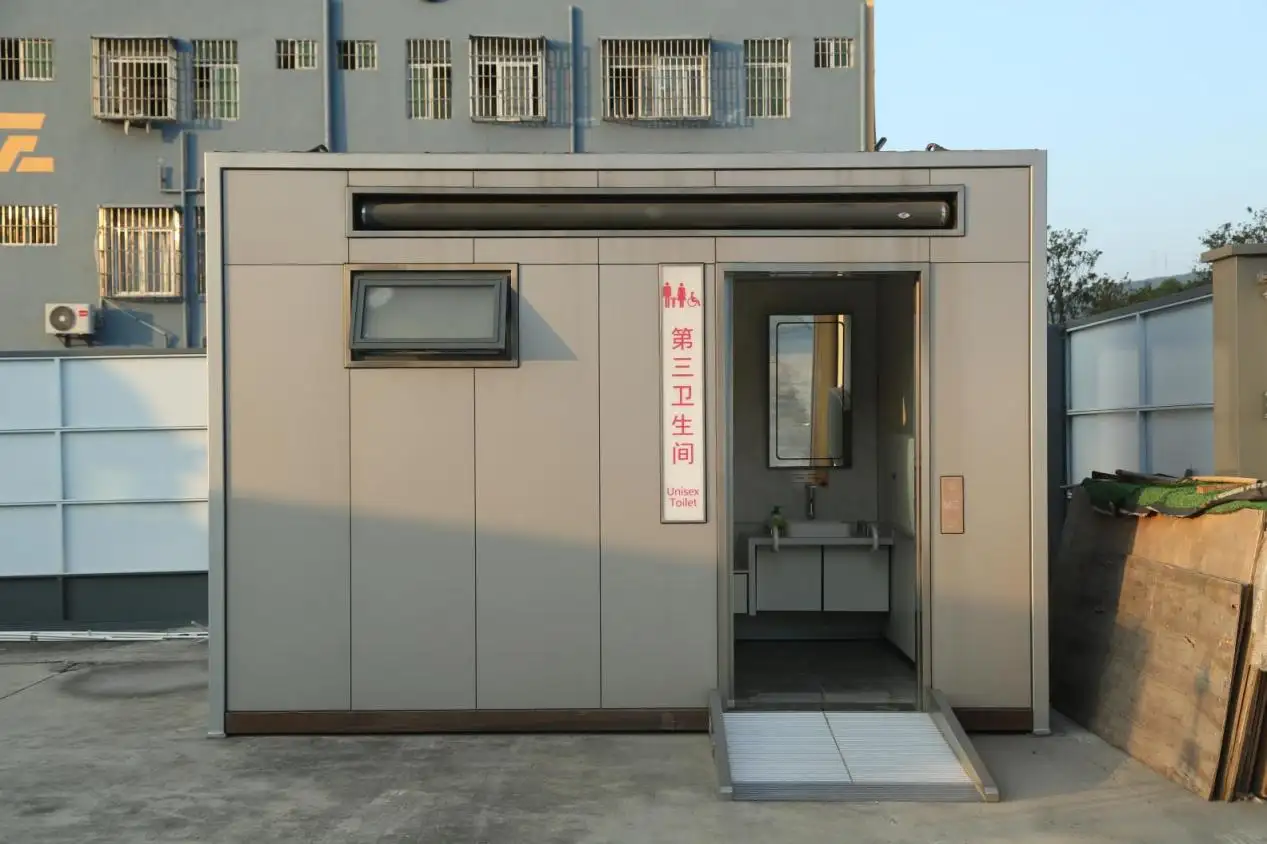
Cabin-Type Public Restroom
How Inclusive Design Improves Public Sanitation Experiences
Public restrooms are important infrastructure for parks, transit centers, places of commerce, and public gatherings. However, most public restroom designs fail to accommodate many user groups, including individuals with mobility challenges, older individuals, those traveling with young children, and people who may require additional support.
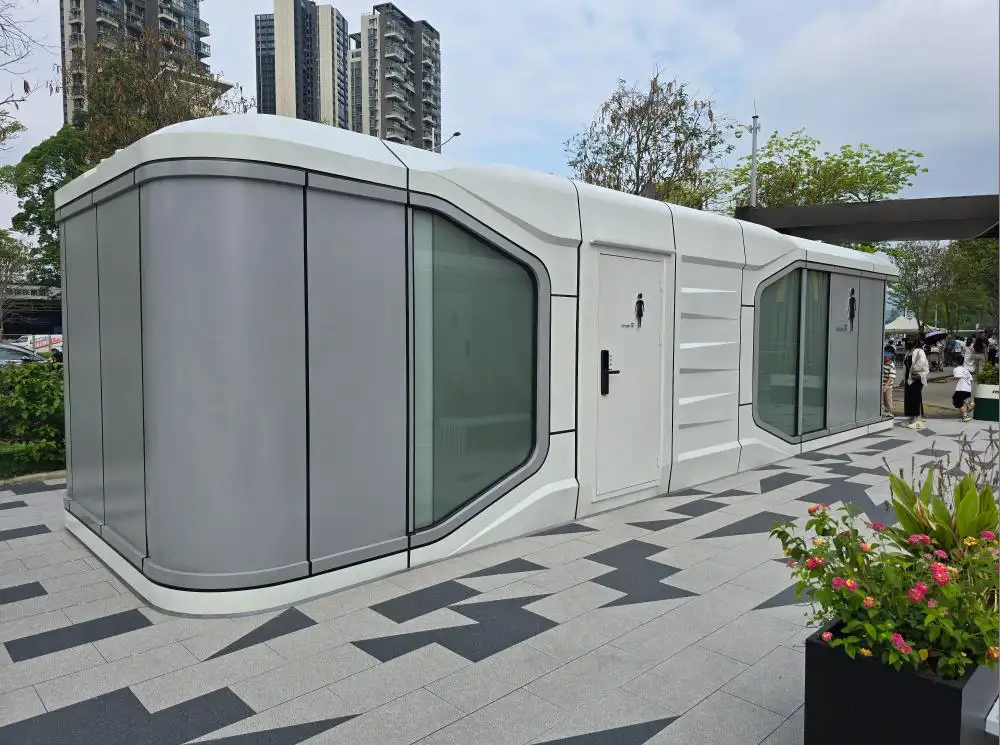
A cabin-type public restroom gives site planners a practical way to add accessible sanitation where a conventional building is difficult to construct or maintain. Its modular layout can incorporate barrier-free features and be placed in parks, temporary venues, transport areas, and other sites with limited construction space
An inclusive design for restrooms intends to construct facilities that the maximum number of individuals can use in the safest, most comfortable, and most independent way.
What is a Cabin-Type Public Restroom?
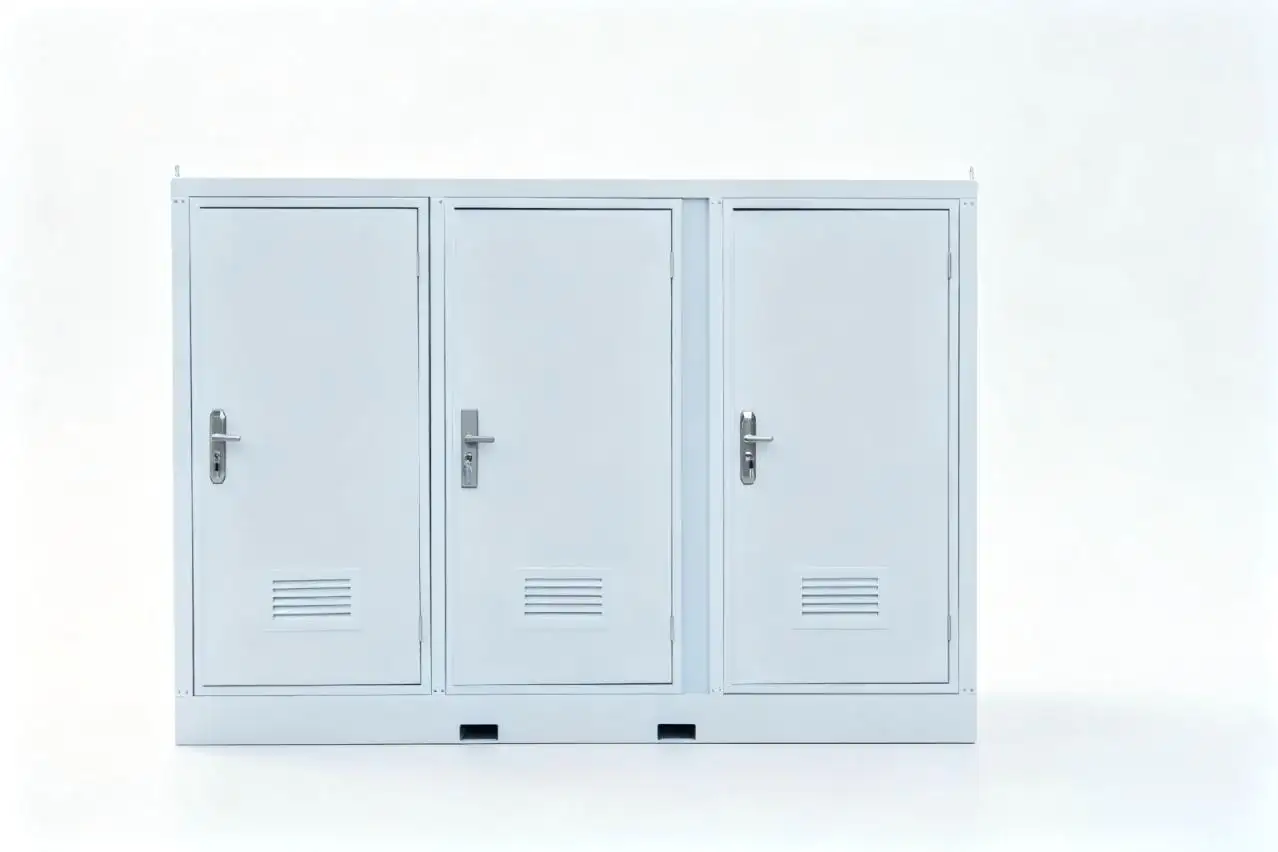
A cabin-type public restroom is a complete or partially prefabricated sanitation unit that is transported to the site and connected for use. Compared with a restroom built entirely on site, this format allows more of the layout, fixtures, and service connections to be planned in advance while adapting the unit to different site conditions
There are a number of features that are common such as:
•Modular design: The components of the restroom are built in pieces and brought to the site to ease both the transport and construction process.
•Integrated systems: The unit can be configured with water supply, ventilation, wastewater, and electrical systems, with the final connections planned around the site’s available utilities.
•Flexible deployment: Suitable for locations such as parks, tourist areas, transit centers, and temporary events.
Due to these characteristics, a Cabin-Type Public Restroom can help broaden the coverage of public restrooms of a desired quality and accessibility standard.
Why Accessibility Matters in Public Restrooms
Accessibility is more than meeting the needs of individuals in wheelchairs. An inclusive restroom design considers a variety of physical abilities, ages, and even the circumstances of restroom use.
The primary user groups consist of:
Individuals With Mobility Impairments
For individuals using wheelchairs and walking aids, the ease of using a restroom primarily hinges on thoughtful design and planning of the available space.
Key design elements include the following:
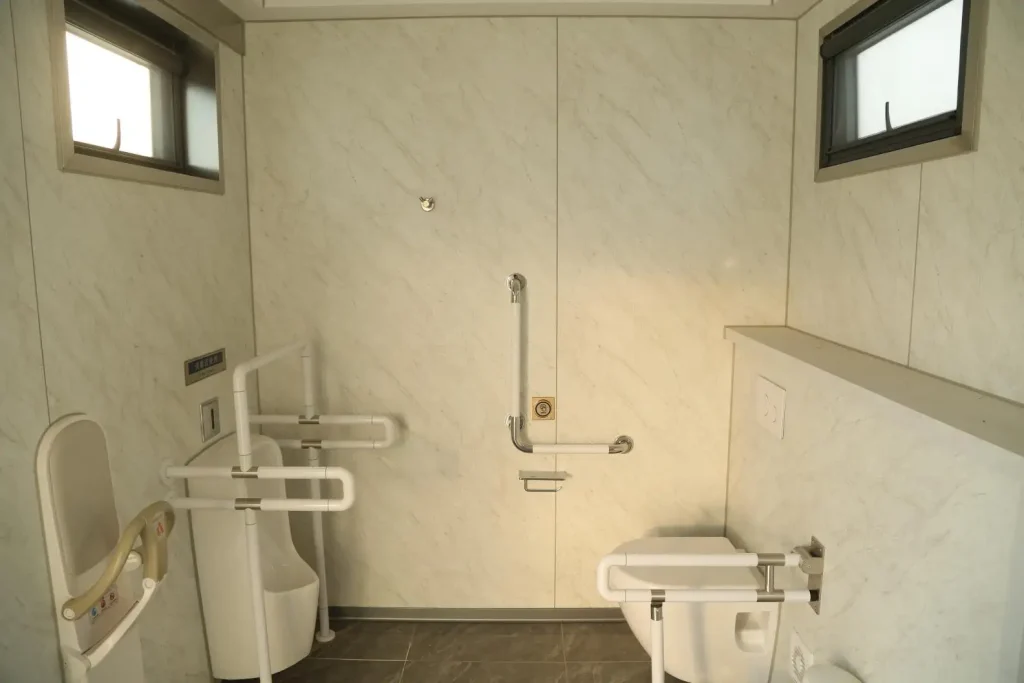
•Sufficient space to enable movement and transfer
•Application of ergonomic principles for ease of operation on doors and fixtures
•Stable flooring with no slip hazards
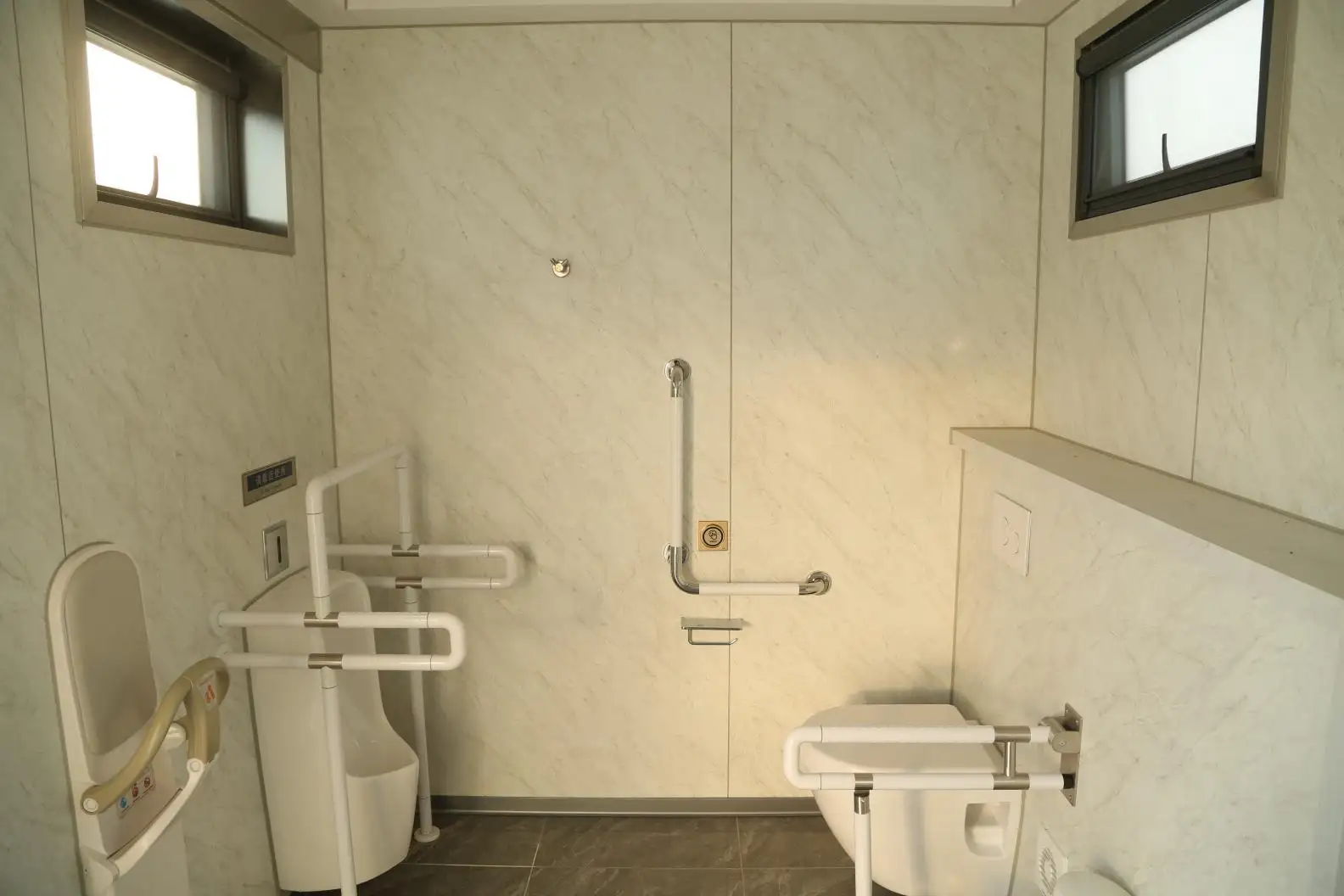
•Support rails positioned for ease of use
The thoughtfully designed Cabin-Type Public Restroom provides users with the ability to carry out activities of daily living (ADLs) with a greater sense of independence and confidence.
Users of Advanced Age and Those with Limited Mobility
With the aging of our population, public facilities must consider users with diminished balance, strength, or ability to move.
Examples of helpful design features are:
•Circulation paths that are clear
•Fixtures that are easy to reach
•Handrails of high contrast
•Hand-support systems
These features reduce common trip, reach, and balance concerns and make the restroom easier to use for people with different levels of mobility
Caregivers
Public restrooms are also used by caregivers that require a safe and private space to care for children.
Restroom design features that foster safety include:
•Changing tables that can be stowed
•Clear floor space around the toilet, wash basin, and changing table so a caregiver can turn and assist a child safely
•Water delivery systems that are child safe
•Layouts that cater to the family
These features provide caregivers convenience and do not reduce the efficiency of the restroom.
Essential Design Attributes of an Accessible Cabin-Type Public Restroom
An accessible cabin-type public restroom brings together the layout, materials, fixtures, and service systems that determine how safely and efficiently the unit works in daily use
| Design Element | User Benefit |
| Barrier-free design | Leaves enough room for wheelchair users and accompanying carers to enter, turn, and transfer |
| Non-slip flooring | Enhances stability when walking, minimizes risks of accidents |
| Accessible fixtures | Eases operation for all users |
| Management of visual clutter/simplified visual cues | Users can easily recognize available washroom features |
| Emergency assistance systems | Provides safety assistance |
| Ventilation | Eases discomfort caused by increases in occupancy |
The Function of Intelligent Systems in Restroom Design
The ease of use of restrooms has benefited from the incorporation of technology.
Intelligent systems in Cabin-Type Public Restrooms may include:
Occupancy Indicators
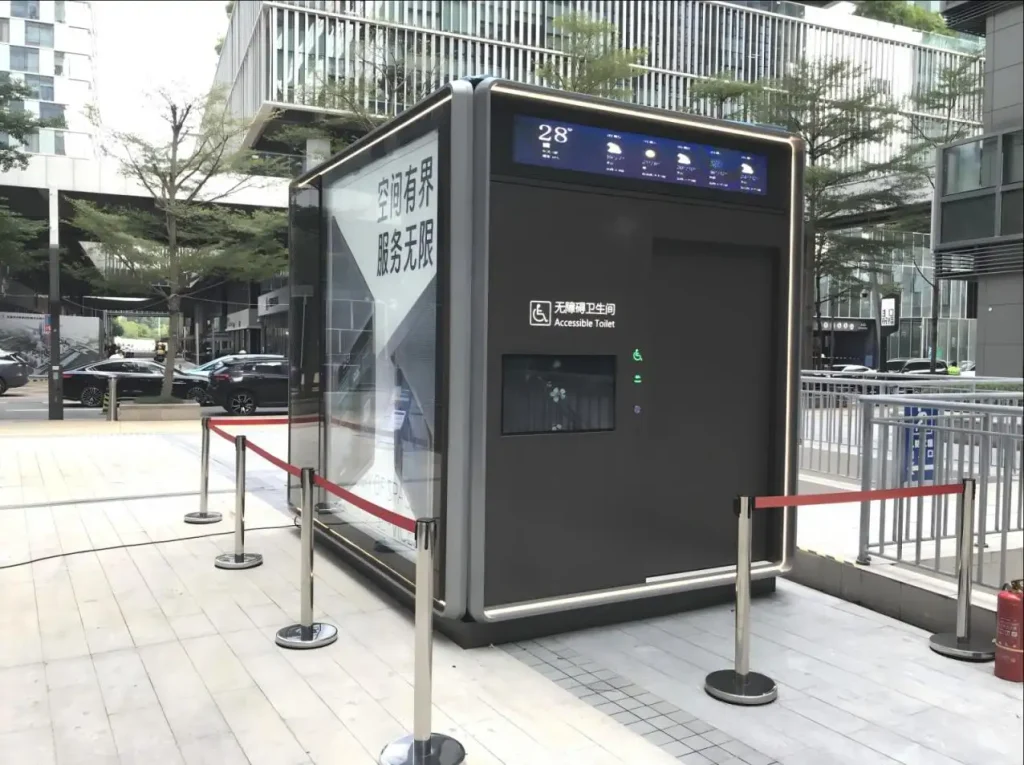
An external occupancy display shows whether the unit is available or in use, helping visitors choose an available facility instead of opening an occupied door or waiting unnecessarily.
Voice Guidance Systems
An audio guidance system can provide clear instructions for visitors with visual impairments and for anyone who benefits from spoken prompts during entry and use.
Emergency Call Services
The use of an emergency button or a communication system aids protection of a user requiring assistance.
Comforting Light and Ventilation Systems
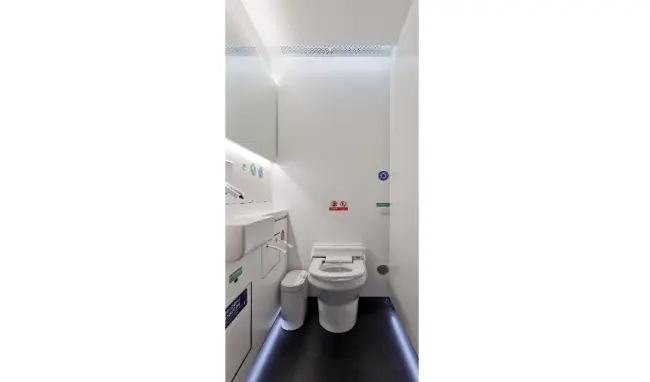
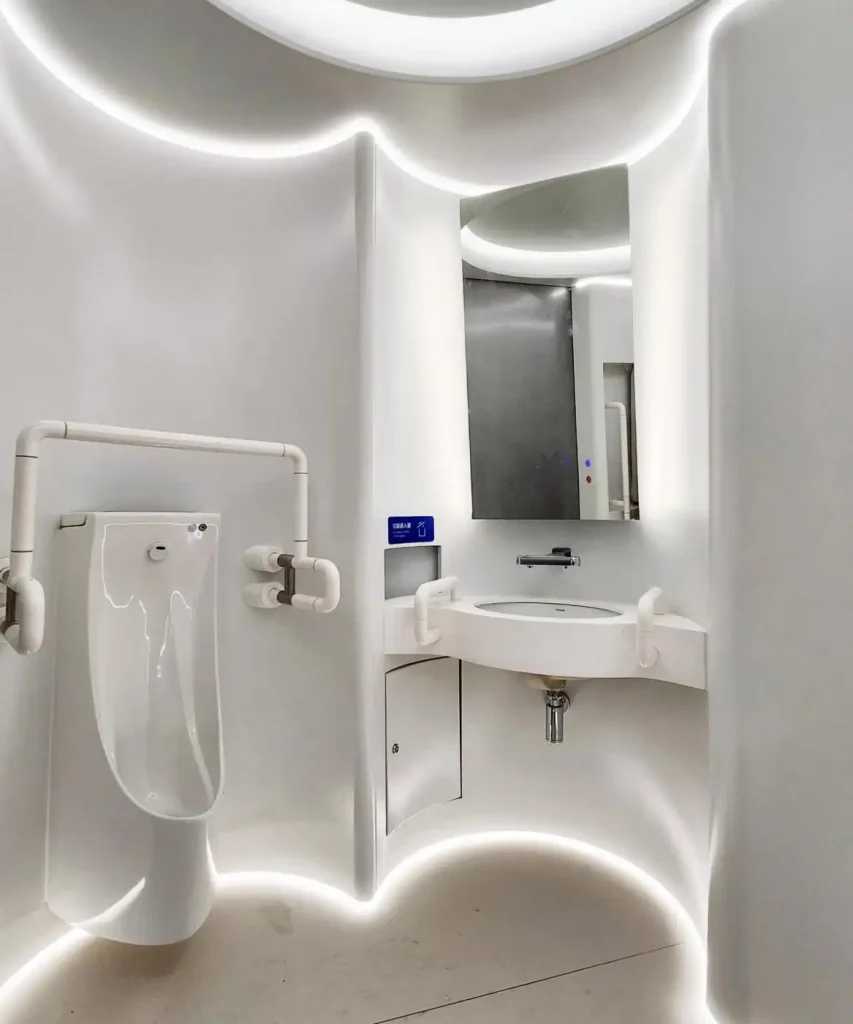
The use of a lighting system that is soft and of good quality coupled with the use of an effective ventilation system creates a comfortable and clean environment.
Materials and Consideration for Durability
Frequent public use, rain, heat, humidity, and cleaning routines all influence material selection for an outdoor restroom. The right finishes affect how easily the unit can be cleaned and how well its surfaces hold up over time.
Some materials aid:
•Outdoor use can be countered by the use of weather-resistant exterior materials
•Hygiene can be easily maintained with the use of clean interior surfaces
•Safety and the needs of users can be balanced with durable and easy to clean flooring materials.
A cabin-type public restroom works well when its layout, surfaces, and service systems are selected together to support accessibility, hygiene, and repeated outdoor use.
Settings Where Cabin-Type Public Restrooms Are Used
Due to their adaptable nature, modular restrooms can fit in many different public applications.
Some of the most common examples include:
•Parks and recreation areas
•Transport hubs
•Tourist sites
•Sports events
•Outdoor markets and fairs
•Areas with a lot of foot traffic
These areas often require restroom facilities that can adapt to the demand of large groups of users and frequent changes in use.
What Will Cabin-Type Public Restrooms Look Like in the Future?
Future cabin-type public restrooms are likely to place more emphasis on inclusive layouts, lower operating demands, and practical monitoring systems.
The next generation of Cabin-Type Public Restrooms will likely have:
•Improved restroom design for a wider variety of users
•Design that lessens impact on our energy systems
•Advanced technology for restroom use monitoring
•Restrooms that use better building technology
•Restrooms built of more eco-friendly building materials
Capitalizing on modular building technology and the values of modern design will transform public restrooms from the basic utility that they have been into an essential aspect of modern urban infrastructure.
Final Words
Inclusive design and accessibility are important considerations of contemporary restroom design and planning. Cabin-Type Public Restrooms are a good example of a flexible design that allows public planners to integrate easily adaptable restrooms in a variety of different settings.
Using thoughtfully designed durable materials in combination with technology of the right scale affords the ability to customize the experiences and needs of the user to a great extent.
SAUDIND Portable Toilets focuses on accessible, adaptable restroom solutions for public spaces.
FAQs
Q1. What is the definition of a Cabin-Type Public Restroom?
A Cabin-Type Public Restroom is a flexible prefabricated sanitation unit that can be adjusted to meet many different public sanitation needs.
Q2. Are Cabin-Type Public Restrooms designed to accommodate wheelchair users?
Some cabin-type public restroom configurations can include barrier-free circulation space and fixtures that support wheelchair users.
Q3. What are the placement options for Cabin-Type Public Restrooms?
Placement options are parks, public transit, tourist attractions, business and event locations.
Q4. In what ways are Cabin-Type Public Restrooms superior to conventional restrooms?
Due to the nature of modular construction, restrooms of this type can be deployed and installed much quicker and in a greater variety of locations than traditional construction methods allow.
Q5. What restroom features assist in making a restroom more accessible?
Barrier free layouts, grab rails, easy to understand signage, and emergency assist systems all create a more accessible restroom.
Written by
admin