



Updated 3 months ago
Prefabricated Kiosk-Style Public Toilet Design for Smart Cities
admin
admin
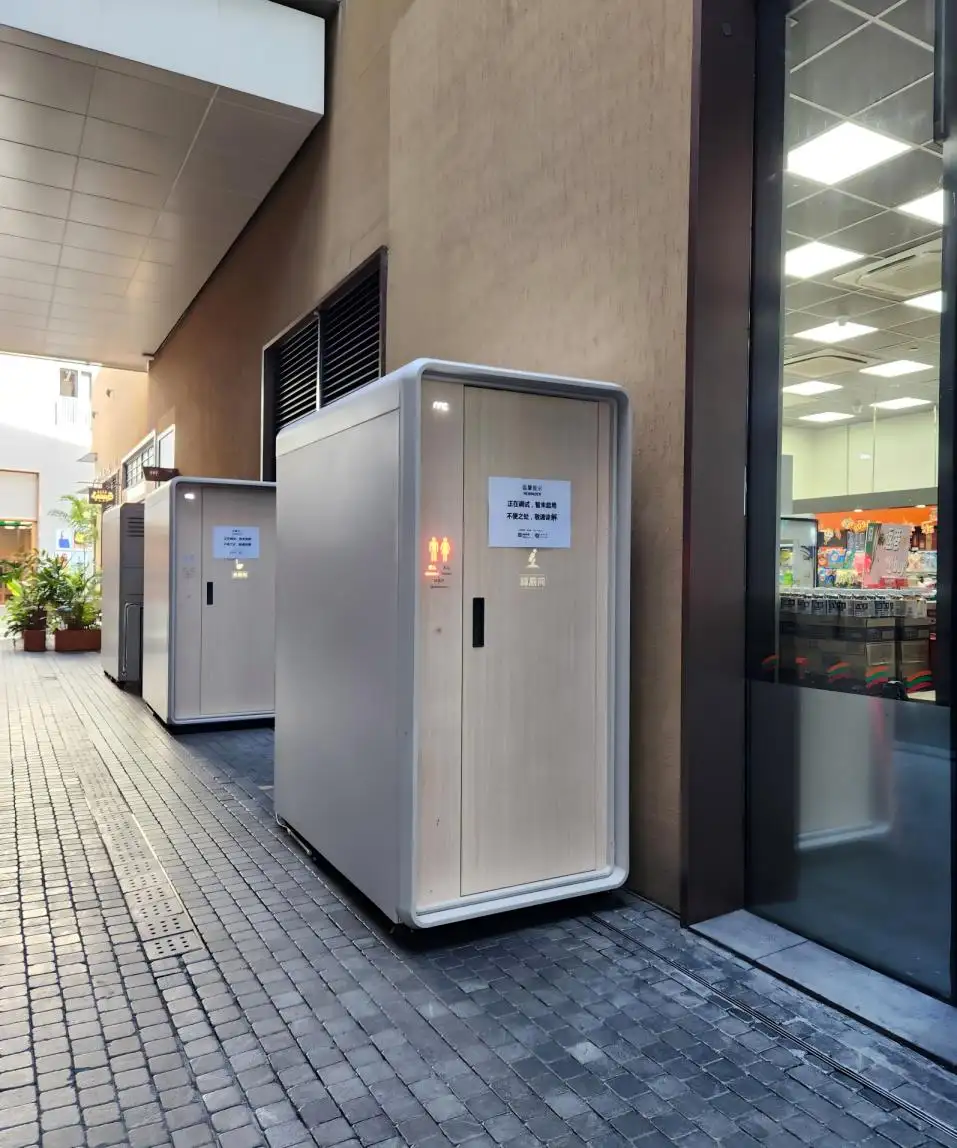
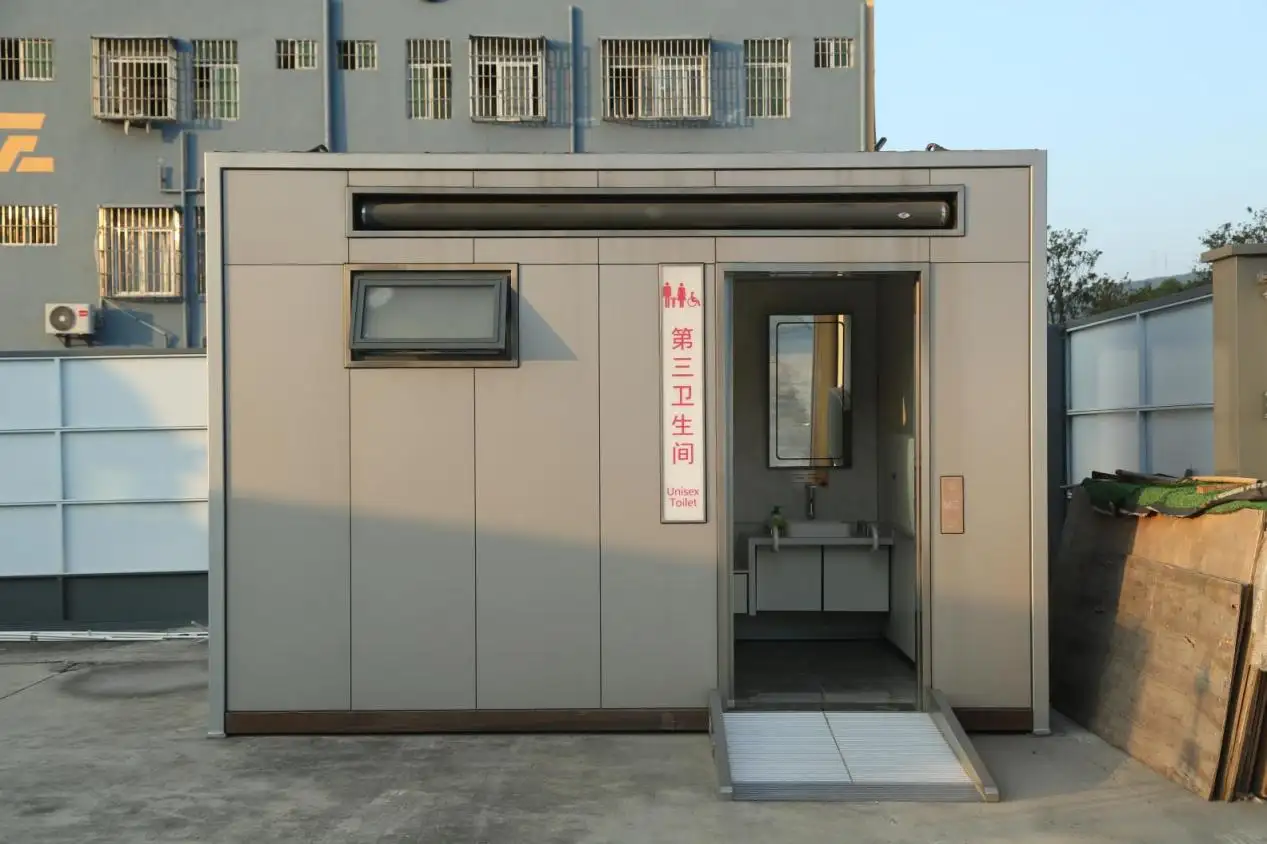
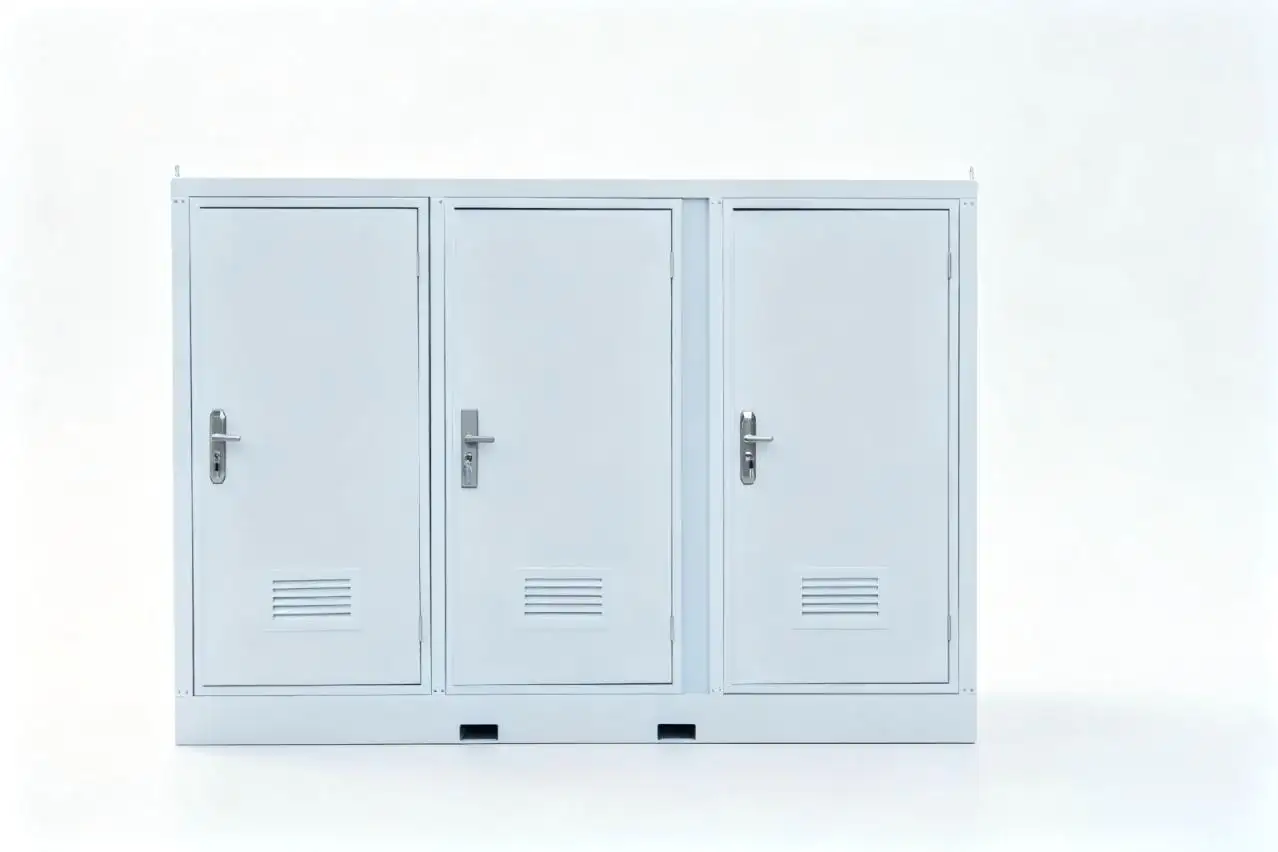
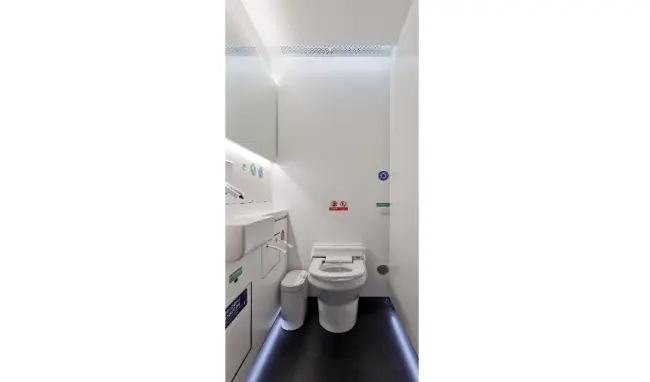
Prefabricated Kiosk-Style Public Toilet
Urbanization increases the need for efficient sanitation systems. Toilets that are hygienic and easy to manage and maintain are in demand. Conventional public toilets constructed from concrete are inflexible and require long lead times with little on-site construction adaptability.
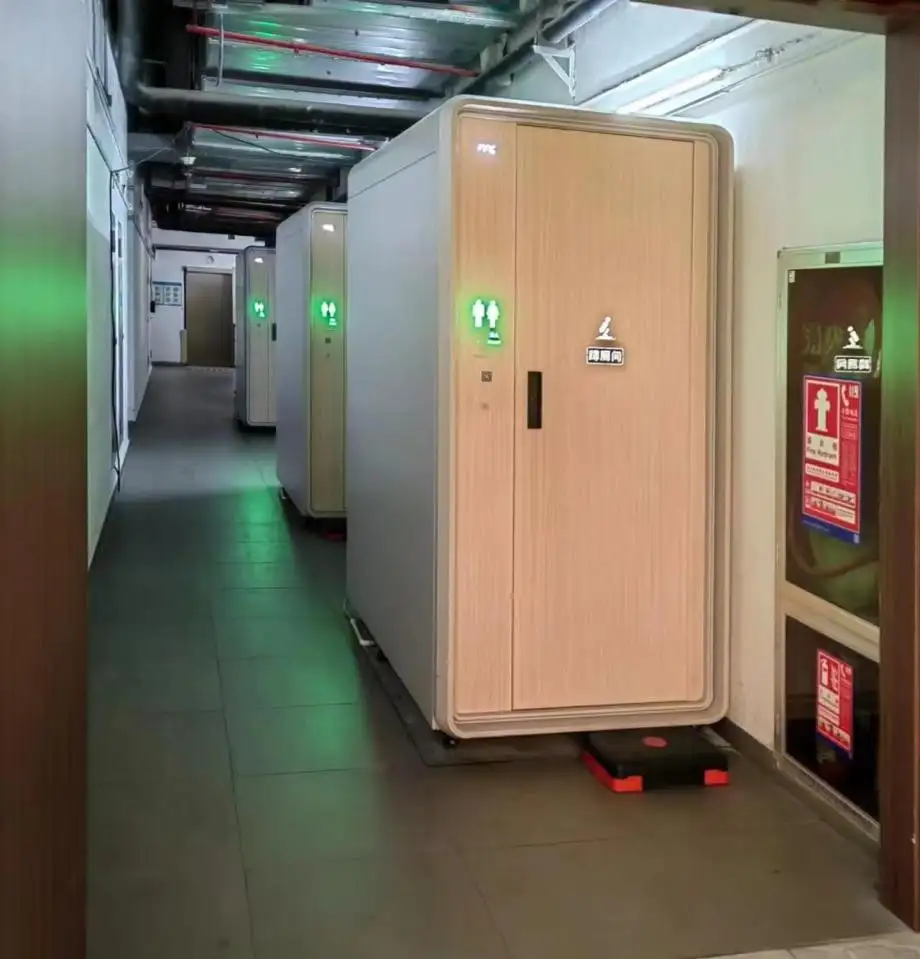
SAUDIND Portable Toilets offers prefabricated kiosk-style public toilet systems that can be configured for factory production, utility connection, and optional smart monitoring. The units are intended for urban sites and temporary public-service locations where planners need a compact, adaptable facility.
This review will outline the structures and benefits of modern prefabricated public toilets and urban planning solutions.
What Is a Prefabricated Kiosk-Style Public Toilet?
A prefabricated kiosk-style public toilet is a factory-built restroom module that is transported to the site and prepared for connection to the required utilities.
This modular design brings together the structural frame, plumbing, electrical services, interior and exterior finishes, and ventilation systems before delivery.
Key characteristics consist of:
• Modular Construction
Manufacturing is uniform, simplifying the process and minimizing difficult and complex assembly at the construction location.
• Integrated Vital Systems/Infrastructure
Systems for smart technology, water, drainage, and ventilation can be integrated prior to shipment.
• Flexible Placement
The compact design allows for easy placement in locations with limited space.
• Relocatable Structure
Certain designs can be easily reconfigured to accommodate the changing needs of the urban environment.
Benefits for Contemporary Urban Design
As municipalities review their sanitation systems, operational effectiveness, flexibility, adaptability, and efficiency of installation and lifecycle management become vital considerations.
The Prefabricated Kiosk-Style Public Toilet design has addressed these challenges and offers the following:
| Consideration | traditional construction | Prefabricated Kiosk-Style Public Toilet |
| Installation | Lengthy construction period | Most construction work is completed in the factory |
| Location flexibility | Rigid construction | Relocatable as needs change |
| Space utilization | Larger footprint | Modular and space-efficient |
| Quality control | Dependent on construction site conditions | Manufactured in a controlled environment |
| Expansion capability | Additional work on site | Modular design offers flexibility for expansion |
Rapid Deployment
Many prefabricated units can be deployed in a short time once the site is prepared, the unit is delivered, and the services are connected, and this minimizes the disruption to the public.
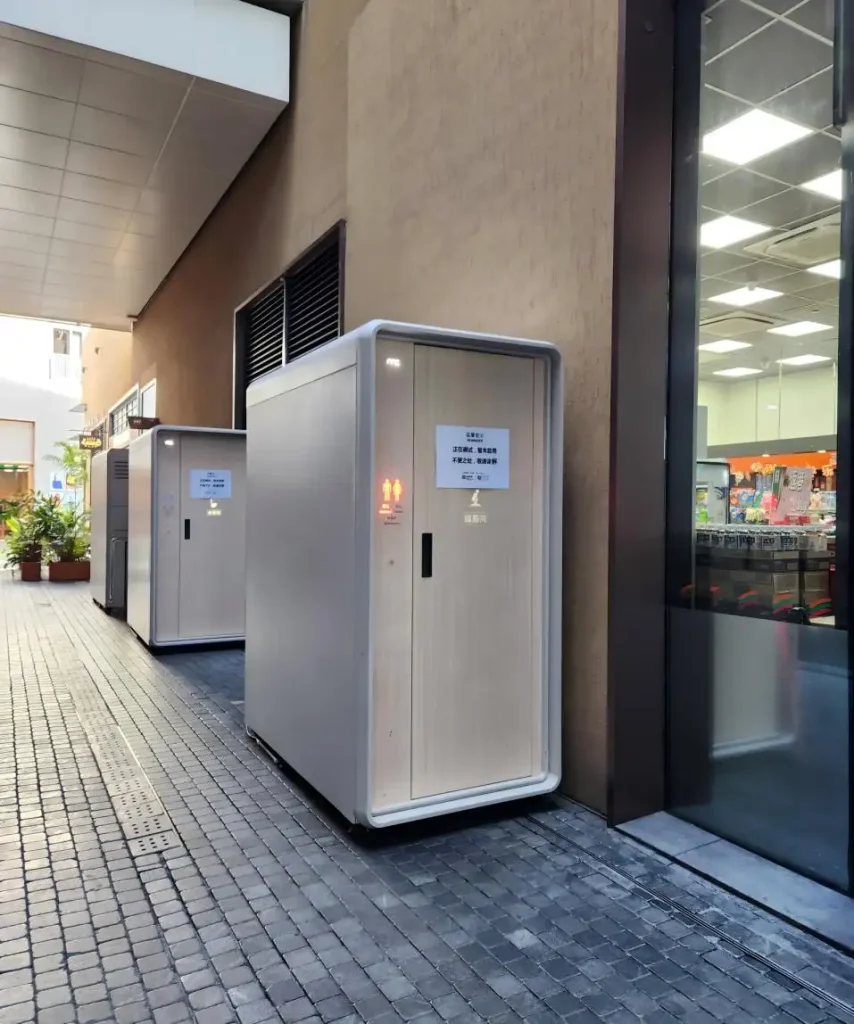
Utilization of Space Designed for Efficiency
The design of our kiosks allows us to place purpose-built public sanitation facilities conveniently and efficiently in:
•Parks & Recreation Areas
•Transit Hubs
•Tourist Areas
•Streets
•Event Locations
without the need for large or costly construction projects.
Easier Management of Maintenance
Current units can use durable, easy-to-clean materials and digital monitoring features to make cleaning and maintenance easier for site operators.
Smart Features and IoT Integration
A key industry development for Kiosk-Style Prefabricated Public Toilets has been the adoption of smart management systems.
SAUDIND Portable Toilets can configure modular restroom systems with monitoring and control features for occupancy, usage, environmental conditions, and maintenance planning.
Typical smart features include:
•Occupancy Sensors
•Usage Sensors
•Remote Monitoring
•Automatic Environmental Control
•Touchless Systems
These features shift maintenance from routine-based scheduling to demand-based servicing of the facility.
Biophilic Design for Future Cities
As our cities of the future grow, so does the need for public infrastructure to support this growth. Sustainable design can help support this need.
We provide Kiosk-Style Public Toilets with the following sustainable design features:
Water Savings
•Low flow fixtures
•Low flow and/or dual flush systems
•Water reuse/recirculation systems
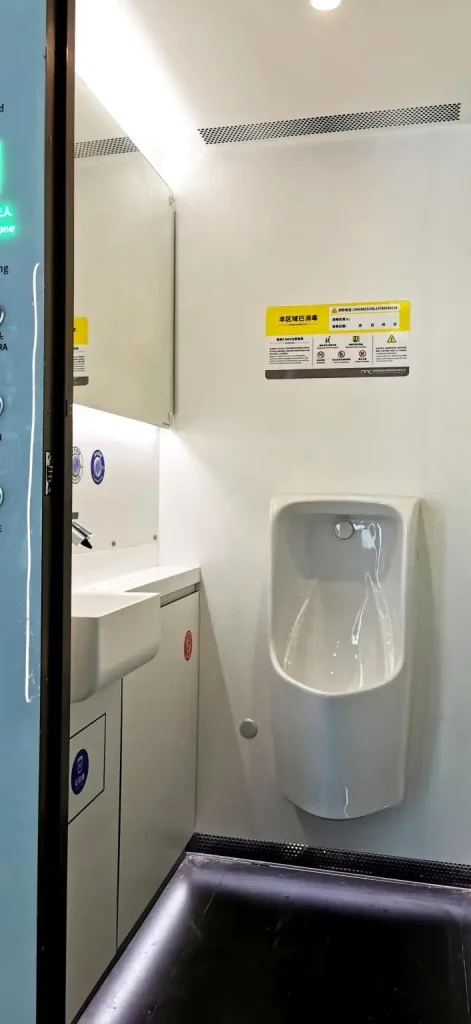
Energy Efficiency Through Building Design
•Solar systems
•LED fixtures
•Energy efficient fans
Durable Design
•Corrosion resistant materials
•Easy clean interiors
•Recyclable construction materials
Energy Savings
•Insulated walls
•Ventilation design
To reduce energy consumption we have implemented design techniques that require less energy to maintain a comfortable indoor environment.
Uses of Prefabricated Kiosk-Style Public Toilet Systems
The use of prefabricated Kiosk-Style Public Toilet Systems allows different designs for different environments.
Examples include:
| Location Type | Key Requirements | Appropriate Features |
| Urban Parks | Comfort and Accessibility | Layouts must carefully utilize space and be convenient and quick to clean |
| Transport Hubs | High Volume of Visitors | Must use durable surfaces and have smart monitoring features |
| Attractions | Developed with Respect for the Surrounding Landscape | Must use designs which can be made to look like other features in the area |
| Remote Areas | Minimal Infrastructure | Must use solar power and have the ability to operate autonomously |
Modular Configurations from SAUDIND Portable Toilets Technology
Based on project requirements, SAUDIND Portable Toilets can supply different site configurations. Examples include:
| Model | Configuration | Typical Application |
| TBOX KS-W2 | Double seat restroom | Good for medium traffic areas |
| TBOX KS-S2 | Double unit mobile restroom | Good for events and transport areas |
| TBOX KS-S1 | Stainless Detachable squat toilet | Good for public areas with easy-clean requirements |
| TBOX KS-S1 | Ceramic Integrated flushing toilet | Good for areas where a familiar toilet is required |
| TBOX KS-S1 | Shower Function Toilet and Shower | Good for Sports and Recreation areas |
| TBOX KS-W1B1 | Toilet with Shower Combination | Good for flexible outdoor applications |
These configurations also allow municipalities and project designers to streamline design while allowing for flexibility in production and maintenance.
Adaptability to Local Requirements and Regulations
Since urban areas have different climate conditions, building regulations, and styles, Prefabricated Kiosk-Style Public Toilet can be adapted to:
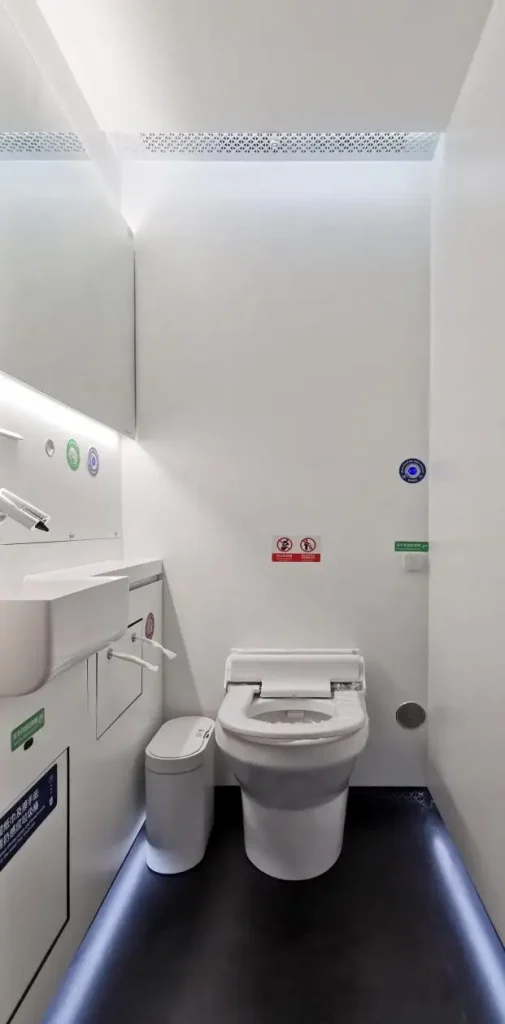
Different Layouts
•Single Units, Multiple Units, Accessible Units, or other functional spaces
Exterior Materials and Finishes
•Different materials and finishes to match different urban areas
Interior Spaces
•Accessible, with smart displays, air purification, and advanced sanitation
Alternate Energy Solutions
•Different power systems can be used such as solar, hybrid, etc.
•Technical documentation to support local approval requirements
•Engineering and product specifications can support the local approval process and building regulations.
Advancing Innovative and Adaptive Urban Planning
A prefabricated kiosk-style public toilet is not a substitute for every permanent sanitation project. It is useful when a project prioritizes controlled production, shorter site work, or the ability to adapt the facility to changing site needs.
SAUDIND Portable Toilets combines factory production, modular planning, and smart systems to support public restroom projects that require adaptable layouts and manageable operations.
FAQs
Q1. What is a Prefabricated Kiosk-Style Public Toilet?
A Prefabricated Kiosk-Style Public Toilet is a fully built restroom module designed to minimize time for installation at its final destination.
Q2. Where are these toilets appropriate?
These toilets are appropriate for placement in parks, streets, transit terminals, tourist locations, and public events.
Q3. What is the expected construction time on site?
Once the site has been prepared, construction time is expected to be significantly less than that of traditional construction.
Q4. Is it possible for the restroom to be moved?
Yes, the majority of modular units can be moved and reinstalled elsewhere.
Q5. Is it possible to add smart monitoring systems?
Remote monitoring can track occupancy, water use, ventilation status, and equipment conditions.
Written by
admin