



Updated 3 months ago
Universal Design in a Station-Style Public Toilet Unit
admin
admin
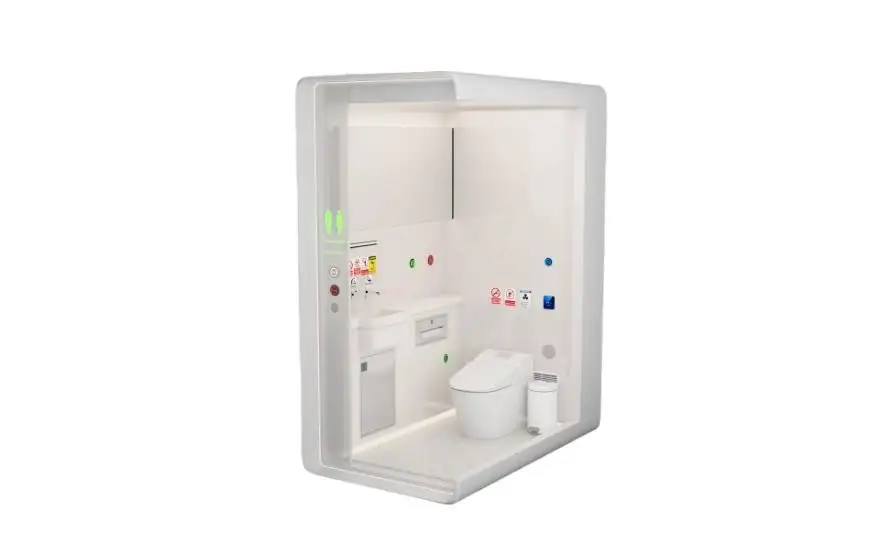
Station-Style Public Toilet Unit
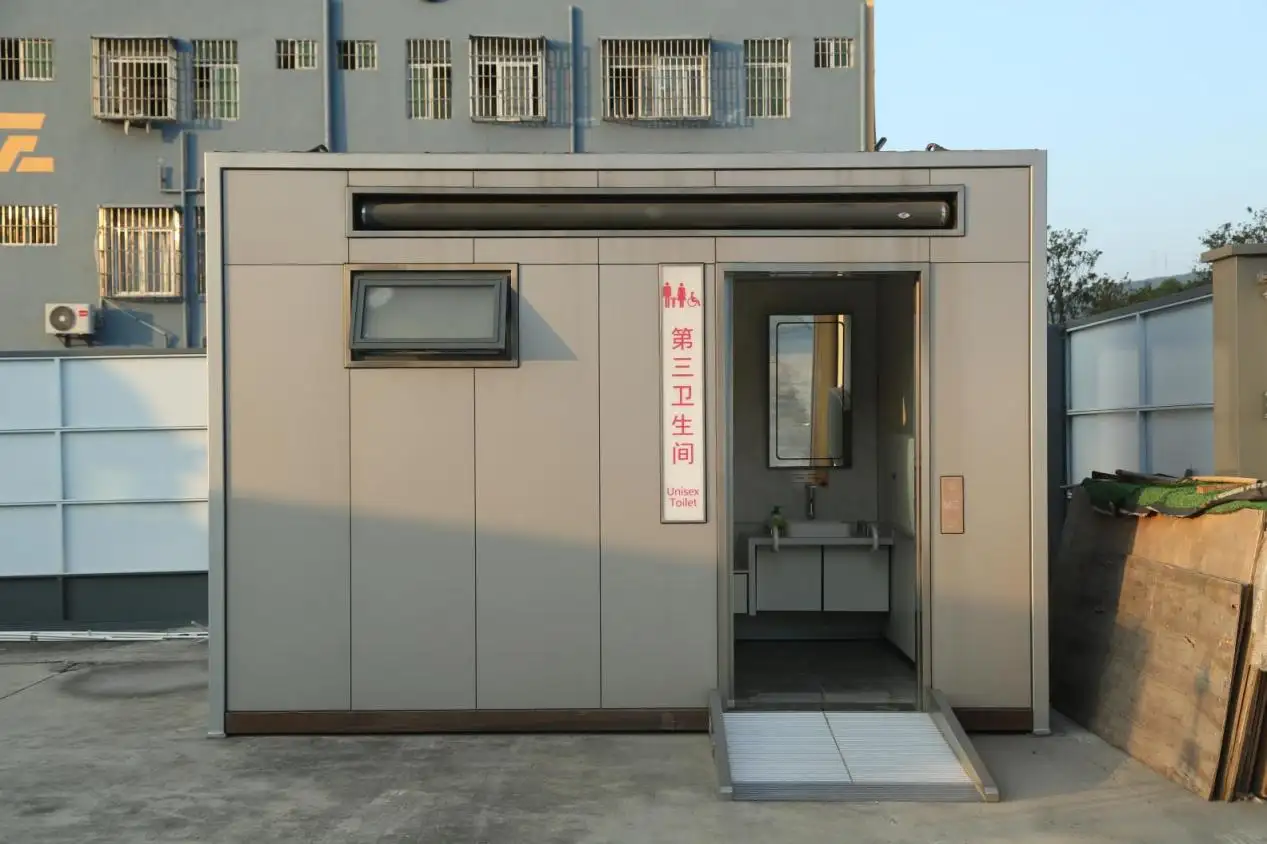
Public toilets influence whether people can use transport hubs, parks, tourist attractions, and other shared spaces with confidence. A Station-Style Public Toilet Unit provides a compact, modular alternative where conventional restroom construction is slow, disruptive, or restricted by limited utility access.
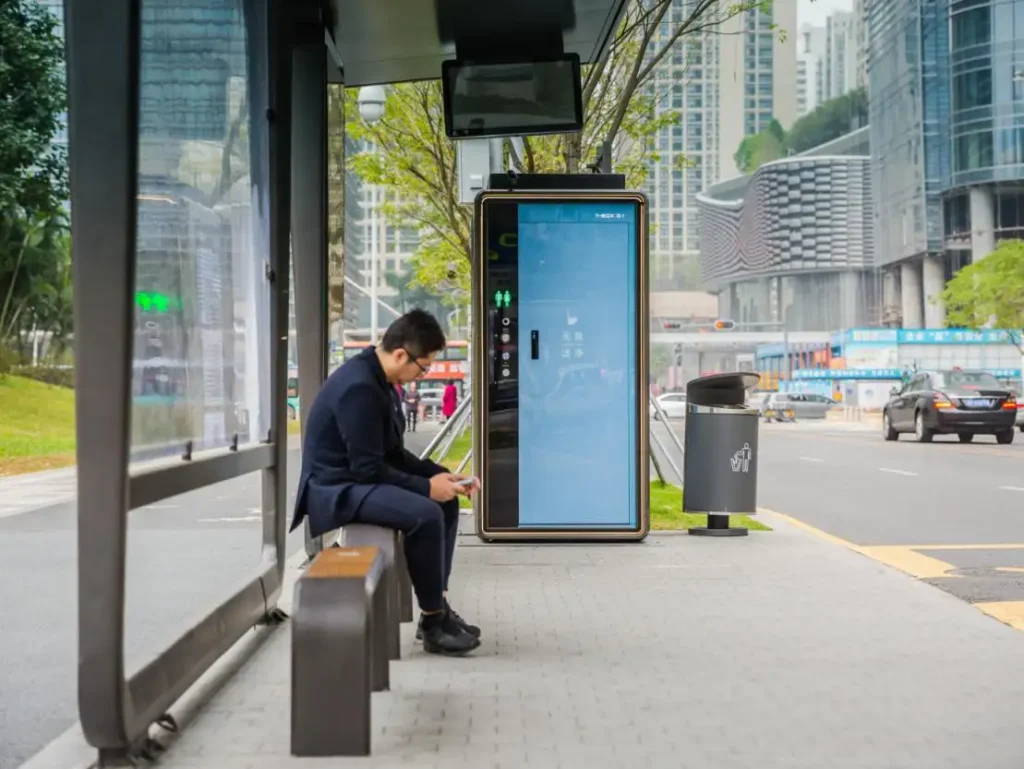
SAUDIND Portable Toilets treats public sanitation design as more than fitting equipment into a small enclosure. The structure, fixtures, controls, ventilation, utility systems, and maintenance access must work together for people with different physical, sensory, and cognitive needs.
What Is a Station-Style Public Toilet Unit?
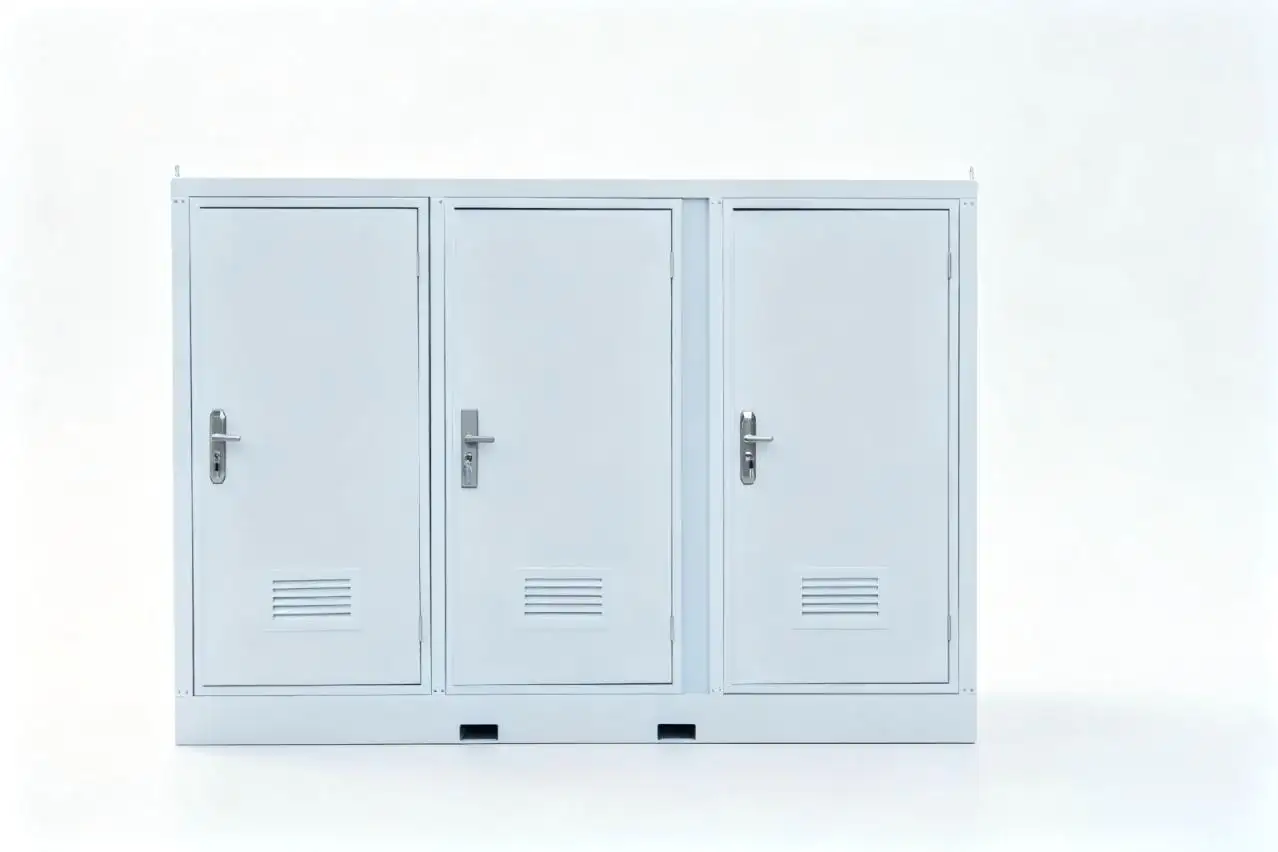
A Station-Style Public Toilet Unit is a prefabricated, enclosed restroom module designed for rapid installation. Depending on the selected model, it may connect to municipal water and sewage networks or use onboard clean-water and waste-storage systems. The available configurations include connected and plug-and-play options; typical installation locations include:
•Railway stations and bus interchanges
•Urban parks and waterfront areas
•Tourist attractions and seasonal destinations
•Event grounds and construction sites
•Compact urban locations with limited building space
The modular structure can reduce on-site work and support future relocation. However, water capacity, waste servicing, electrical supply, climate exposure, maintenance access, and expected daily use must be assessed before deployment.
Universal Design Is More Than Adding a Handrail
Universal design is commonly guided by seven principles: equitable use, flexibility, simple and intuitive operation, perceptible information, tolerance for error, low physical effort, and appropriate size and space. These principles guide the design process, but they do not replace mandatory accessibility regulations. A compact Station-Style Public Toilet Unit should not be described as wheelchair-accessible unless its entrance, internal clearances, turning space, grab bars, sanitaryware positions, controls, and emergency equipment comply with the applicable local standard.
How Universal Design Shapes the Unit
| Design objective | Practical feature | Value for users and operators |
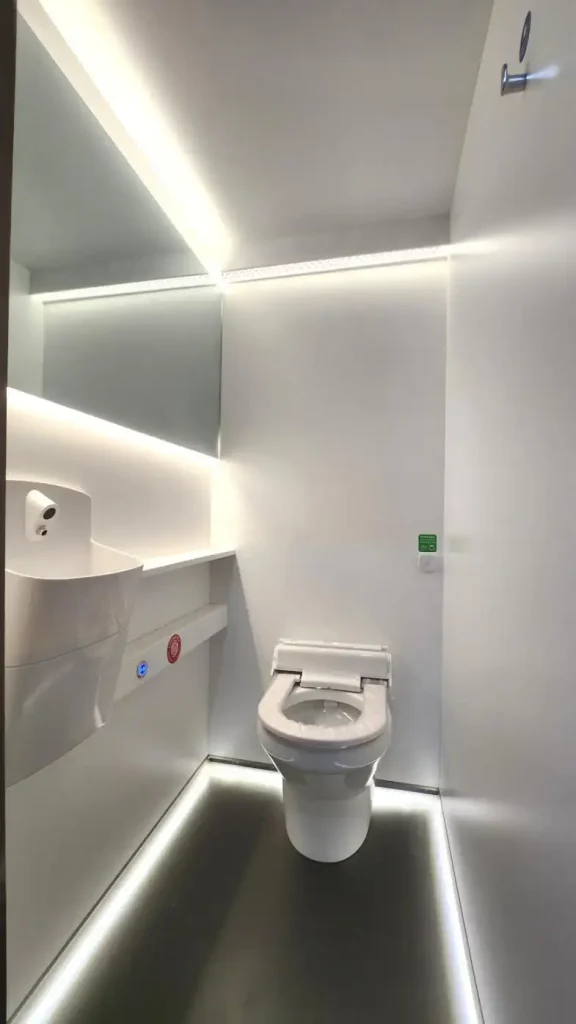
| Clear information | Occupied/vacant indicator using text, symbols, and light | Communicates status without relying on colour alone |
| Low-effort operation | Touchless flushing, sensor taps, and simple controls | Reduces contact and supports users with limited hand strength |
| Safer use | Reachable emergency call button with clear instructions | Makes assistance easier to request |
| Visual comfort | Even, anti-glare lighting | Reduces harsh contrast and improves fixture visibility |
| Sensory support | Visual prompts combined with optional voice guidance | Provides information through more than one channel |
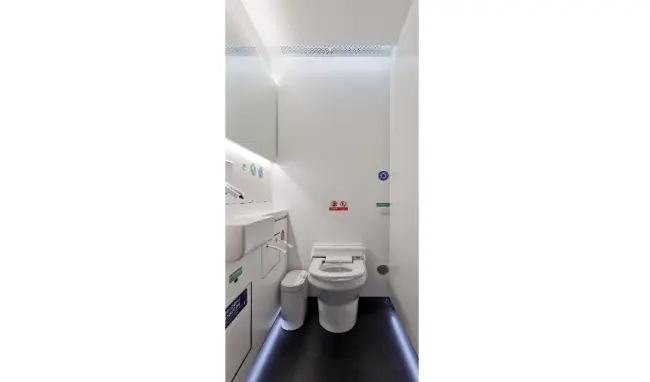
| Interior comfort | Fresh-air supply, extraction, and odour control | Supports a more comfortable environment during frequent use |
| Service continuity | Tank-level, consumable, and fault alerts | Helps maintenance teams respond before the unit becomes unavailable |
Sensor-operated fixtures should also have a practical fallback. A sensor-only control may become difficult to use if it is obstructed, incorrectly calibrated, or affected by a power interruption.
Water and Waste Configurations
SAUDIND Portable Toilets can configure a Station-Style Public Toilet Unit according to the utilities available at the site
Municipal Connection
Where permanent water and sewage networks are available, the unit can use external supply and drainage connections. This arrangement may suit high-frequency locations with reliable existing infrastructure.
Self-Contained Operation
Where permanent utilities are not available, the unit can be designed to store clean water and to have an on-board sealed waste tank. The tank's capacity must be designed based on expected traffic, on-board cleaning requirements, and servicing frequency.
Vacuum Sewage System
A vacuum sewage system utilizes negative pressure to transport waste. This system typically uses less flush water compared to a gravity system. However, actual consumption depends on the sanitaryware, pipe arrangement, operating settings, and maintenance condition. Project-specific performance data should therefore be used instead of applying one universal water-saving percentage.
The following parameters describe a configurable example rather than a fixed specification for every Station-Style Public Toilet Unit.
| Item | Representative configuration |
| External dimensions | 1.72 × 1.11 × 2.33 m |
| Approximate weight | About 1,000 kg, depending on equipment |
| Exterior | Fluorocarbon-coated aluminium panels |
| Interior | Compact laminate wall and ceiling panels |
| Floor | Sintered stone |
| Glazing | Laminated tempered safety glass |
| Fixtures | Smart toilet and ceramic washbasin |
| Waste system | Vacuum suction or direct discharge |
| Environmental systems | Lighting, fresh air, ventilation, and odour control |
| Smart functions | Occupancy display, emergency call, voice prompt, and service alerts |
| Optional equipment | Photovoltaic module and external display |
Final dimensions and materials should be checked against transport limits, foundation conditions, climate exposure, fire requirements, utility capacity, and local accessibility regulations.
Manufacturing Details That Affect Daily Use
At SAUDIND Portable Toilets, user experience is closely connected to manufacturing and maintenance decisions:
•Corrosion-resistant exterior materials support long-term outdoor use.
•Cleanable interior surfaces reduce difficult joints and dirt traps.
•Isolated service areas simplify inspection of tanks, pumps, wires and vents.
•Active systems support scheduled replacement of consumables and servicing of waste systems.
•Using components that are field replaceable minimizes the impact of the repair of a single unit.
•Modular design allows for change of layout and equipment package.
These features do not eliminate maintenance. Their value lies in making servicing more predictable and helping the Station-Style Public Toilet Unit remain operational during busy periods.
A Practical Approach to Inclusive Public Sanitation
A well-planned Station-Style Public Toilet Unit can extend sanitation services to locations where conventional construction is difficult. Universal design improves the result by encouraging clear information, low-effort controls, safer interaction, comfortable lighting, and reliable service management.
SAUDIND Portable Toilets treats these principles as part of the engineering process rather than as a collection of optional labels. Final usability still depends on site assessment, code compliance, correct capacity planning, and routine maintenance. When these elements are coordinated, the unit can provide a more reliable public restroom service.
FAQs
Q1. Where can these toilet units be placed?
These toilet units can be placed in railway stations, parks, tourist locations, event venues, and other developed locations in urban public spaces.
Q2. Can the unit function in the absence of municipal sewage?
Yes. Certain configurations can function with the use of onboard water and storage tanks for sealed waste.
Q3. Are all units wheelchair accessible?
No. Accessibility is determined by the internal layout and dimensions, the type of fixtures used, and relevant local regulations.
Q4. What does "universal design" in a public toilet mean?
This refers to the public toilet design to accommodate people of varying ages and with different needs and abilities.
Q5. Can the unit be connected to a vacuum sewage system?
Yes. The unit can be configured for vacuum flushing when the selected sanitaryware and system design support reduced-water operation.
Written by
admin