


Updated 1 month ago
Single-Stall Portable Toilet Buying Guide 2026: Key Features, Materials and Costs
admin
admin

Single-Stall Portable Toilet
A Single-Stall Portable Toilet can meet the footprint on a site drawing and still be the wrong purchase. Common specification gaps include missing peak-user estimates, confusion between "portable" and "self-contained," or a waste tank with no practical emptying route.
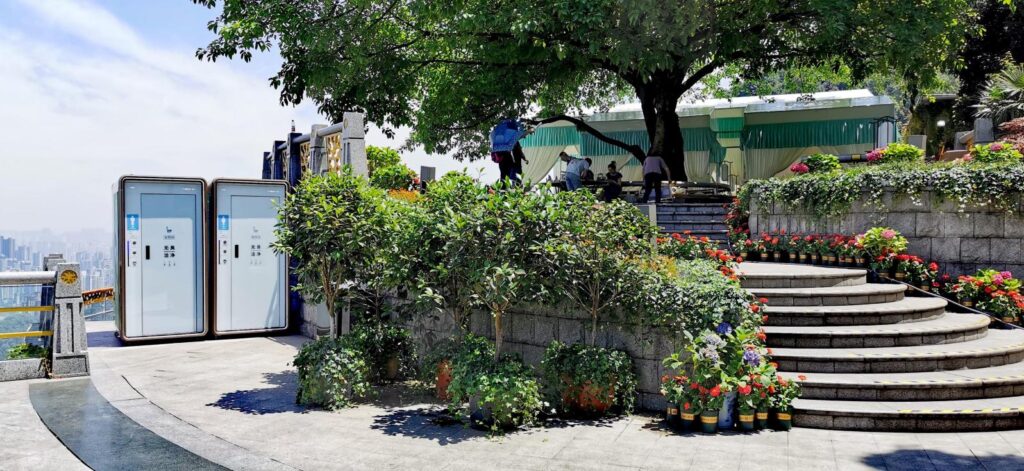
At SAUDIND, we suggest beginning with operating conditions rather than the catalog photo. If you are in the bid stage, finalizing the design to meet the demands of the project, and determining the cost of installation and service will impact your decision.
What is the Actual Demand for Single Stall Portable Toilets on Your Site?
Peak Usage Is More Relevant than Daily Headcount
A construction site with a normal 8 hour shift works differently than an outdoor event where a large number of guests arrive within a short time frame.
When selecting a Single-Stall Portable Toilet, consider:
•User Demand: Maximum usage, peak arrival times, daily visits.
•Sanitation Demand: Male/Female configuration, hand washing, ADA compliant facilities.
•Operating Conditions: How long will the project last? How often will the facilities be cleaned? How far will the users have to walk to access the facilities?
When determining the number of Single Stall Portable Toilets to meet demand, you need to take into account service times and the number of users at a time, and how long users have to wait.
Which Single-Stall Portable Toilet Materials Will be Affected by Weather?
Structural failures usually originate in stressed areas such as door hinges, plumbing penetrations, joints, and panel edges.
| Cabin Material | Technical Advantage | Critical Inspection Point |
| HDPE Molded Shell | Lightweight, corrosion-resistant construction | UV aging, deformation, fitting replacement |
| FRP Composite | Corrosion resistance and flexible shaping | Impact damage, laminate defects |
| Coated Steel + Sandwich Panels | Modular construction with insulation options | Coating damage, thermal bridges, joint sealing |
How SAUDIND Approaches Cabin Construction
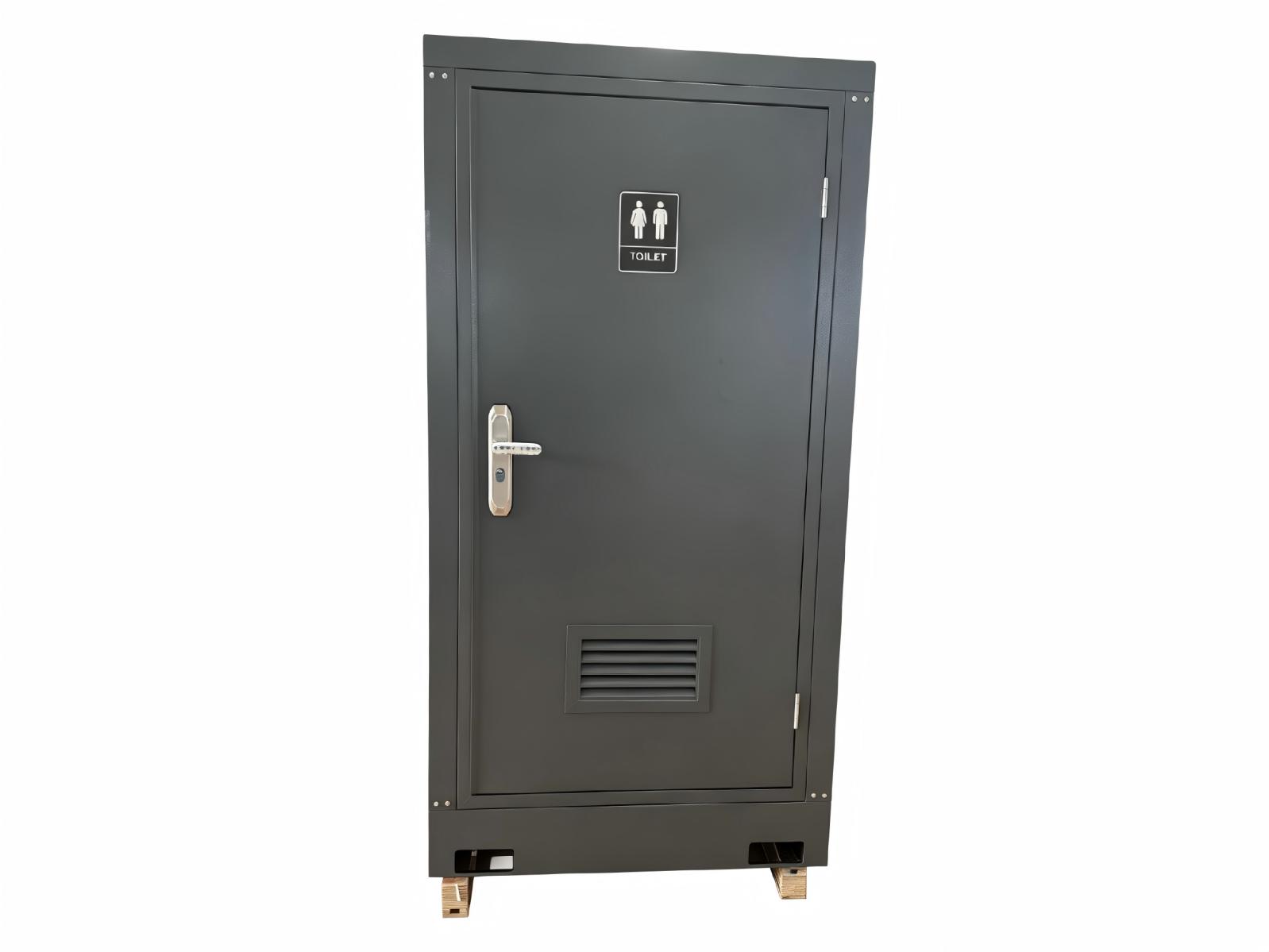
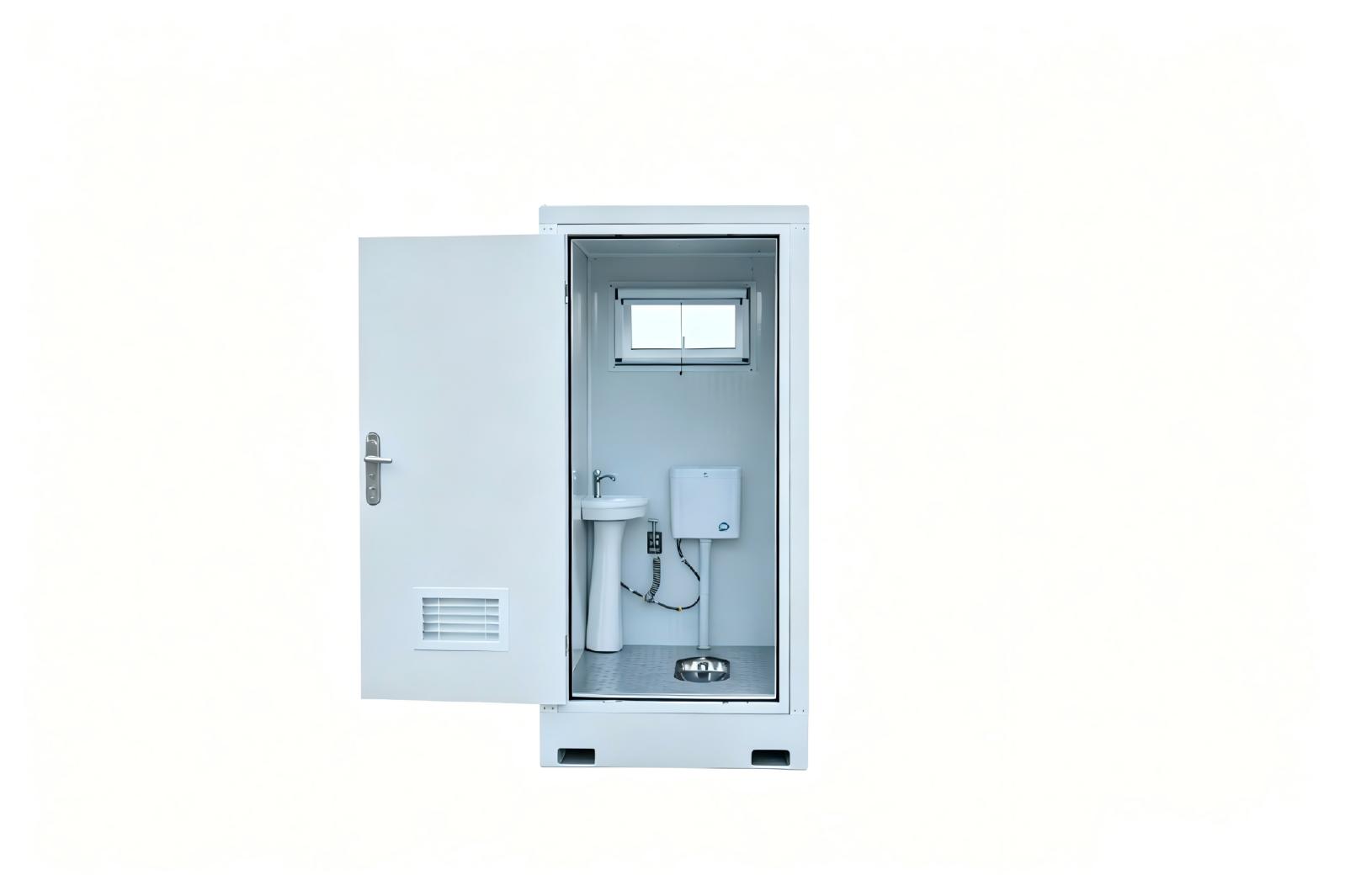
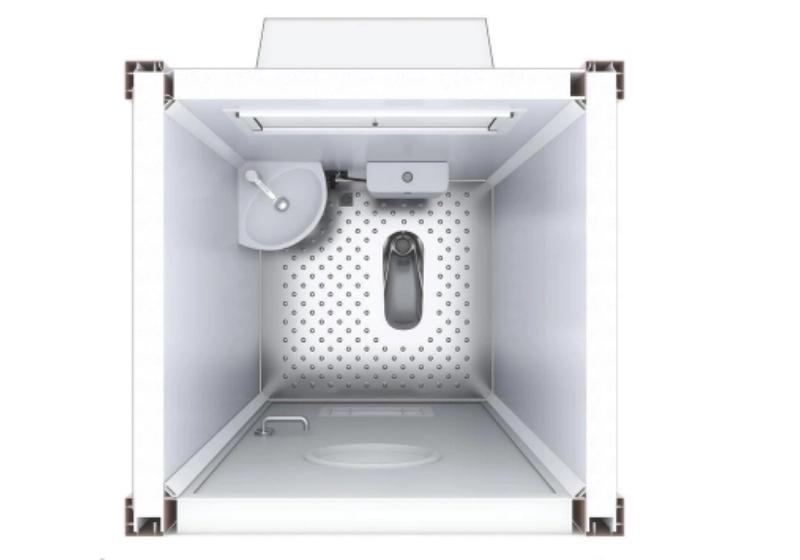
Our TBOX KS-S1 (Stainless) demonstrates steel-frame modular construction with:
•Electrostatic-painted steel frame and color-steel foam-board walls.
•304 stainless-steel floor with integrated squat pan.
•Ceramic wash basin, louvered door and top-hung window.
This configuration addresses structural assembly, cleaning and ventilation. Stainless steel does not guarantee floor slip resistance or corrosion immunity.
Heat Resistance for Saudi Arabian Projects
In hot climates, the first place to look is the roof. Solar gain and air exchange in combination with shading and panel thermal transmittance (U-value) determine heat buildup.
Thicker walls cannot compensate for an unshaded roof or blocked ventilation. Coastal installations also require attention to chloride exposure, fasteners, and protective coatings.
Configuration: Squat vs. Seated? Tank vs. Sewer?
You need to consider the mobility of your users and your maintenance capabilities to select the right configuration for your Single-Stall Portable Toilet.
| Configuration | Operation | Limitations |
| Squat Toilet | Squatting is preferred by some | Users need to have adequate lower-limb mobility to use the fixture |
| Seated Toilet | Provides users with fixture options | Seats require clearance and hygiene considerations |
| Flush Toilets | Conventional, straightforward design | Requires adequate water and drainage |
| Vacuum Toilets | Potentially lower water consumption | Controls, pumps, seals, and power |
| Direct Sewer Connection | Eliminates tank emptying | Appropriate drainage and proper sewer connections |
| Waste Holding Tank | For sites lacking sewer connections | Tank capacity and scheduled emptying |
SAUDIND also offers a TBOX KS-S1 (Ceramics) option which provides a squatting pan and flush tank.
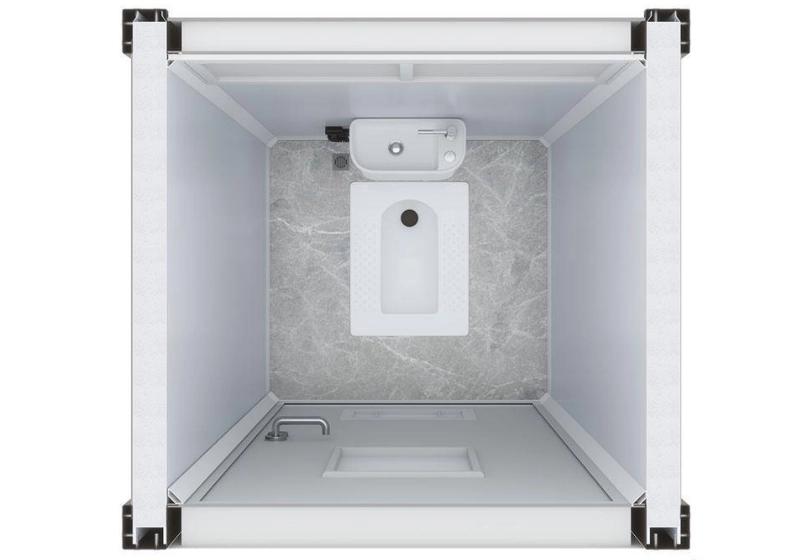
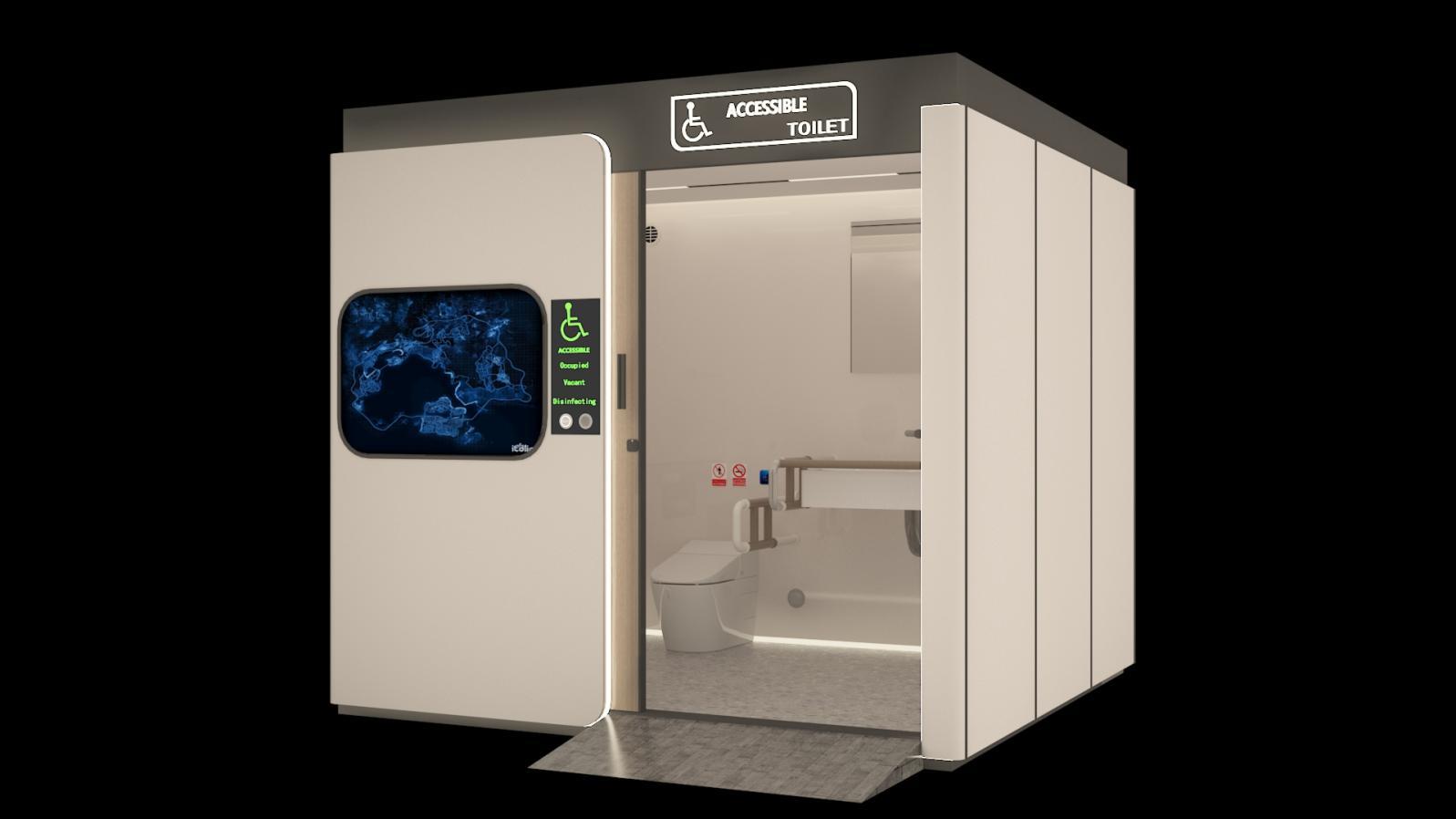
Buyers should confirm fixture schedules for each model, as a portable single-stall toilet cabinet does not guarantee independent waste storage, and a single-stall portable cabin does not necessarily mean it is wheelchair-accessible.
How is Capacity Calculated for Water and Waste?
Holding capacity for a single stall portable toilet with a waste water tank is determined with the following calculation:
Required Volume = Daily Users × Visits per User × Waste Volume per Visit × Days Between Emptying
Flush water and hand wash basin discharge, if applicable, as well as an operational allowance should be included in the calculation.
Compare the calculated required volume with the tank's usable capacity rather than its nominal capacity.
Residual liquids, service restrictions and other factors can reduce the effective tank capacity.
Adding a larger capacity tank will increase operational weight, and can impact support and transport requirements.
Check Utility Compatibility Before Ordering
There are four interfaces to consider:
•Water: Supply pressure, connection, tank capacity, and refill method.
•Waste: Outlet diameter, pipe routing, access to the tank and an authorized disposal location.
•Electrical: Voltage and frequency, lighting and ventilation, and motor loads.
•Ventilation: Moisture and odor removal.
Odor is managed with functioning traps, and waste containment and cleaning, and not with airflow alone.
What Should Be Inspected During Installation and Maintenance?
A single-stall portable toilet needs a level surface for setup. Check handling conditions separately before moving the unit.
Before delivery, make sure to check the external dimensions and internal clearances. Also check the door swing, empty/full weights, lift points and site access.
Checklist for Installation and Handover
•Check the site sub-soil condition and levelness. Also confirm the required anchoring.
•Test flushing and drainage, and check the water and drain connections for leaks.
•Check the door hardware, lighting and electrical protection.
•Inspect the floor and panel joints, and check that waste is properly contained.
•After relocating, check the fasteners, and watertight seals.
Cleaning schedules should be segregated from tank evacuation schedules. Daily surface disinfection and replacement of consumables might be necessary and pump-out intervals would depend upon the build-up of waste.
Request information on repair parts for fittings, lights and sanitary equipment.
What Standards Should Be Verified Prior to Procurement?
EN 16194:2023 covers mobile non-sewer-connected toilet cabins and their associated servicing. Other sanitation technologies, including vacuum toilets, fall outside its scope.
Consult the Saudi building code, including SBC 701 (plumbing) and SBC 401 (electrical) and other accessibility and project specific provisions for Saudi Arabian projects.
Prior to acceptance, request:
•Dimensioned drawings and material specifications.
•Plumbing and electrical connection diagrams.
•A record of factory inspection and functional test.
•Installation and maintenance manuals.
An ISO 9001 certificate for the quality management system of the manufacturer, if available. It does not guarantee compliance of a specific toilet model.

What Determines Single-Stall Portable Toilet Costs in 2026?
The purchase price represents only part of the project's expenditure.
| Cost Component | Main Cost Drivers |
| Cabin Construction | Frame material, panel construction, insulation, flooring |
| Sanitary Equipment | Fixture material, flushing mechanism, basin |
| Utility Systems | Water/waste tanks, pumps, electrical options |
| Logistics & Installation | Delivery distance, lifting, foundations, connections |
| Operating Costs | Cleaning, waste removal, repairs, spare parts |
A lower-cost cabin could end up being more expensive if it requires frequent service and/or difficult waste collection.
For short term deployments, it may be cheaper to rent than to buy. For repeated long-distance moves, consider how easy it is to detach the structure and/or obtain replacement parts and/or assembly labor.
Request a Project-Specific Quotation from SAUDIND
In Riyadh, SAUDIND manufactures portable toilet cabins in standard and project-specific configurations.
For a precise quotation for a Single-Stall Portable Toilet, please indicate your site location, approximate user number, the sanitary fixtures you prefer, and whether water and/or drain connections are available. Also include your operating period and expected deliverables.
Prior to the production of the cabin, our staff will evaluate the site conditions to verify the cabin configuration.
FAQs
Q1. What Is a Single-Stall Portable Toilet?
A Single-Stall Portable Toilet is an individual restroom cabin designed for temporary or relocatable use. SAUDIND offers modular single-unit toilet configurations for construction sites, project camps, and outdoor facilities.
Q2. What Materials Does SAUDIND Use for Its Portable Toilet Cabins?
SAUDIND's TBOX KS-S1 (Stainless) features an electrostatic-painted steel frame, foam-insulated color-steel wall panels, a 304 stainless-steel floor, and a stainless-steel squat pan.
Q3. Does SAUDIND Offer Both Stainless Steel and Ceramic Toilet Fixtures?
Yes. SAUDIND offers the TBOX KS-S1 (Stainless) and TBOX KS-S1 (Ceramics) configurations. Buyers can compare fixture materials, flushing arrangements, and maintenance requirements before ordering.
Q4. Does a SAUDIND Single-Stall Portable Toilet Require Plumbing?
Requirements depend on the configuration. SAUDIND reviews water supply, drainage connections, and site utilities before production. Buyers should confirm any independent water or waste storage requirements.
Q5. How Many Users Can One Single-Stall Portable Toilet Serve?
There is no universal capacity. SAUDIND recommends evaluating peak occupancy, daily usage, cleaning schedules, and applicable sanitation requirements to determine the number of units needed.
Written by
admin