



Updated 3 months ago
Effective Restroom Odor Removal Solutions for Public Toilets
admin
admin

Restroom Odor Removal Solutions for Public Toilets
Odor control in a public restroom does not come from adding fragrance after smells appear. It requires coordinated control of waste, drainage, moisture, airflow, and cleaning at the source. At SAUDIND Portable Toilets, Restroom Odor Removal Solutions for Public Toilets are integrated into the utility and maintenance plan of modular sanitation units rather than treated as add-on options.
Causes of Odor in Public Restrooms
Odor in public restrooms is typically the outcome of multiple causes:
• Organic waste: Excreta, soiled paper, and contaminated wash water can release ammonia and other volatile compounds that contribute to odor.
• Drainage issues: Floor drains with dry traps, damaged seals, blocked vents, or leaking drain connections can allow foul air to enter the room.
• Microbial activity: Damp surfaces can support the growth of biofilms and decomposition.
• Inadequate ventilation: Insufficient or poorly distributed airflow causes an accumulation of pollutants and elevated levels of moisture.
• Lack of service: Full waste bins, impaired drainage, dirty tanks, and exhausted odor-control media can overwhelm the intended odor-control design
The U.S. EPA describes source control, ventilation, and air cleaning as complementary indoor-air-quality strategies. In restrooms, source control should come first because ventilation cannot compensate for accumulated residue or a failed drain seal.
A Layered Odor-Control Strategy
Effective Restroom Odor Removal Solutions for Public Toilets use four connected layers.
1. Control the Odor Source
Reliable flushing, sealed pipework, maintained water traps, covered bins, and scheduled tank servicing help prevent odor from entering the occupied space.
Floor drains should have water-sealed traps to separate the occupied restroom from the drainage system. NIOSH studies associated missing water seals with sewer-gas odors in restrooms.
2. Collect and Remove Contaminated Air
Exhaust openings should be installed as close to the source as possible. Air should be supplied or moved in the direction of the exhaust openings to avoid stagnant air pockets.
The required airflow rate and operating schedule should be based on:
• Volume of the restroom
• Number of fixtures
• Estimated occupancy
• Climate conditions
• Applicable building codes and standards
Ventilation removes airborne contaminants, but it does not replace cleaning or drain maintenance. ASHRAE standards set minimum ventilation requirements for different occupancy categories.
3. Maintain Surfaces That Are Dry and Easy to Clean
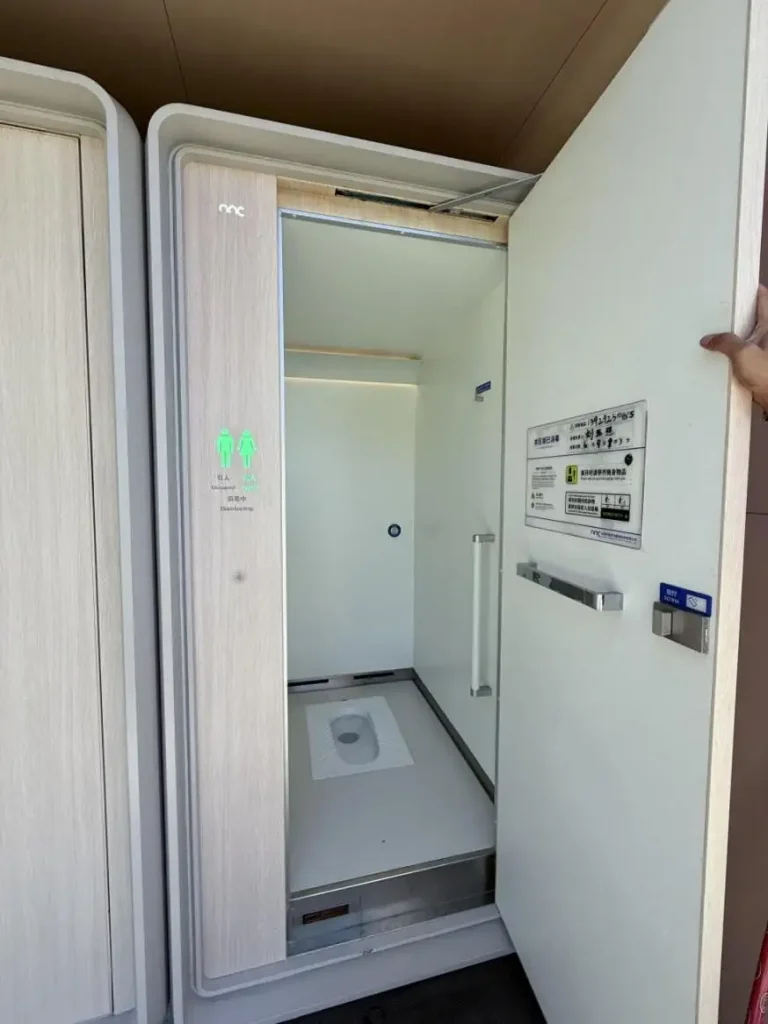
Restroom surfaces should have smooth, sealed joints, be easy to clean, and slope toward the drains.
Some examples of design features are:
• Moisture resistant wall panels
• Floor panels with a seamless or low-joint design
• Drains installed in the floor
• Service panels that are easy to remove
Antimicrobial surface finishes may be appropriate for certain projects, but they are intended to be a supplement to cleaning. The CDC indicates the regular maintenance and cleaning of surfaces is a primary focus of maintaining a healthy building.
4. Treat Residual Airborne Odor
Activated-carbon or other odor-control media may be fitted in selected exhaust or recirculation paths. Their effectiveness depends on media type, airflow, humidity, contaminant loading, and replacement frequency.
Fragrance dispensers may change how an odor is perceived, but they do not remove waste residue, sewer gas, or contaminated moisture.
Key System Elements
| System Element | Role in Odor Control | Important Consideration |
| Mechanical exhaust | Removes humid and contaminated air | Size for occupancy, fixture count, climate, and code |
| Directed airflow path | Reduces stagnant zones | Position air inlets and outlets to sweep the room |
| Traps and vented drainage | Blocks gases from drainage pipes | Inspect seals, vents, gaskets, and rarely used drains |
| Efficient sanitary fixtures | Removes waste promptly | Match bowls, valves, pressure, and drainline conditions |
| Non-porous finishes | Limits absorption and simplifies cleaning | Minimize joints and maintain access to corners |
| Touchless controls | Reduces hand contact and missed flushing | Does not directly remove odor |
| Odor-control media | Captures selected airborne compounds | Replace according to loading and service conditions |
| Sealed waste tank and vent | Contains odor in off-grid units | Provide safe vent discharge and pump-out access |
| Monitoring module | Reports faults and service requirements | Must not reduce required ventilation |
Solutions for Different Infrastructure Conditions
Restroom Odor Removal Solutions for Public Toilets should be matched to the available utilities and servicing conditions.
Municipal-Connected Units
These units use sewer connections, plumbing vents, flushing fixtures, and mechanical exhaust. Typical hazards consist of dry traps, unbalanced airflow, leaking seals, and cleaning zones that are difficult to access.
Semi-Independent Units
Semi-independent units (SIUs) are connected to external services but carry some utility capacity onboard, such as water or waste storage. Isolation valves, tank-level monitoring, and accessible service interfaces simplify maintenance.
Fully Off-Grid Units
Off-grid restrooms depend on:
• Sealed waste storage
• Controlled tank ventilation
• Scheduled pump-out
• Managed water consumption
• Accessible cleaning and inspection points
Tank temperature and servicing frequency become particularly important in hot climates because heat can accelerate odor generation.
Multi-Compartment Facilities
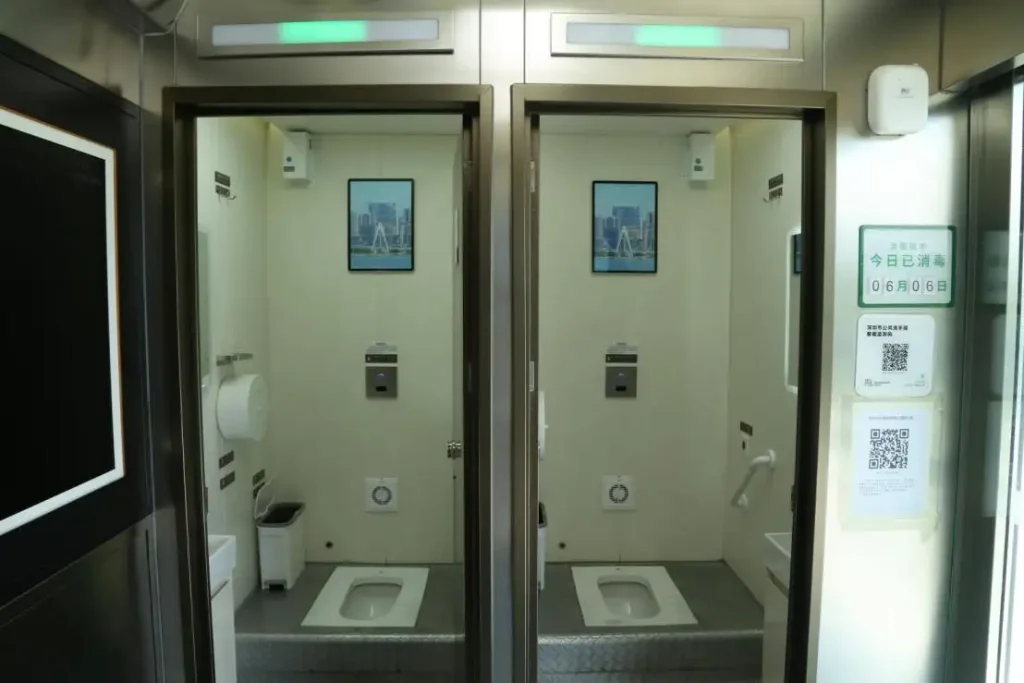
Larger facilities require airflow and drainage zoning so that odor does not migrate between cubicles, accessible rooms, staff areas, and waste-tank enclosures.
Designing for Long-Term Performance
From SAUDIND Portable Toilets' manufacturing perspective, durable Restroom Odor Removal Solutions for Public Toilets must be easy to inspect and service. Fans, filters, traps, sensors, tanks, valves, and cleanouts should be accessible without dismantling finished interior surfaces.
Smart controls can report:
• Ventilation-fan faults
• High humidity
• Abnormal air-quality readings
• Waste-tank levels
• Water shortages
• Overdue maintenance
However, sensors support rather than replace physical inspection, routine cleaning, and scheduled servicing.
A Practical Engineering Approach
No single deodorizer can solve every restroom odor problem. A maintainable system encompasses the following:
• Waste and drainage management
• Ventilation that meets code
• Construction that is dry and easily cleanable
• Suitable odor treatment media
• Maintenance access
• Service intervals driven by actual consumption
When designing a restroom odor removal solution for public toilets, these features should work together to improve user comfort, make cleaning and servicing easier, and reduce reliance on temporary odor-masking products.
At SAUDIND Portable Toilets, the objective is not to promise an odor-free room under every operating condition. Instead, we focus on a practical system that identifies, contains, and removes the main odor sources throughout the public restroom's service life.
FAQs
Q1: What causes smells in public toilets?
Odors are caused by dried-out traps, cleaning delays, and waste residue, and can also be caused by a lack of proper ventilation.
Q2: How do ventilation systems tackle restroom odor?
These systems remove air that is contaminated and humid and replace it with clean air.
Q3: Can air fresheners remove restroom odors?
Air fresheners generally mask odors rather than remove their source.
Q4: Why are floor drains important for odor control?
Floor drains should include maintained water seals or traps to help prevent sewer gases from entering the restroom.
Q5: What are the best materials for the public restroom interiors?
Materials that are easy to clean and durable are best for the restroom interiors. These surfaces are best when they are smooth, non-porous and corrosion-resistant.
Written by
admin