


Updated 3 months ago
Is a Prefab Toilet Block Really "Plug-and-Play"? A Reality Check on Modern Sanitation
admin
admin
Prefab Toilet Block
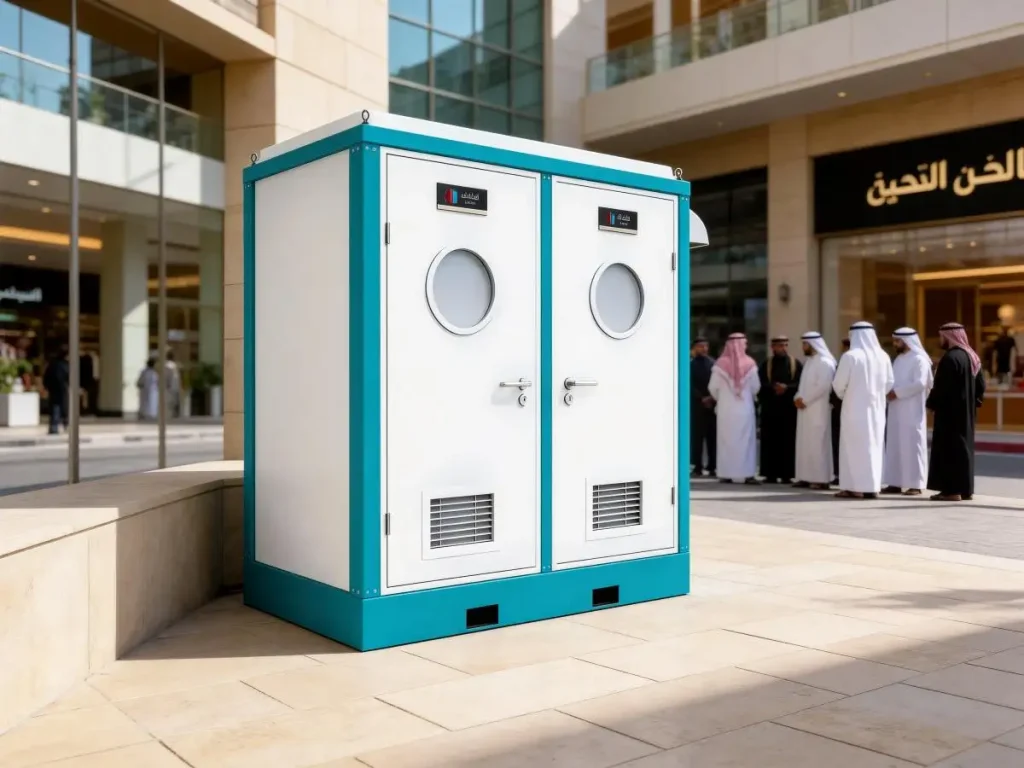
A prefab toilet block can be quick to install, but it is not magic. The unit may arrive factory-built and tested, yet the site still needs a level base, delivery access, lifting space, and prepared water, waste, and power connections. This article explains what plug-and-play means in real site conditions and how SAUDIND Technology designs prefab sanitation blocks to reduce on-site construction time.
What Does "Plug-and-Play" Actually Mean for a Prefab Toilet Block?
A plug-and-play prefab toilet block does not mean zero site preparation. It means the restroom is manufactured, wired, plumbed, and tested in the factory before delivery. On site, the work should mainly involve positioning the unit, securing it to the prepared base, and connecting water, waste, power, and any network lines.
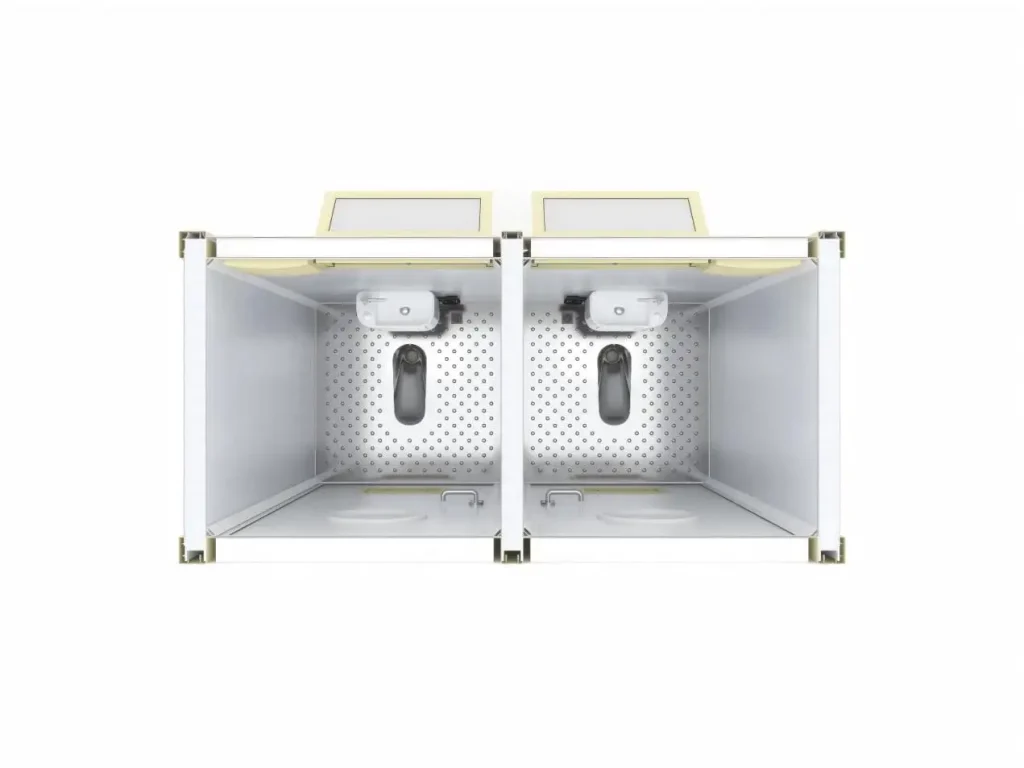
• Factory-complete assembly: The production facility installs all the components including 304 stainless steel floors, sensor lights, and flush guns. This eliminates the need for carpentry, tiling, and painting at the site.
• Pre-terminated utilities: Water, waste, electrical, and network lines are routed to standard connection points on the unit exterior so site teams can complete the final connections more efficiently.
• No curing or drying time: Concrete restrooms need weeks for the foundations to set; however, the prefab unit is ready for use the day after it is set.
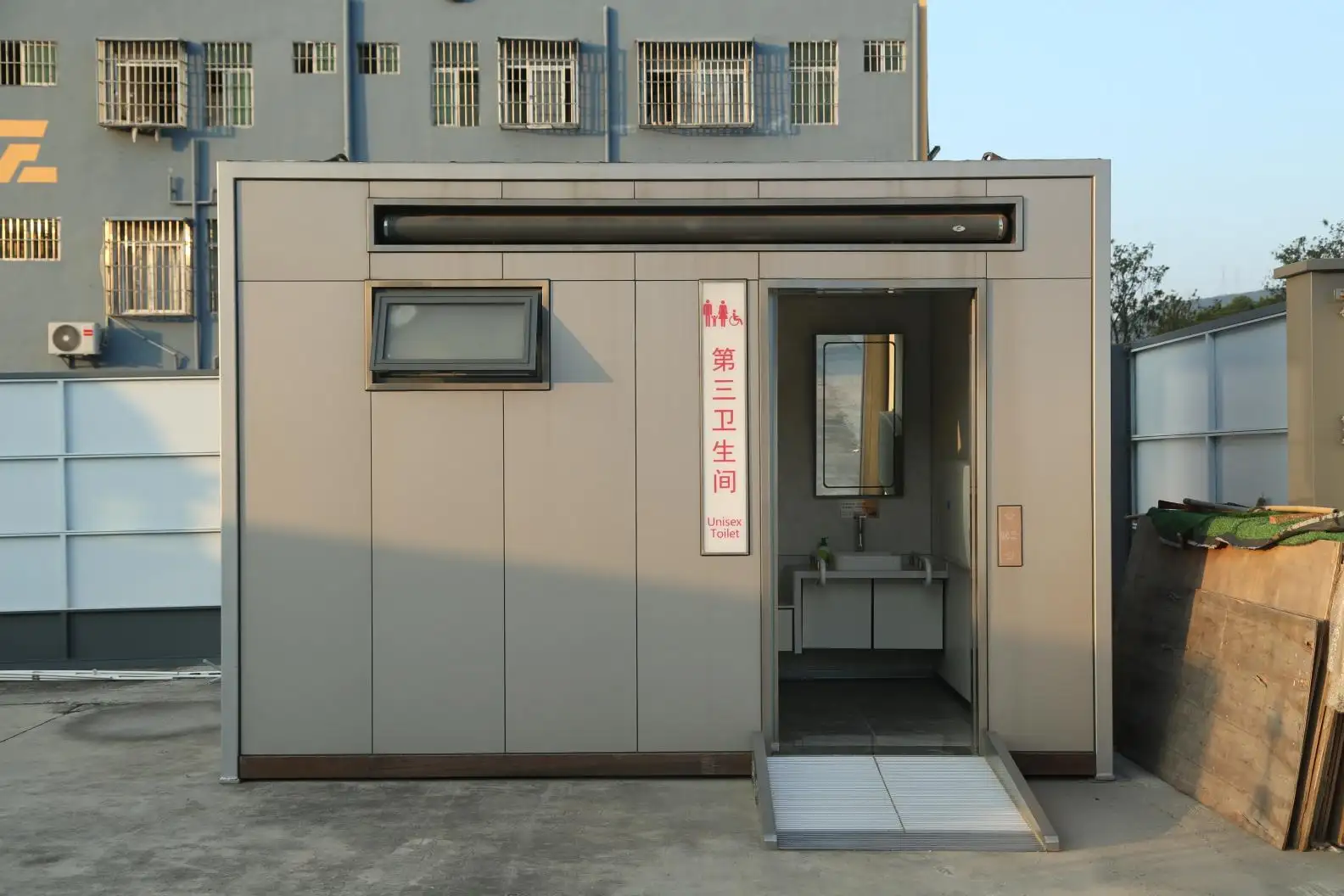
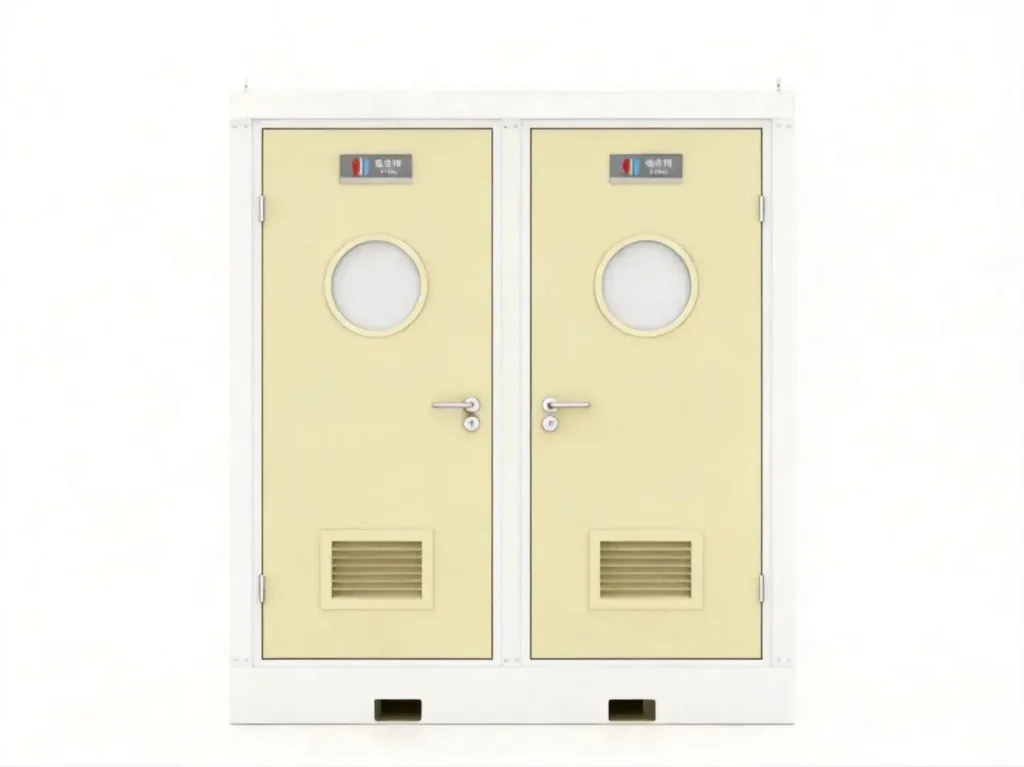
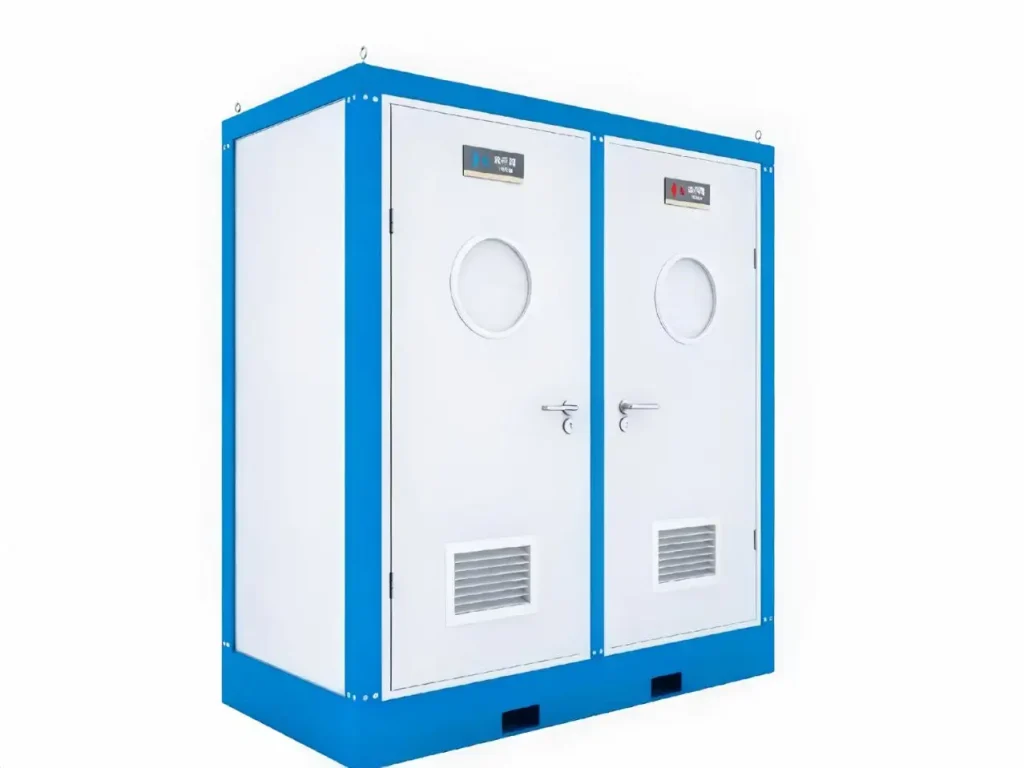
SAUDIND Technology's TBOX KS-S2 model exemplifies this approach. Its electrostatic spray-painted steel frame, color steel foam board walls, and pre-mounted squat toilets arrive as one detachable double-unit module.
The Three Prerequisites for True "Quick Installation"
To avoid delays, buyers should confirm the site conditions before the prefab toilet block arrives. SAUDIND Technology can provide a site-readiness checklist, while the project team confirms the base, utility points, delivery route, lifting access, and any local approval requirements
1. Level and Load-Bearing Base
• A concrete pad or compact gravel: The base needs to be reliable and level because the unit's weight can be from 800 to 1500 kgs (depending on size).
• Drainage planning: The base should slope away from the toilet block so rainwater drains away from the entrance instead of pooling around the doorway or service area.
• No full foundation required: For more permanent buildings, a deep footing and a rebar cage is needed. This is not the case for a prefab unit.
2. Close to Utility Connection Points
• Water: A typical ¾-inch or 1-inch line with a shut-off valve must be within 5 meters of the unit.
• Waste: The outlet must connect (by gravity fall) to a sewer line, septic tank, or a holding tank (110 mm diameter, common in many areas).
• Electricity: A grounded outlet (110–240 V AC, according to local standards) is needed for lights, ventilation, and IoT devices. Solar or hybrid systems are available for off-grid locations.
3. Access to Delivery and Lifting
• For Trucks: Flatbed delivery trucks require 3.5 meters width clearance and 4.5 meters height clearance.
• For lifting: Forklift or small mobile crane access is needed to the exact drop zone. SAUDIND Technology marks every unit with lifting sling positions.
• No overhead obstacles: Tree branches, low wires, or canopies must be cleared.
The Step-by-Step Installation Timeline (From Delivery to Operation)
When all prerequisites are met, the "plug-and-play" promise becomes reality. Below is a realistic timeline based on SAUDIND Technology's field records for projects such as construction sites and city parks.
Step 1 – Delivery and Positioning
• Truck arrives on site; unit is unfastened from shipping brackets.
• Forklift or crane lifts the Prefab Toilet Block from the truck bed.
• The unit is positioned on the prepared base, with placement adjusted to within +/-2 cm of the intended location where site conditions allow.
Step 2 – Utility Connections
• The water line will be connected to the inlet valve. This connection will be hand tightened and then tightened fully with a wrench.
• Connect the waste outlet to the sewer, or holding tank, using a flexible rubber coupler.
• Plug the electrical cord into the weatherproof receptacle. The indicator light should turn green when power is connected.
Step 3 – Function Testing and Calibration
• Entering through the door activates the light, as well as the faucet and the flush gun sensors.
• Smart ventilation and auto-deodorization are activated; airflow is checked with a smoke pencil or airflow meter.
• IoT module sends its first "online" signal to the remote management dashboard.
Step 4 – Handover and Cleaning
• Surfaces (antimicrobial, graffiti-resistant panels) are given a final wipe-down.
• Soap dispensers and toilet paper holders are stocked.
• Door locks and emergency release mechanisms are demonstrated to the site manager.
✔ Result: On a prepared site, the prefab toilet block can be handed over as an operational, touch-free restroom facility for public or worker use within a single working day.
Can the Unit Be Moved Again? The "Plug-and-Play" Cycle
One major advantage of a prefab toilet block over conventional masonry is that it can be reused at another site. Relocation is usually faster than first installation when the team already knows the lifting points, utility interfaces, base requirements, and connection sequence.
• Disconnection: Shut off water and power; disconnect three utility lines; unbolt unit from base.
• Lifting and loading: Forklift slides forks into designated pockets and places unit onto a flatbed.
• Relocation setup: Repeat the positioning, leveling, utility connection, function testing, and handover checks at the new location.
This makes prefab toilet blocks suitable for construction sites that move every 12 to 18 months and for seasonal events that return each year but may use different site layouts.
Common Misconceptions About Prefab Toilet Blocks
Prefab toilet blocks are often described as fast and simple, but buyers still need a clear view of what they can and cannot replace on site. These common misconceptions are worth clarifying before procurement.
Myth 1 – "No site work at all is required."
Reality: A level base and utility stub-outs are still needed. In many projects, this preparation is far simpler than building a poured concrete restroom, especially when the site team confirms the base and utility points before delivery.
Myth 2 – "Prefab means low quality or temporary appearance."
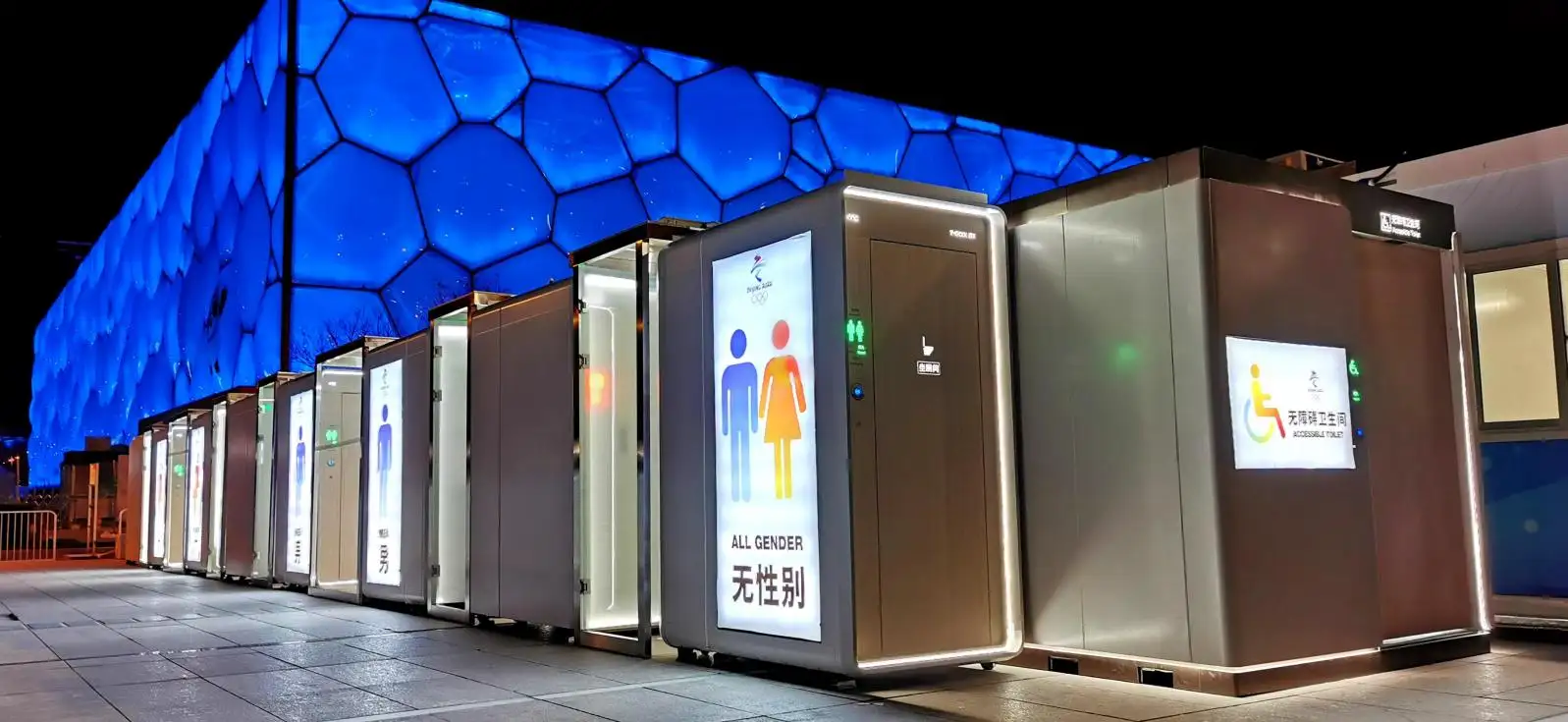
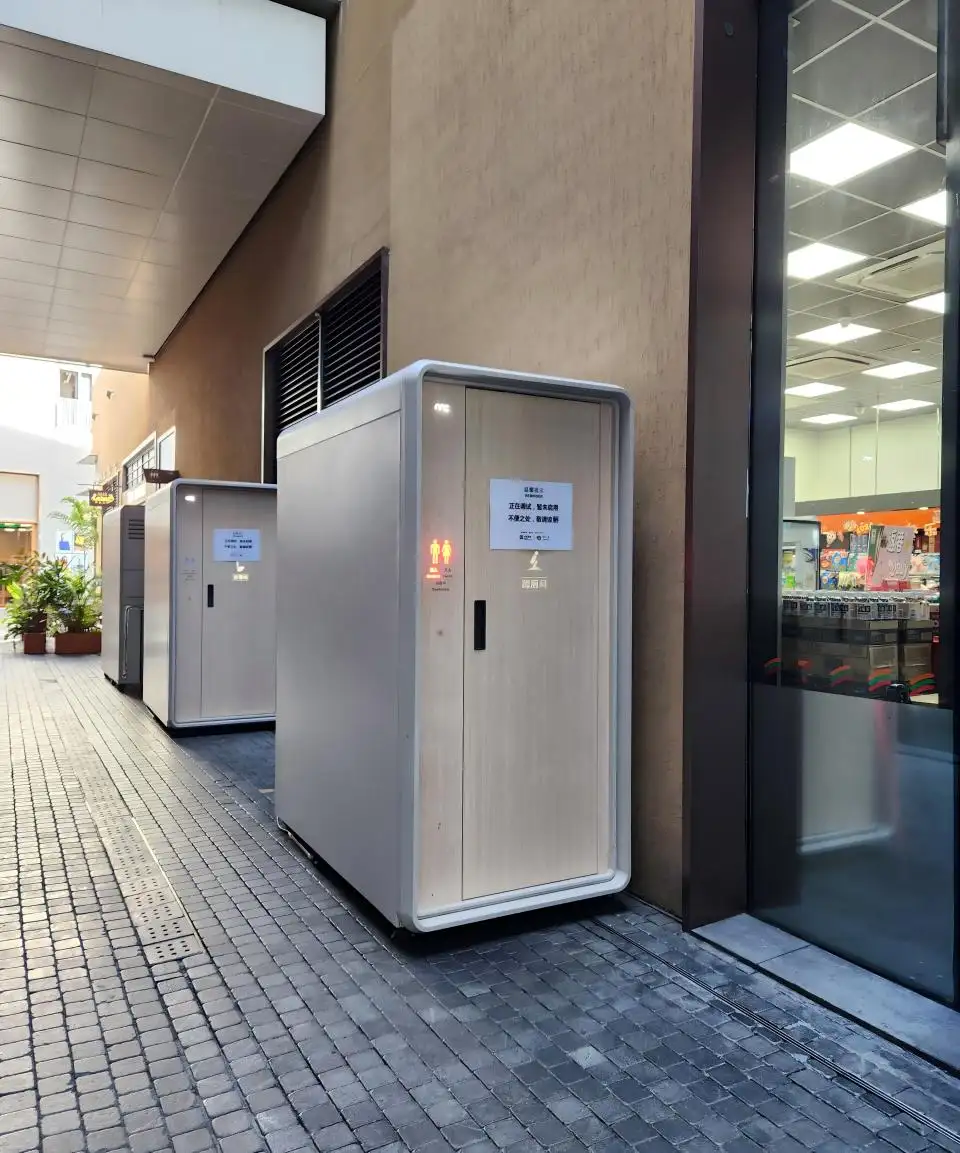
Reality: SAUDIND Technology's electrostatic-painted steel frames and ceramic wash basins match permanent building standards. The units are used in train stations and tourist attractions, not just construction sites.
Myth 3 – "You cannot customize a prefab block."
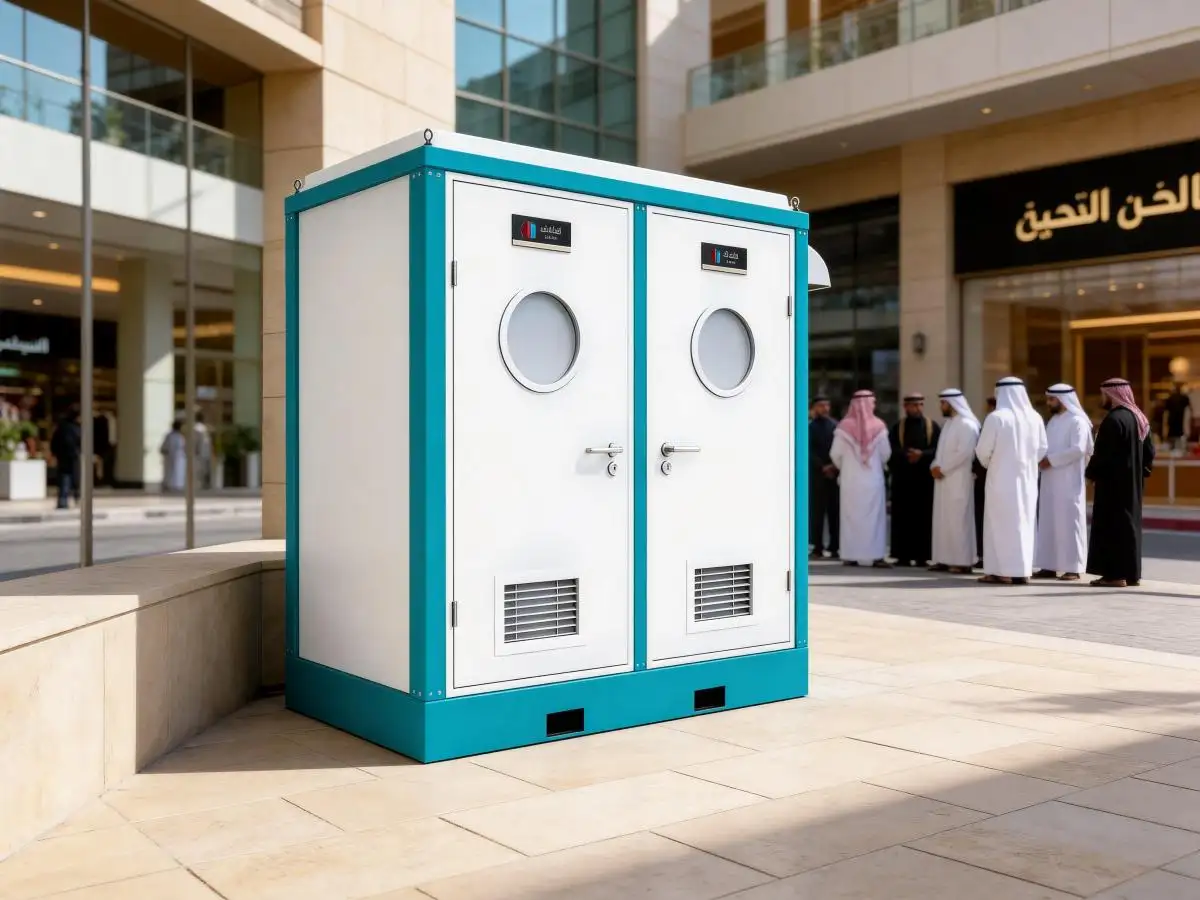
Reality: SAUDIND Technology offers complete customization: size (single or multi-module), exterior color and cladding, interior smart features (digital signage, air cleaning), and even compliance with Middle Eastern or European accessibility codes.
How SAUDIND Technology's Design Enables True Plug-and-Play
SAUDIND Technology designs each prefab toilet block around fast delivery, clear utility connection, safe lifting, and long-term service access. The following features support a more predictable plug-and-play installation process.
• Standardized connection panel: Labeled icons and color coding identify utility points on one side of the unit, helping installers locate water, waste, power, and network connections quickly.
• Integrated lifting system: Four built-in fork pockets prevent damage to walls during transport; overhead lifting rings are also available.
• Smart self-diagnostics: Upon first power-up, the IoT controller runs a 90-second check of all sensors and valves. Any error (e.g., low water pressure) is reported via LED light on the unit's exterior.
• Weather-independent factory assembly: Because 90% of the work is completed indoors at the factory, rain, snow, or extreme heat has less impact on the restroom build process, although delivery and lifting still depend on site conditions.
Conclusion: "Plug-and-Play" Is Real – With Reasonable Preparation
A prefab toilet block from SAUDIND Technology can deliver rapid deployment when factory readiness and site preparation work together. For city parks, transport hubs, construction sites, and temporary events, this model reduces the amount of on-site building work and moves the project faster into connection, testing, and handover. The TBOX KS-S2 double-unit model shows how stainless steel flooring, touch-free sensors, anti-vandal surfaces, and a detachable module structure support a practical plug-and-play sanitation setup.
To plan a prefab toilet block for your site, start with the base, utility points, delivery route, and lifting access. SAUDIND Technology can provide site-readiness checklists, 3D layout proposals, and compliance documentation to support quotation and project planning.
FAQs
Q1: Do I need a building permit for a modular portable restroom?
A: Permit requirements depend on the local authority and how the unit will be used. Some sites may treat a prefab toilet block as a temporary or movable structure, while others may require approval for utilities, accessibility, drainage, or public use. Always check local codes before installation.
Q2: What is the maintenance for a touch-free smart toilet block?
A: Maintenance is lower than a traditional site-built restroom, but it is still required. Operators should restock paper and soap, clean surfaces, check sensors, inspect water and waste connections, and review IoT status to confirm the unit is working properly
Q3: Can the Prefab Toilet Block be used in freezing winter conditions?
A: Yes, units can be built to incorporate insulation packages and small electric heaters, but standard units are built for moderate climates.
Q4: Can I choose the color or materials used for the external cladding?
A: Yes. SAUDIND Technology offers different coatings, colors, wood-grain finishes, and culturally specific exterior patterns, including Middle Eastern design styles when required by the project.
Q5: Are the surfaces truly resistant to graffiti and viruses?
A: Yes. The panels can be supplied with graffiti-resistant finishes and antimicrobial surface options to support easier cleaning and better hygiene management in public-use environments.
Written by
admin