


Updated 3 months ago
How Modular Design Turns One Public Restroom into a Multi-Use Public Facility?
admin
admin
Modular Public Restroom
Public restroom planning is no longer only about placing toilets where people need them. Cities, parks, and transport hubs also need facilities that can support care, maintenance, emergency response, and public information without building separate structures for every function. A modular public restroom gives operators a base facility that can be configured around local foot traffic, service hours, utility access, and future changes in public use.
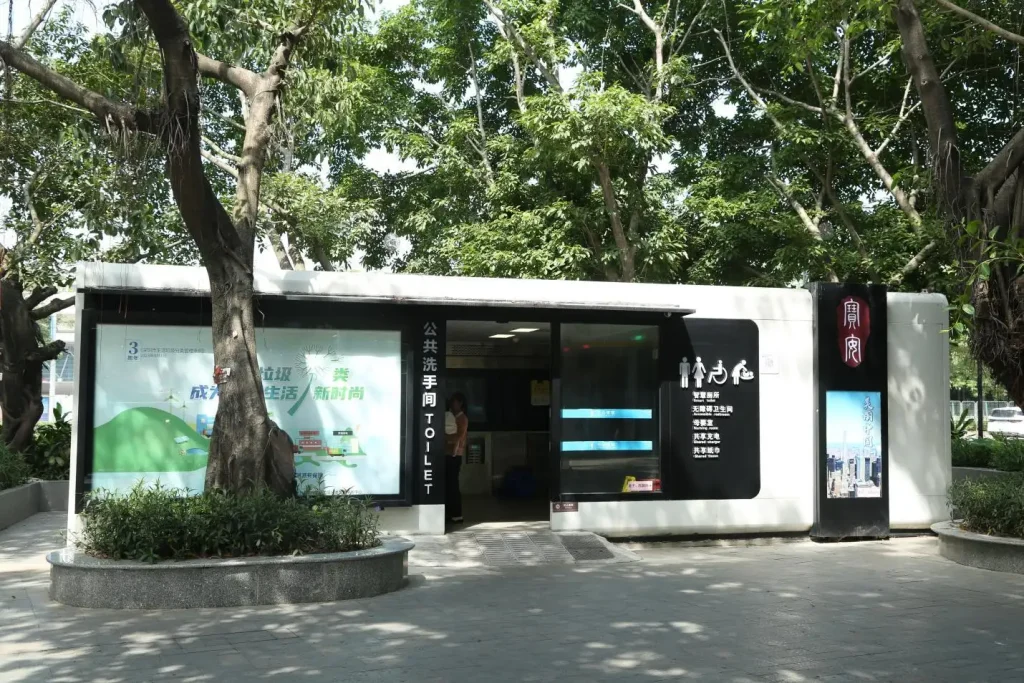
This article explains how SAUDIND Technology uses flexible layouts, IoT monitoring, energy options, and custom interiors to make a modular public restroom useful for public care, staff operations, emergency support, and daily sanitation. It also shows what operators should check before choosing a unit: user flow, service access, cleaning needs, utility connections, and long-term reconfiguration plans.
What Makes a Modular Public Restroom "Multi-Functional"?
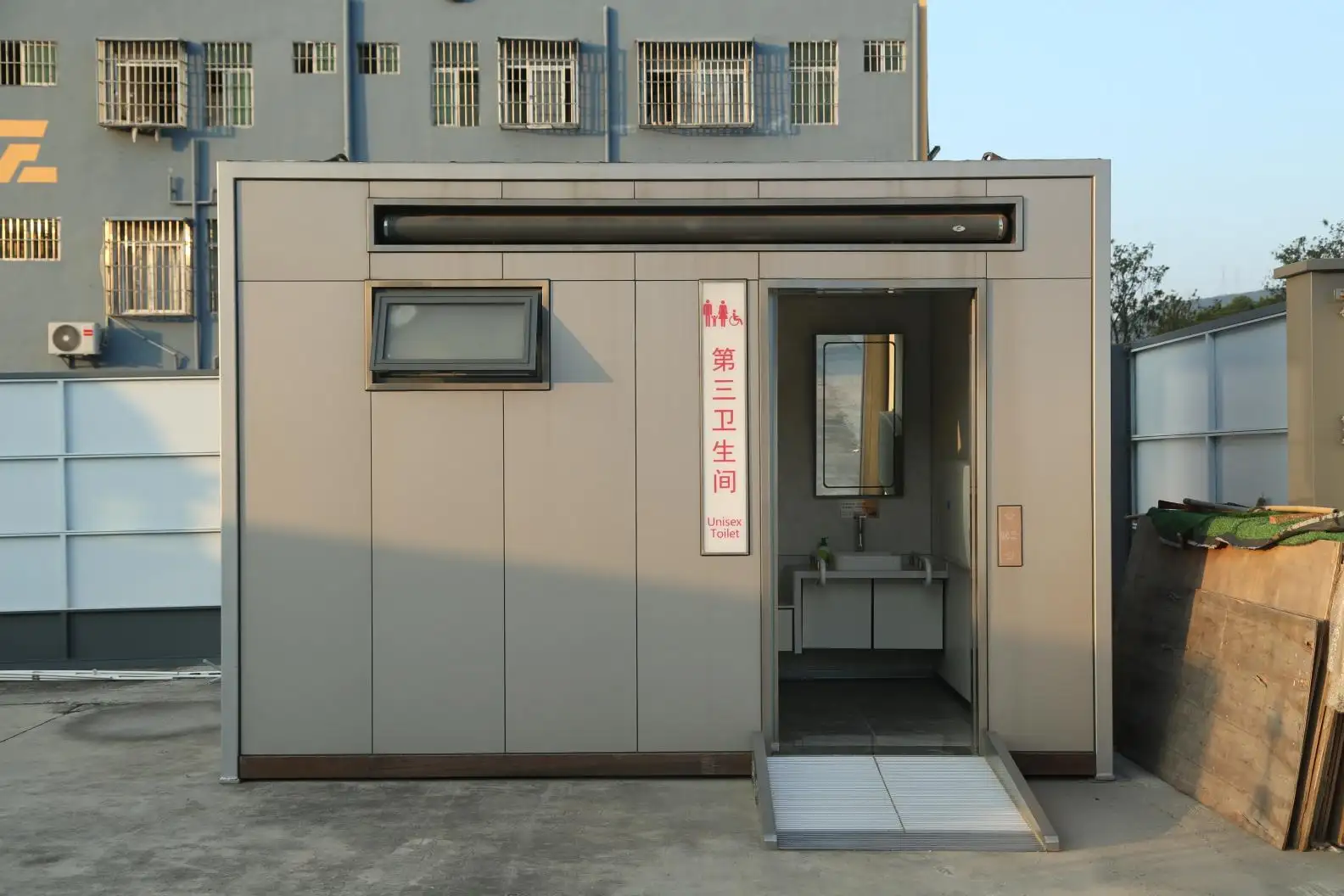
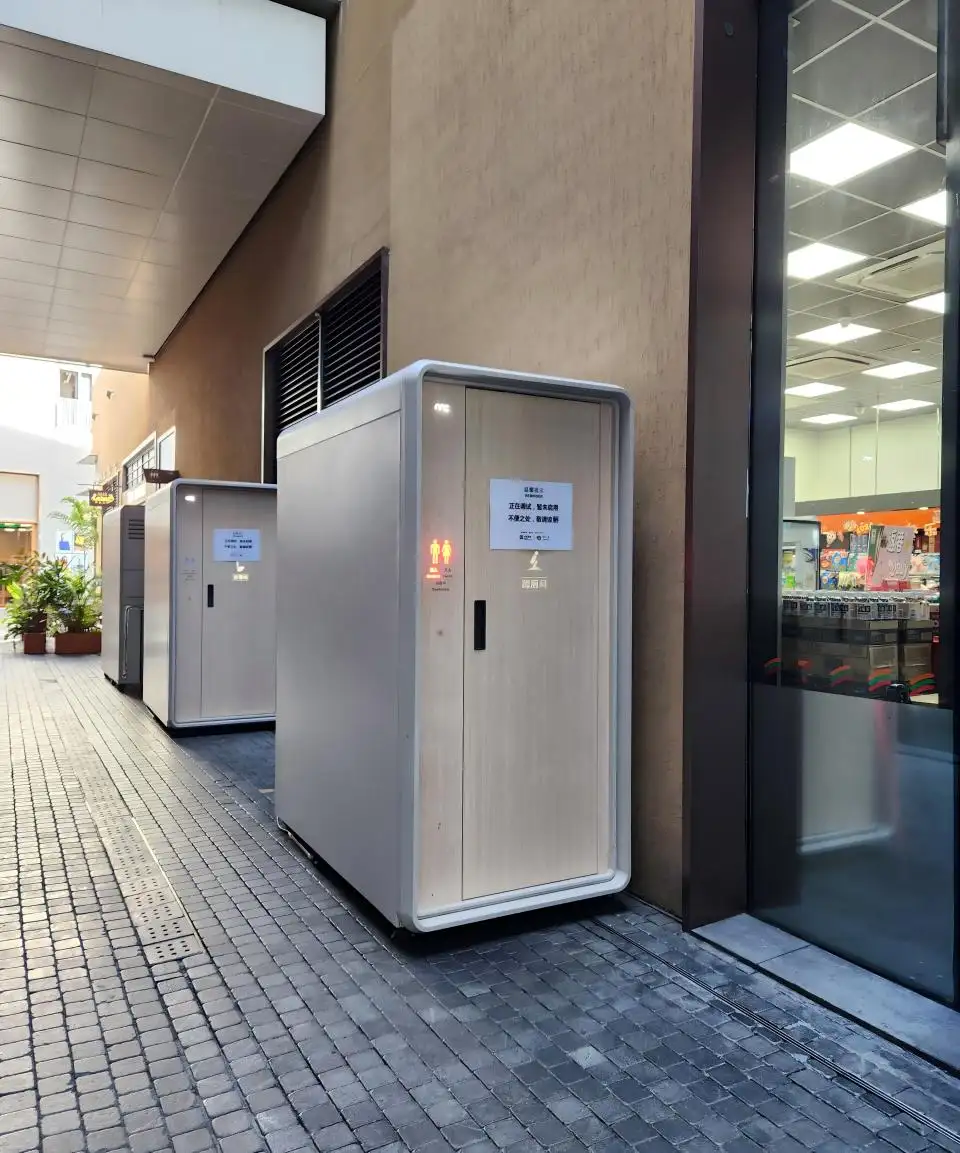
A modular public restroom is a prefabricated restroom system built from sections that can be combined, expanded, or reconfigured for different public sites. The practical value is not simply that the unit can move, but that planners can adjust entrances, stalls, service rooms, equipment zones, and utility interfaces as the site's public-service role changes.
Key enablers of multi-functionality:
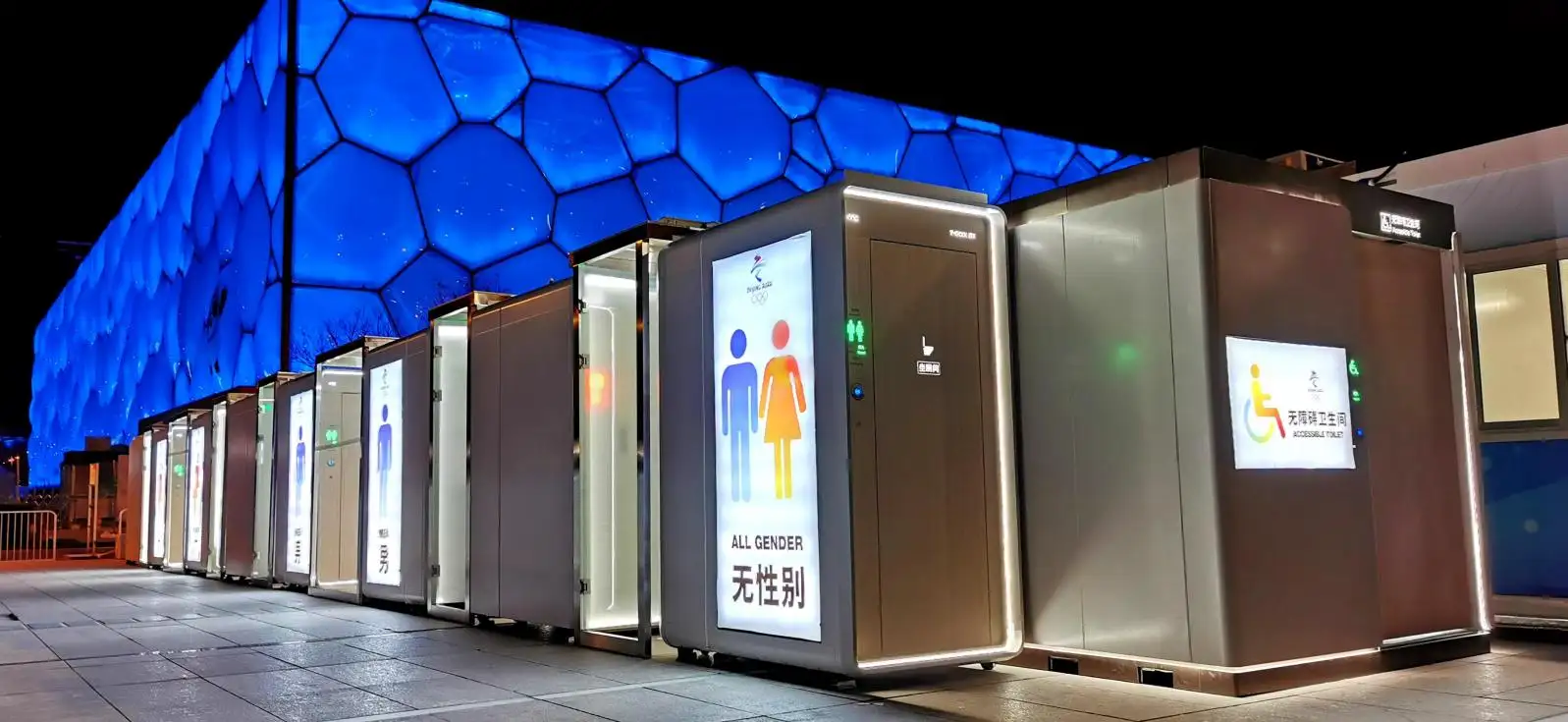
•Scalable layout: Single-cabin, double-cabin, or multi-module clusters that can be arranged side by side or stacked (where space allows).
•Hook-up ready: Pre-installed water, power, drainage, and network interfaces make it easier to plan equipment zones for baby-changing tables, service counters, emergency storage, digital signage, or monitored access points.
•Adjustable partitions: Interior partitions can be designed for faster layout changes, allowing a three-stall restroom to be reconfigured into two public stalls plus a small service room when staffing, storage, or care functions become more important.
SAUDIND Technology takes this further by offering complete customization of size, exterior finish, interior fittings, and power sources (solar/grid/hybrid), ensuring that the same restroom platform can adapt to local regulations, climate, and cultural needs.
Beyond Toilets: Six Function Extensions That Add Real Value
A modular public restroom becomes more useful when added functions are planned around the restroom's daily operation. The following six extensions show how SAUDIND Technology can configure one restroom platform for care, emergency response, staff work, public supplies, information display, and temporary services while keeping sanitation as the core function.
1. Mother-and-Baby Care Room (Nursing Room)
A foldable nursing table, ceramic wash basin with child-lock hot water, and seating area can create a private care zone inside the module. For parks, transport hubs, and event sites, this gives parents a cleaner place for breastfeeding, diaper changing, and handwashing without requiring a separate nursing-room building.
•Quiet and safe: Sound-insulated walls and an emergency call button give parents peace of mind.
•Easy to clean: Compact laminate boards resist stains and disinfectants, meeting hygiene standards for infant care.
•Space efficient: The TBOX GS-A1 model, for example, combines a foldable toilet and a foldable nursing table in the same 2.23m × 2.84m footprint.
2. Emergency Service Point
During heat waves, floods, large public events, or temporary service disruptions, a modular public restroom can support basic emergency functions when it includes storage, water access, exterior signage, and communication tools.
•First-Aid Storage: AEDs, bandages, portable oxygen in cabinets.
•Clean water support: Solar-powered systems and UV-C purification options can be integrated with water supply tanks for sites where clean water access may be limited or temporarily disrupted.
•Comm Hub: Emergency phone and external digital sign.
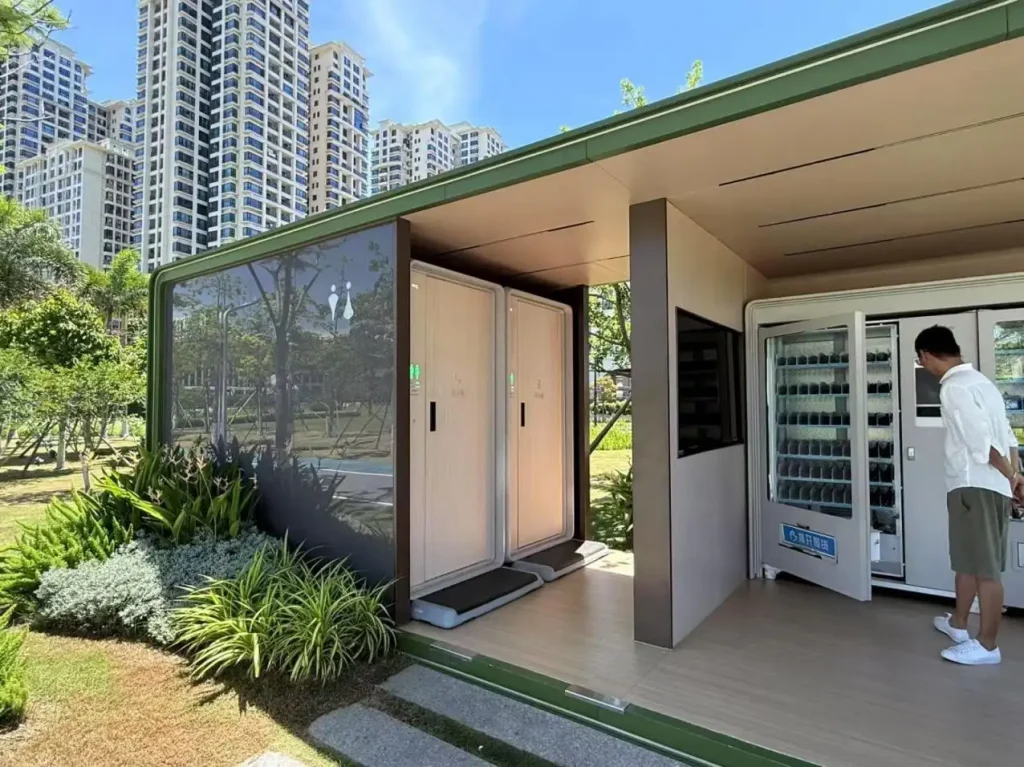
3. Park Staff Office/Cleaning Supply Room
Urban parks often have limited back-of-house space for attendants, cleaners, and maintenance teams. One cabin in a modular public restroom can be configured as a small staff workspace or supply room, keeping daily service tools close to the facility that needs them.
•Desk with power supply: Provides space for a staff members' laptop.
•Supply lockers: Space is reserved for staff members to secure supplies and tools.
•Private entrance: Staff can access the service area without crossing the main public restroom flow, making cleaning, restocking, and equipment checks easier during operating hours.
4. Sanitary Product Vending/Donation Point
Wall-integrated vending or dispensing units can provide sanitary products, hand sanitizer, masks, or other small public-use items without taking floor space away from the restroom.
•IoT product tracking: Sensors can alert operators when dispenser stock is running low, so refills can be scheduled before the machine is empty during busy public hours.
•Vandal-resistant design: Recessed dispensers and durable surface materials reduce exposed edges, make stocked items harder to tamper with, and simplify maintenance in high-traffic public areas.
5. Outdoor Advertising & Community Bulletin Board
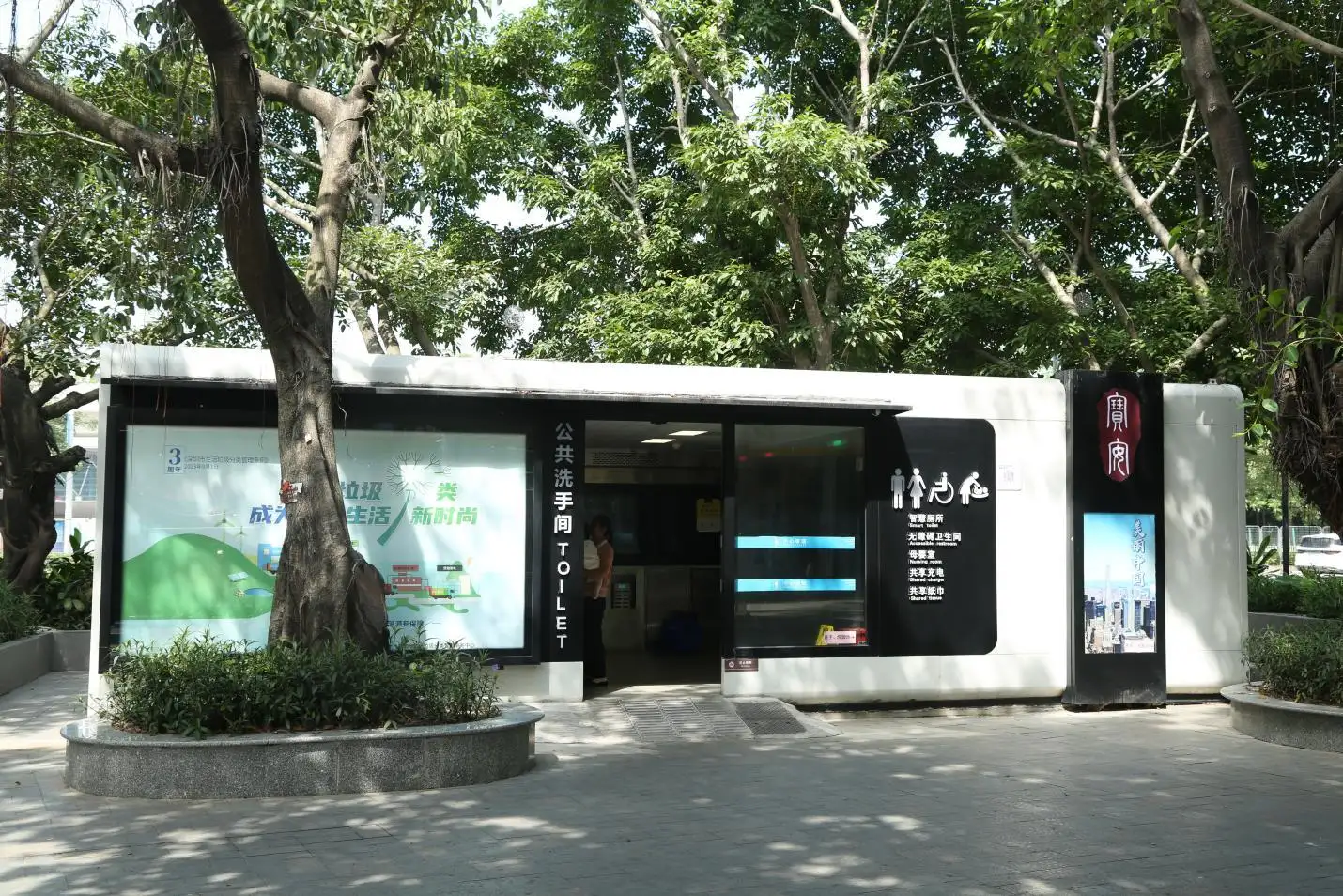
The exterior panels of a modular restroom can be used for printed graphics, digital displays, wayfinding, public notices, or advertising, turning the building envelope into part of the site's communication system
•Cost offset: Advertising revenue can help offset part of the operating cost, such as routine cleaning, lighting, maintenance, or electricity use.
•Public service: Panels can display community notices, event information, lost-and-found messages, emergency updates, or QR codes that connect users to city services.
•Landmark Restroom: With the use of custom printed graphics on the panels, the restroom can be a community landmark.
6. Tactical Urbanism Pop-up (Café / Info Kiosk)
For temporary festivals or seasonal markets, one side of the module can remain a public restroom while another side is configured as a small information, ticketing, or service kiosk
•Dual access: Public toilets on one side, service window on the other.
•Plug-and-play power: A solar and battery system can support low-load kiosk equipment such as a ticketing tablet, information screen, payment device, or small service appliance.
Smart Management: The Invisible Backbone of Multi-Use Restrooms
A multi-use public restroom needs clear operating control because different users may need stalls, nursing space, staff access, vending, or emergency features at the same time. SAUDIND Technology uses IoT monitoring to give operators visibility into occupancy, equipment status, consumables, and service needs from one management system.
How IoT enables smooth multi-function operation:
•Real-time occupancy monitoring: Know whether a nursing room is free or the emergency phone is being used, without physical inspection.
•Remote equipment diagnostics: If the foldable toilet jams or the hot water heater fails, the system sends an instant alert to maintenance staff.
•Automated consumables replenishment: Smart sensors track toilet paper, soap, and sanitizer levels, triggering orders when thresholds are crossed.
•Energy-optimized lighting & water: Lights and faucets activate only when motion is detected — crucial for low-traffic auxiliary rooms (e.g., staff office).
SAUDIND Technology's modular public restrooms can be configured to connect with city management platforms, building management systems, or other digital operation tools through standard API options. This allows restroom data to sit closer to the operator's existing public-service workflow.
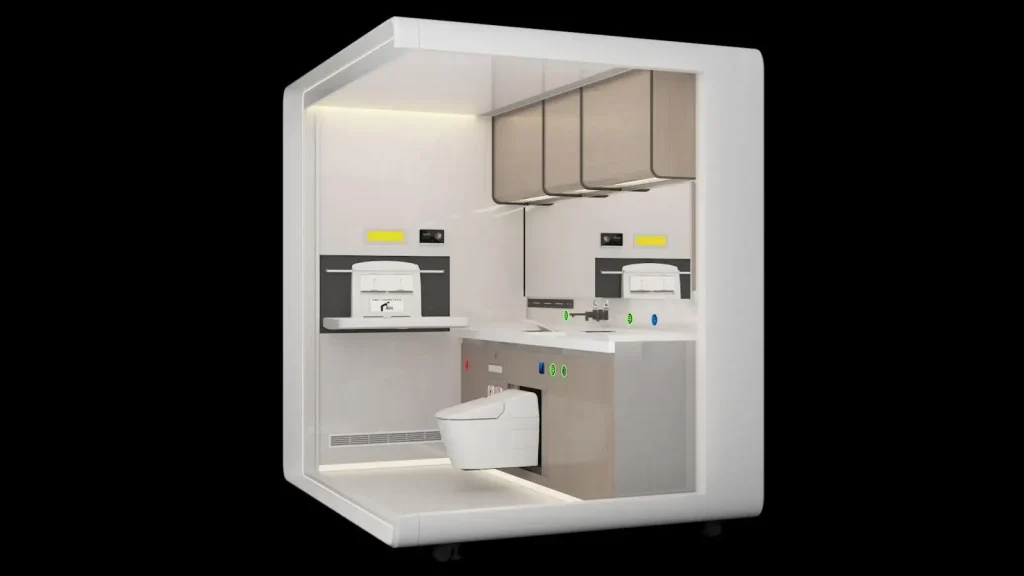
Case in Focus: TBOX GS-A1 – A Barrier-Free Module That Does It All
The TBOX GS-A1 (Accessible Portable Restroom) shows how one modular public restroom can combine accessibility, care functions, and public-service features within a compact footprint.
Key specifications (length 2.23m × width 2.84m):
•Foldable toilet + foldable nursing table: Allows the same module to support accessible restroom use and baby-care needs without requiring two separate rooms.
•Constant-temperature hot water with child lock: Safe for baby washing and hand hygiene in cold weather.
•Emergency call + occupancy display: Provides safety for vulnerable users (elderly, solo parents).
•External advertising screen: Turns the restroom into a revenue-earning media point.
•Fresh air system (low-level air circulation): Supports ventilation and odor control when the room is used repeatedly by different user groups throughout the day.
All these features are housed in a durable structure — stone slab floor, fluorocarbon aluminum panels, and compact laminate walls — designed to resist vandalism and daily wear.
Why SAUDIND Technology's Modular Approach Lowers Total Cost of Ownership
Some decision-makers hesitate because a multi-function modular restroom costs more upfront than a basic portable toilet. The stronger case appears when one unit replaces several separate facilities, supports multiple public services, and can be reconfigured as site needs change.
Cost-benefit highlights:
•No foundation work: The restroom sits on an adjustable steel base, eliminating concrete pouring and lengthy permits. Installation takes hours, not months.
•Movable asset: After serving a park, construction project, or temporary public site, the restroom can be relocated for another use, helping the owner get more value from the same capital investment.
•Less maintenance labor: With IoT remote monitoring, routine inspections can be cut by up to 70%, and maintenance teams can identify service issues earlier instead of waiting for on-site complaints.
•Green energy savings: Solar panels + LED lighting + vacuum flush toilets (<1 liter per flush) lower utility bills by 40–60% compared to traditional restrooms.
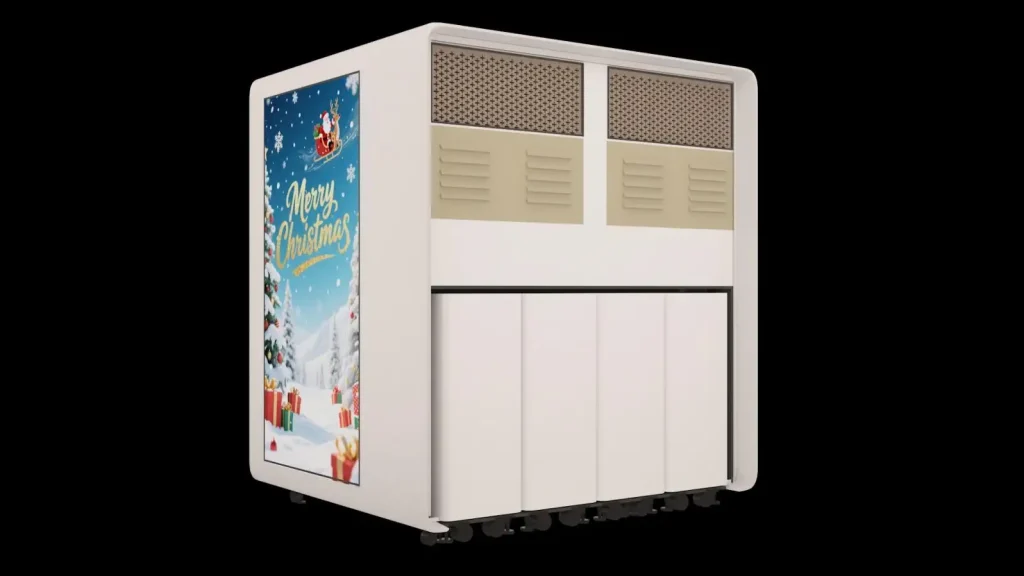
Customization: The Key to Truly "One Restroom, Multiple Uses"
No two public sites operate the same way. A beach park may need a foot-wash station and shower, while a bus terminal may need luggage space, ticketing, and clearer passenger flow. SAUDIND Technology offers four customization layers so the restroom can be matched to site use, climate, utility access, and user groups.
Customization dimensions:
•Size & layout: Single, double, or integrated modules — even two-story designs where the upper level becomes an observation deck.
•Exterior design: Material (aluminum, corten steel, stone), coating (anti-graffiti fluorocarbon), color, and even national/regional style (e.g., Middle Eastern geometric patterns).
•Interior functions: Smart entry (QR code or face recognition), air purification, touchless fixtures, digital signage, and any combination of power sources (solar / grid / hybrid).
•Compliance: Fitting local accessibility laws (ADA, EN 17210), climate adaptations (insulation for cold regions, shading for hot zones), and cultural requirements (bidet sprays, foot-washing basins).
SAUDIND Technology has delivered customized projects ranging from mother-and-child rooms to multi-function public restroom modules, with support for project documentation, certification coordination, and layout modification.
Final Words
A modular public restroom gives public-site operators more options than a single-purpose toilet block. It can combine sanitation, nursing care, staff support, emergency functions, public information, and digital management in one configurable structure. For cities, parks, and operators planning flexible public facilities, SAUDIND Technology can configure the unit around user flow, site utilities, service access, and long-term operating needs.
FAQs
Q1: Can a Modular Public Restroom really function as a nursing room?
A: Yes — models like the TBOX GS-A1 include a foldable nursing table, child-lock hot water, and a private, ventilated space for breastfeeding or diaper changing.
Q2: Can the same Modular Public Restroom be moved after I add a nursing room or staff office?
A: Yes. Interior fittings can be securely mounted while remaining removable, and the unit can be relocated to a new site in a matter of hours when access, lifting, and utility conditions are ready.
Q3: How does the smart management system know when a nursing table is occupied?
A: Built-in occupancy sensors and a "vacant/occupied" display panel integrate with the IoT platform, allowing parents and staff to check availability in real time.
Q4: Does SAUDIND Technology offer design support for multi-functional kiosks (e.g., pharmacy kiosk + restroom)?
A: Yes. SAUDIND offers customization for size, shape, layout, and interior functions. Hybrid modules can combine toilet facilities with retail, service, or medical-support functions when the site requires a multi-use kiosk.
Q5: How does the design reduce touch points when several functions are added?
A: Each function can be equipped with dedicated sensors, touchless controls, or voice-activated operation. This allows users to access the toilet, nursing table, emergency phone, or other service features with fewer shared touch points.
Written by
admin