


Updated 1 month ago
Portable Toilet for Mining Sites: Integrated Toilet and Shower Units for Worker Camps
admin
admin
Portable Toilet for Mining Sites
A mining camp may have enough toilets for 80 workers yet still face long shower queues after every shift. The problem is rarely the number of cabins alone. More often, simultaneous demand exceeds the available water flow, hot-water recovery capacity, or wastewater storage.
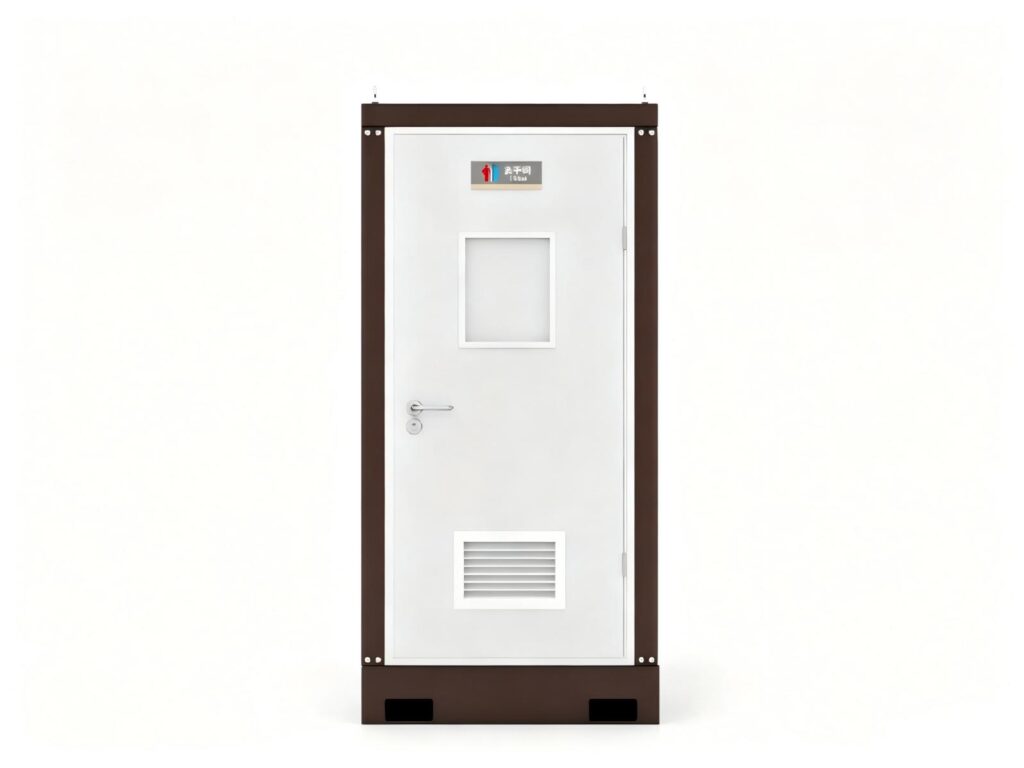
A Portable Toilet for Mining Sites should therefore be specified as a complete sanitation system, not simply an enclosure fitted with plumbing fixtures.
Shift Changes Determine the Required Shower Capacity
Suppose 40 workers need to shower during a two-hour shift change. At eight minutes per person, the camp requires 320 minutes of shower occupancy.
Three shower positions provide 360 theoretical operating minutes during that period, leaving little allowance for changing clothes, cleaning, or uneven arrivals.
An integrated single-occupancy cabin introduces another constraint: the toilet and shower cannot serve two workers simultaneously.
For larger camps, it may be beneficial to use separate toilet and shower blocks to increase throughput.
Three Factors Affect Fixture Quantity
• Peak Occupancy: Rather than considering the total camp population, assess the population arriving within the busiest 30-120 minutes.
• Service Time: How long do users spend in the shower/changing stall? What is the average time between uses?
• User Requirements: What are the user preferences concerning single-sex usage? What are the users' requirements concerning privacy?
When assessing fixture quantities for a mining-site portable toilet, consider system demand and workers' welfare needs.
What is an Integrated Toilet and Shower Unit?
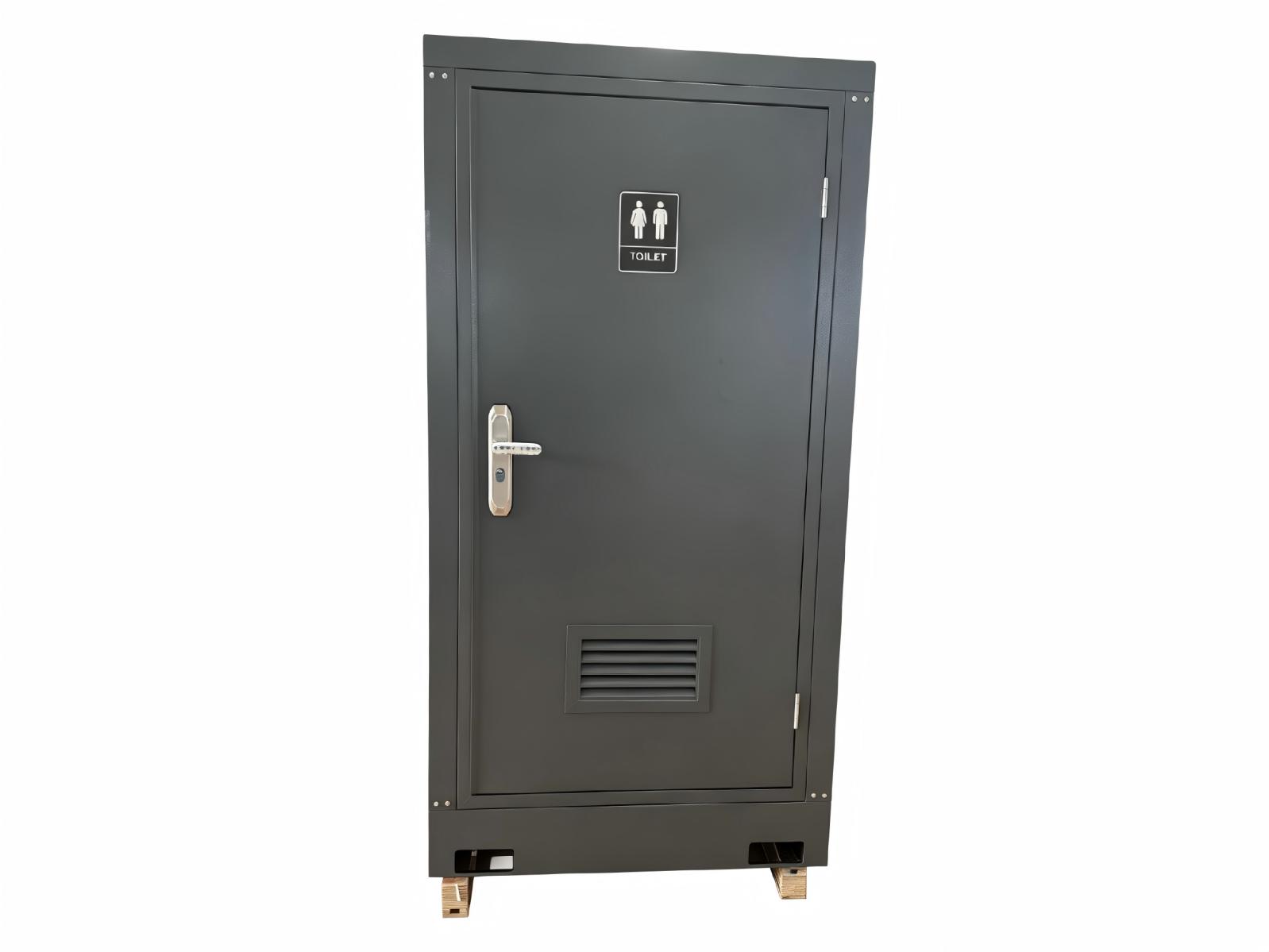
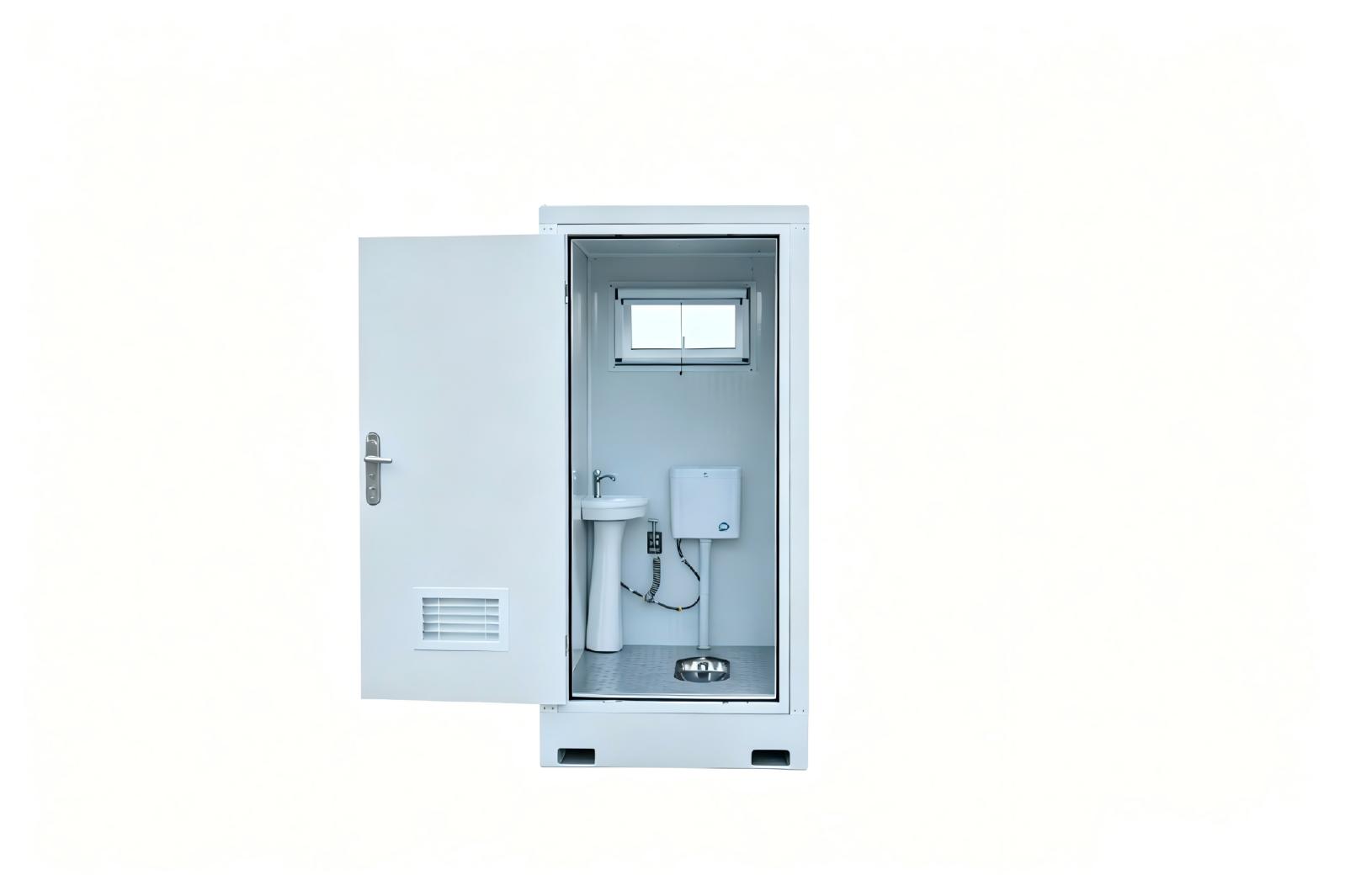
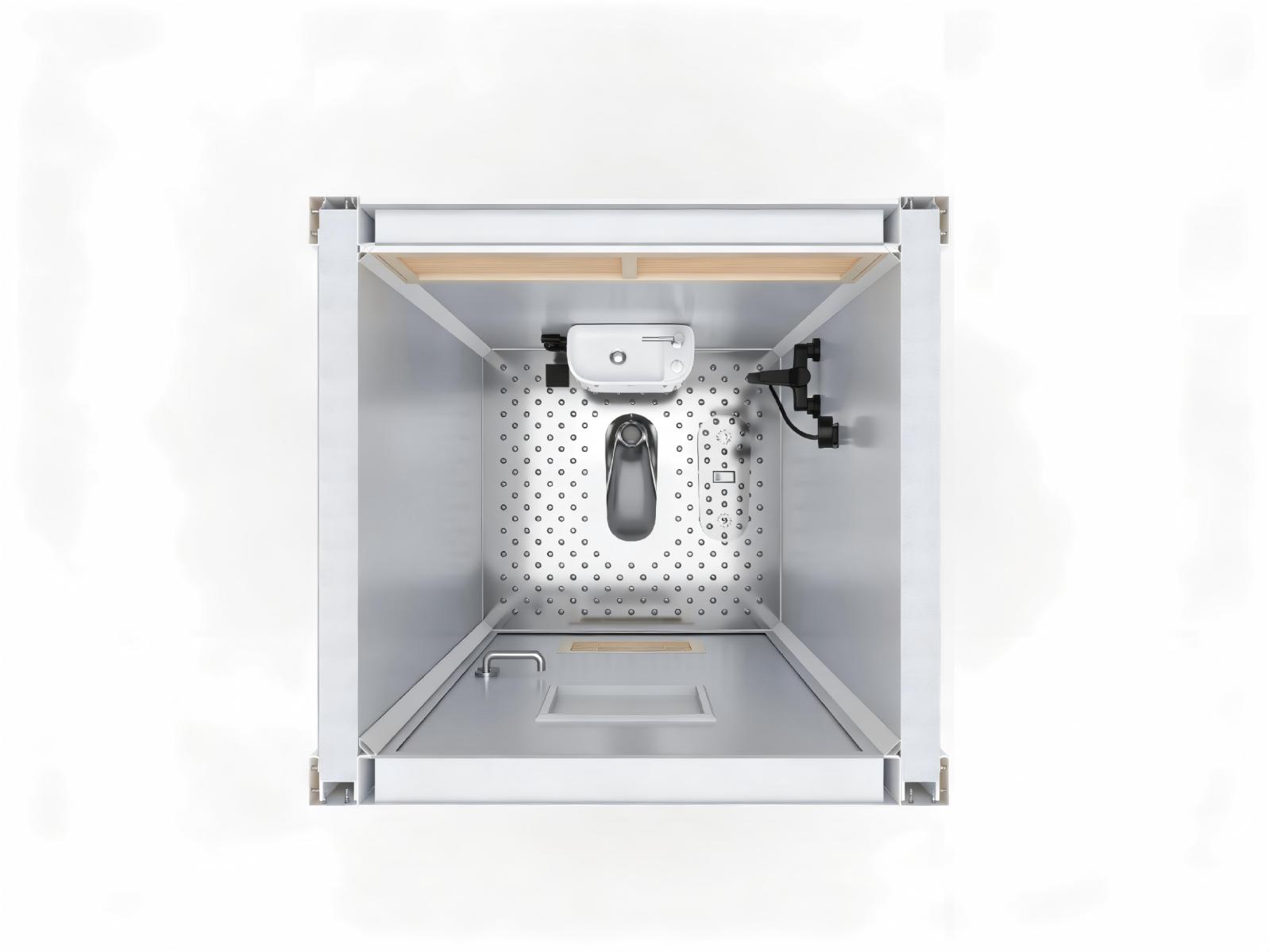
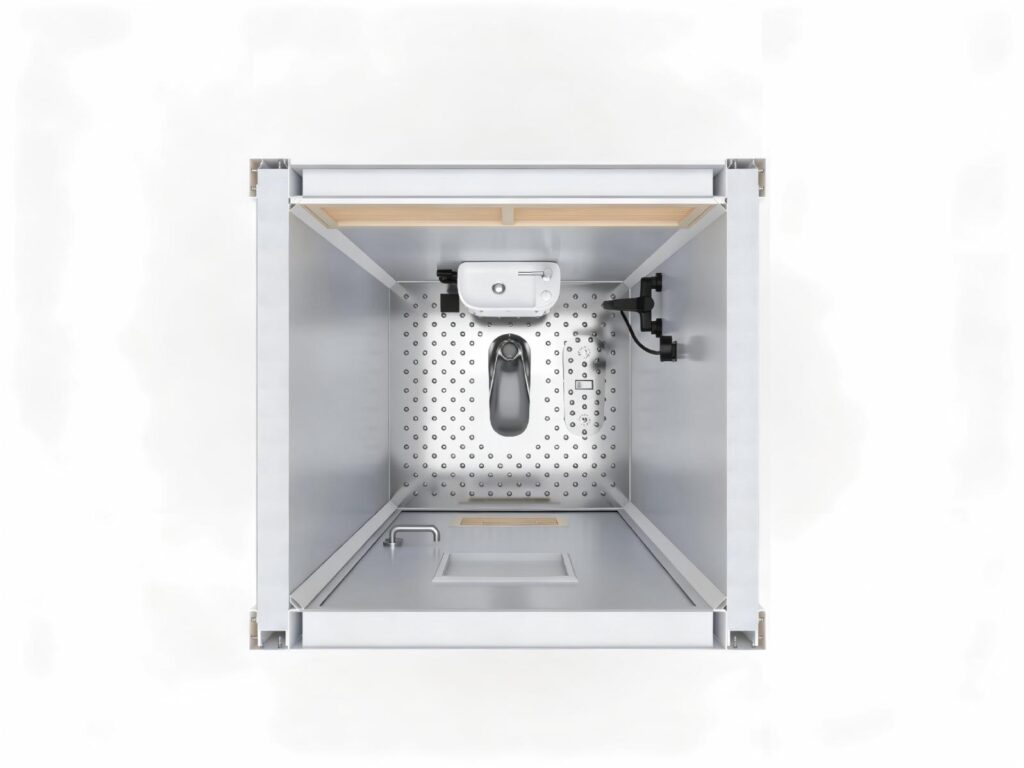
SAUDIND's TBOX KS-S1 integrated mobile bathroom consists of a 304 stainless steel squat toilet, a ceramic washbasin, and a shower cabin.
Construction elements are:
• Frame: Electrostatic spray painted steel
• Walls: Insulated colored steel sheets
• Floor: 304 stainless steel
• Ventilation: Louvered steel door and a top-hung window
• Accessories: Shower fittings and a ceiling-mounted sensor light
These describe the cabinet. To have an off-grid system, the customer would need to integrate a freshwater/wastewater tank, pumps, heater, and power supply.
Why Cabin Materials Matter in Mining Environments
In the absence of air conditioning, insulated panels help reduce heat transfer and provide some thermal comfort.
A floor made of 304 stainless steel provides corrosion resistance. However, whether it provides slip resistance depends on the quality of the floor surface and the drainage slope among other things.
Water Supply, Heating, and Wastewater Must Be Sized Together
An integrated bathroom can have sufficient fixtures but inadequate hydraulic capacity.
Consider an illustrative camp with 40 daily shower users, each showering for eight minutes at 6 L/min.
| Engineering parameter | Calculation | Design result |
| Daily shower consumption | 40 × 8 × 6 L | 1,920 L/day |
| Four simultaneous showers | 4 × 6 L/min | 24 L/min |
| Heating power for a 20°C temperature rise | 0.4 kg/s × 4.186 kJ/(kg·°C) × 20°C | ≈33.5 kW |
| Additional water demand | Toilet flushing, handwashing, cleaning | Calculate separately |
Illustrative engineering assumptions, not SAUDIND product performance specifications.
Hot Water Storage vs. Instantaneous Heating
An instantaneous heater must meet peak flow and temperature-rise requirements. A storage heater can handle brief demand peaks, but its usable volume and recovery rate determine how long hot water remains available.
Pump selection also matters. Check pressure at the most remote shower under simultaneous operation—not merely the pump's nominal flow rating.
Greywater and Blackwater Handling
Shower drainage is normally greywater, while toilet discharge is blackwater.
Separate collection provides flexibility in selecting the most appropriate treatment option, but adds pipework and maintenance connections. Combined collection reduces the number of collection connections. Combined collection also means that wastewater of different strengths is treated together, and thus requires proper sewage treatment.
Estimate the storage of wastewater based on the daily discharge, the collection interval and the contingency for when pump-outs are delayed.
Where mining contaminants enter wash water, additional treatment or disposal controls may be necessary.
Which Portable Toilet for Mining Sites Configuration Works Best?
| Technical comparison | Suitable application | Key engineering concern |
| Integrated vs. separate cabins | Small camps vs. heavy shift-change traffic | Simultaneous fixture availability |
| Holding tanks vs. sewer connection | Remote exploration vs. established camps | Storage capacity and disposal logistics |
| Instantaneous vs. storage heating | Continuous demand vs. short peaks | Electrical load and recovery time |
| Natural vs. mechanical ventilation | Moderate conditions vs. humid enclosed cabins | Moisture removal and air exchange |
For short-term exploration, the ability to relocate camp may be better than having utility connections.
For long-term operations, the cost of installation and the availability of water, energy and replacement parts, as well as the cost of collection and disposal of wastewater, should be considered.
Potential Problems That Could Delay Camp Occupancy
A Portable Toilet for Mining Sites may arrive undamaged, but be unused because its utility interfaces don't work with camp conditions.
Prior to shipping, check:
• Transport: Dimensions, weight, and lifting points, access-road constraints.
• Camp Foundation: Level supports, anchors, drainage of surface water.
• Plumbing: Water supply pressure and quality, wastewater outlet elevation, sizes of connections.
• Electrical: Voltage, protective devices, grounding, electrical safety in wet areas.
Commissioning and Maintenance Checks
Before handover, check electrical protection and drainage, inspect for leaks, and verify hot-water delivery while the showers operate simultaneously.
Establish cleaning intervals for floor drains, strainers, ventilation openings, and plumbing components.
In dusty mining environments, inspect seals, coated fasteners, and drainage blockages regularly.
Worker Hygiene Requirements and Technical Verification
The IFC/EBRD Workers' Accommodation guidance describes shower provision benchmarks ranging from approximately one shower per 6–15 workers, together with adequate privacy, cleanable surfaces, slip-resistant floors, and hot and cold running water.
These are guidance benchmarks, not universally applicable legal requirements.
Project teams must verify local occupational-health, mining, building, electrical, accessibility, and wastewater regulations.
From a worker-health perspective, ordinary showers should not be assumed to replace dedicated decontamination facilities where hazardous exposure is possible.
What Should a Mining Contractor Include in an RFQ?
Provide the Following When Requesting a Portable Toilet for Mining Sites:
• Number of workers, shift schedules, peak demand for showers
• Required cabin quantity, layout and specs
• Available water supply, heating, wastewater connections or collection arrangements, and electricity
• Compliance documents and acceptance test requirements
• Location of delivery, installation and service, scope of work and expected duration of project
Check Out Integrated Bathroom Options with SAUDIND
Mining contractors interested in toilet and shower facilities can review the TBOX KS-S1 offered by SAUDIND at RestroomTech.
To request a quote please provide camp operating schedule, location and available utilities so we can determine if integrated systems meet customer needs. This will assist in finalizing the order.
FAQs
Q1. Does SAUDIND Offer a Portable Toilet for Mining Sites With a Shower?
Yes. SAUDIND offers the TBOX KS-S1 integrated mobile bathroom, combining a squat toilet, washbasin, and shower within one detachable cabin. Mining camp suitability depends on site conditions and required capacity.
Q2. What Materials Are Used in SAUDIND's Integrated Toilet and Shower Units?
The TBOX KS-S1 features an electrostatically painted steel frame, foam-insulated color-coated steel wall panels, and an anti-slip 304 stainless steel floor.
Q3. How Many Portable Toilet Units Does a Mining Camp Need?
Capacity depends on worker population, shift changes, and fixture availability. SAUDIND can review project requirements, while final quantities should follow applicable sanitation regulations.
Q4. Does SAUDIND's Portable Toilet for Mining Sites Include Water Tanks?
The published TBOX KS-S1 specifications do not confirm integrated freshwater or wastewater tanks. Buyers should verify tank provision, capacity, and plumbing connections before ordering.
Q5. Can SAUDIND's Integrated Bathroom Operate Without a Sewer Connection?
Potentially, when paired with a suitable wastewater holding or treatment system. Off-grid operation requires confirmation of water storage, drainage, power, and waste collection arrangements.
Written by
admin