


Updated 5 months ago
Permanent vs. Temporary? How a Mobile Lavatory Supplier Solves the Needs
admin
admin
Mobile Lavatory Supplier
A smart Mobile Lavatory Supplier knows permanent vs. temporary is an outdated choice. Permanent buildings cost too much and lack flexibility. Traditional portable units lack durability and comfort.
SAUDIND Technology reduces the trade-off. Our modular portable restrooms deliver permanent-grade durability and IoT smart capabilities with temporary-style mobility and speed. Today’s best supplier gives you both—without compromise.
Here is how the right supplier solves permanent vs. temporary needs once and for all.
The Real Cost of Choosing Wrong
Many procurement teams underestimate the gap between these two options. Permanent restroom construction typically takes 7 to 11 months and ranges from $260,000 to $790,000 per facility, not including ongoing maintenance. Some place permanent public restrooms at cost of over $1.7 million and timed at two years.
While a portable toilet may take only hours to deliver and set up, traditional toilets require servicing while providing little to no hygiene. They also have no capability to interface with smart facility management systems.
SAUDIND meets this challenge with its Mobile Lavatory systems and three differentiating features: permanent-grade construction, modular flexibility, and smart system-enabled, IoT-based intelligence.
Across Use Cases, IoT Technology Today
Over the years, the most advanced mobile sanitation system has encompassed smart technology. IoT-based and connected systems bring the ability to design units which track occupancy levels and supply inventory and rest hygiene indicators setting service level alerts.
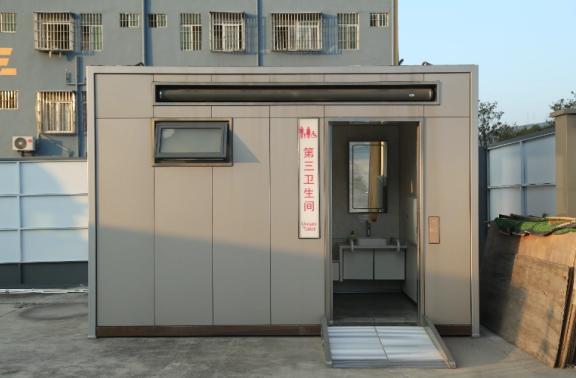
For permanent installations at Parks, Transport hubs, Tourism units and the like, this capability allows for usage-based smart scheduling and dynamic, usage-based service. For temporary installations at construction sites or events, the modules provide the same monitoring capability without the need for on-site management personnel.
SAUDIND designs systems that achieve:
• Real-time Tracking of toilet occupancy and reduced lines and the ability for people to know which stalls are available.
• Automatic notifications for Deodorization and Cleaning provide a higher standard of restroom hygiene while reduced cleaning staff is available.
• Predictive maintenance and remote diagnostics to ensure that service disruptions do not occur.
• Setting capability for Consumption monitoring and signaling for alterations to the supply for the management of Consumption.
These features change the possibilities for both permanent and temporary toilets. A fixed-location city park restroom can optimize cleaning schedules based on actual foot traffic. A temporary event installation can be monitored remotely, eliminating the need for dedicated on-site staff.
Modular Design for Permanent Durability and Temporary Mobility
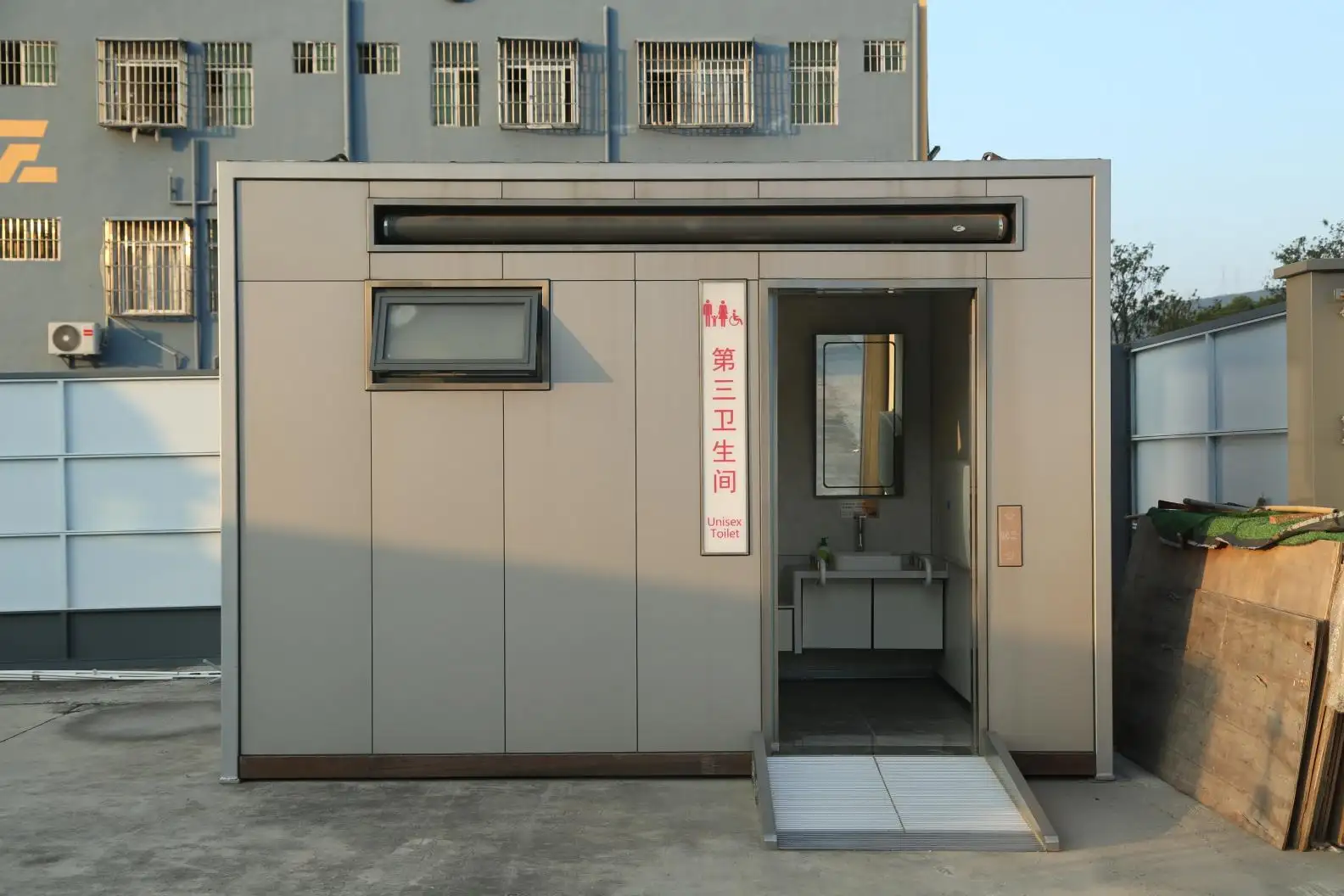
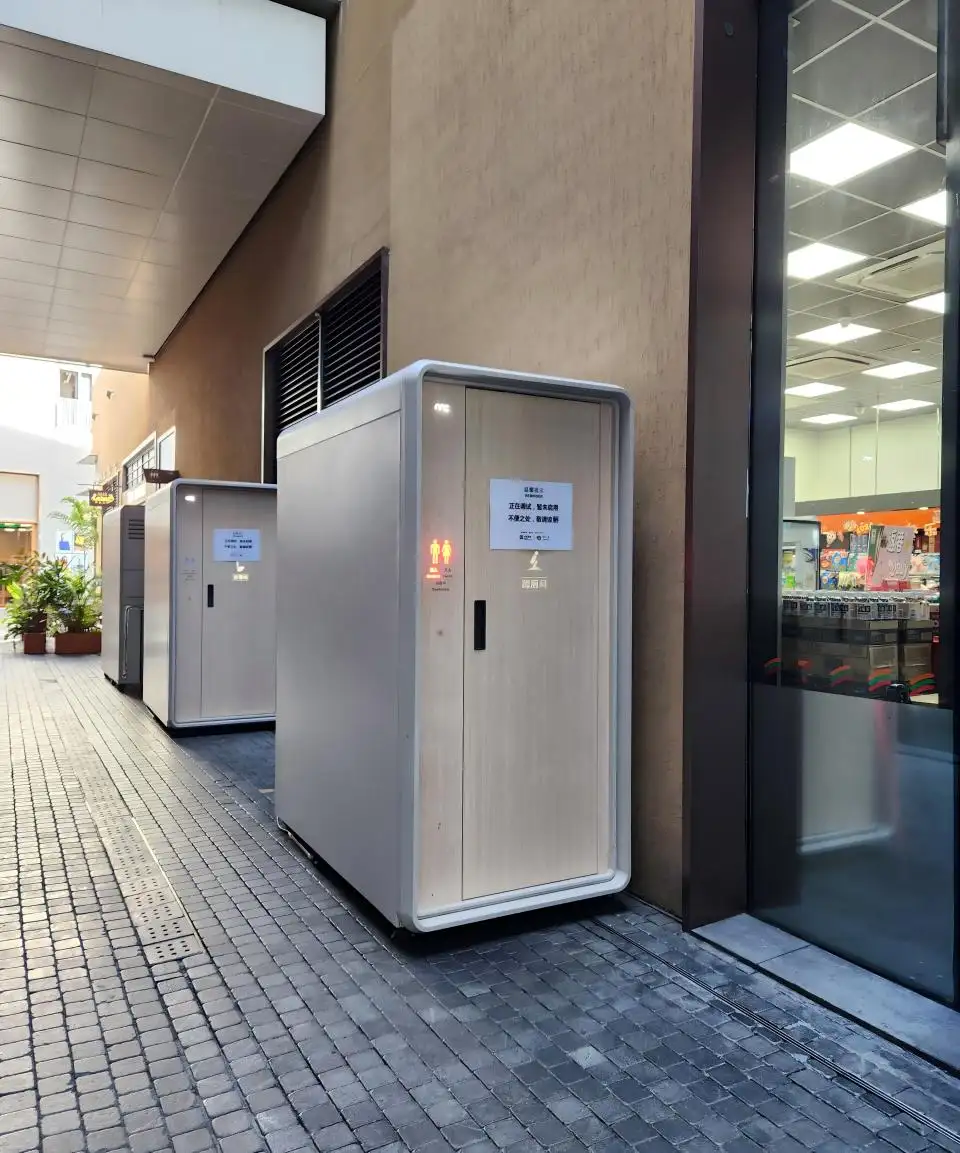
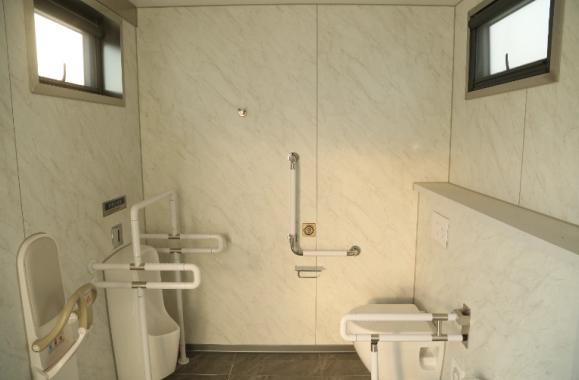
The secret behind SAUDIND's approach is a modular architecture that neither permanent construction nor traditional portable toilets can match. SAUDIND's self-contained mobile toilet unit—the TBOX GS-W1—operates as a mobile restroom solution with built-in tank, requiring no external water, sewage, or electrical hookup. Yet the same unit is constructed from durable, vandal-resistant materials designed for high-traffic, long-term use.
Key advantages of modular design:
• Permanent-grade construction: Built from high-density materials engineered to withstand years of daily public use.
• True Mobility: Deploy units within hours and relocate existing units when site needs change. Traditional buildings are different in comparison.
• Scalability: The number of units can be changed to suit growing or shrinking demand. This isn’t possible in traditional construction.
• Independent operation: The site can be used where there are no connections to the required utilities.
This flexibility means greater hygiene, environmental, and economic benefits of modular systems over conventional restrooms.
Environmental Compliance Without Compromise
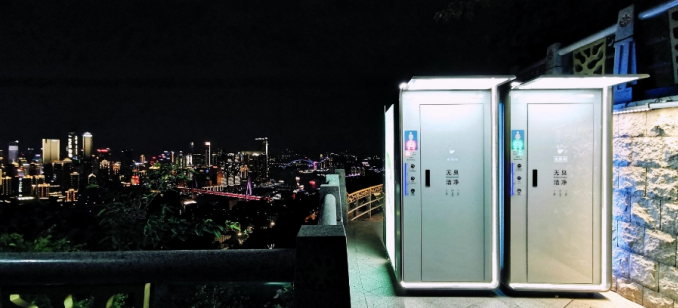
2026 buyers demand sustainability, regardless of how portable. SAUDIND uses eco-friendly materials, saves water, and uses renewable energy systems that integrate solar. The Smart Public Toilet TBOX GE-S1 is off-grid and only uses water to maintain its flow.
Sustainability Functions valuable to procurement:
• Water conservation: Smart flush systems and recirculation technology provide water savings of up to 70% compared to traditional units.
• Renewable energy readiness: Construction supports solar and renewable energy to remote and personal systems.
• Low-carbon materials: Eco-friendly substrates supply green building and materials certifications for your ESG.
• Closed-loop waste management: sealed tanks and treatment systems for sugared sensitive closed areas.
For temporary sites, construction supports sensitive placements. This is not the case with slow construction.
Multi-Function Configurations for Any Scenario
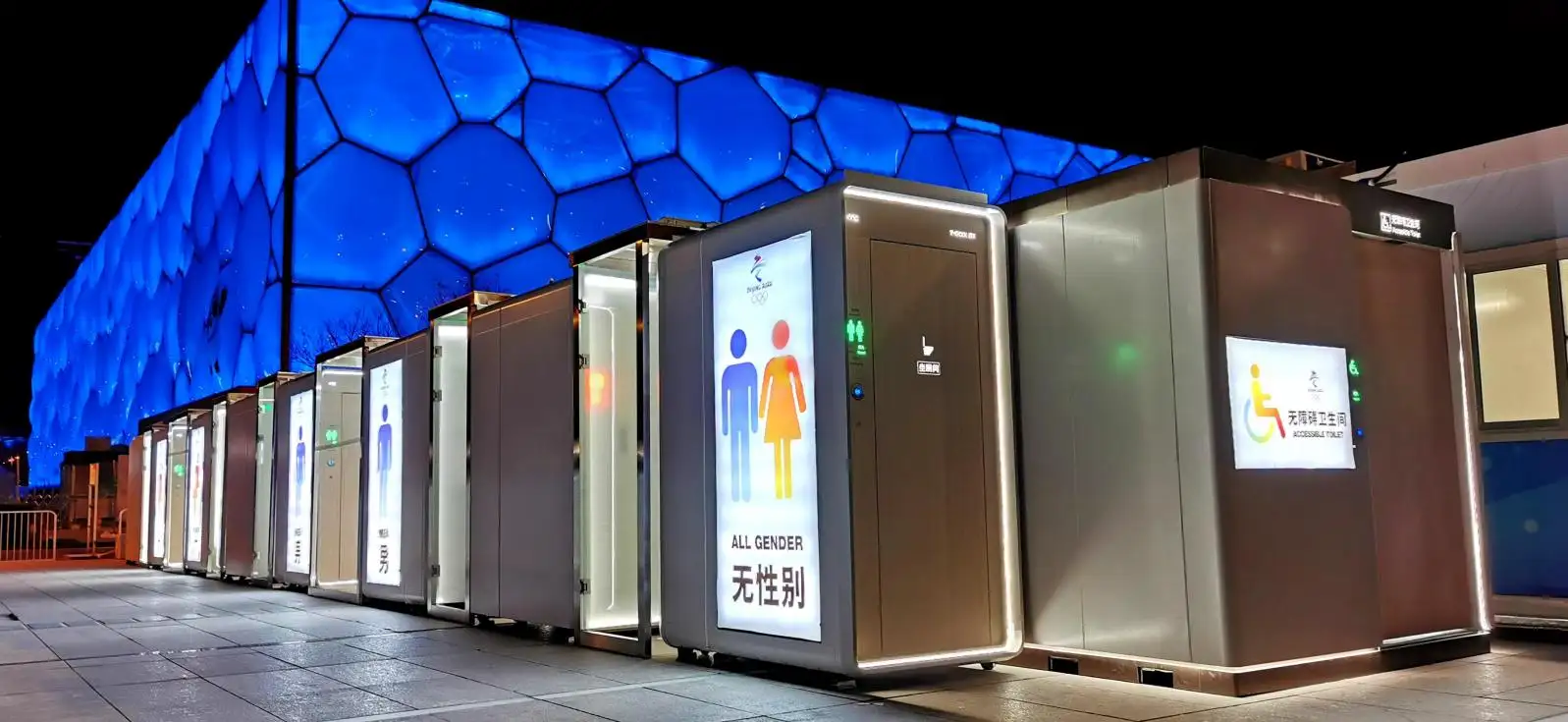
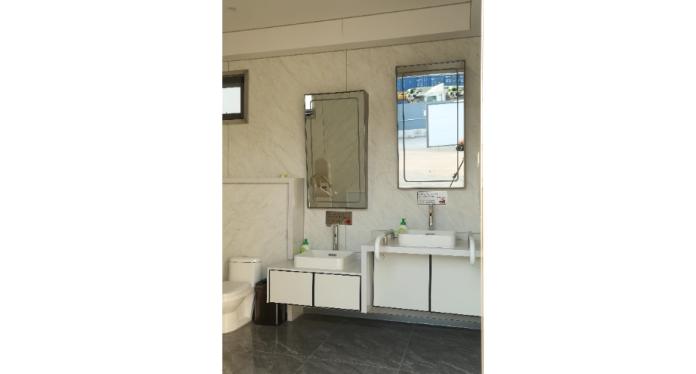
Diverse user needs require more than a permanent vs temporary Mobile Lavatory Supplier. SAUDIND's TBOX series offers the full range.
• Standard Public Toilets (TBOX GS-W1): Self-Contained, Located to Parks or Transit Centers or Tourist Sites.
• Squatting mobile toilet (TBOX GS-S1): Designed for Middle Eastern and Asian markets.
• Smart public toilet (TBOX GE-S1): Smart toilets with environmental monitoring and self-cleaning.
• Portable mother and baby room (TBOX GE-N1): High-end mother and baby care facilities in temporary and permanent structures.
• Mobile nursing room (TBOX GS-N1): Fully functional stations for baby care, despite being space constrained.
• Accessible portable restroom (TBOX GS-A1): Complies with ADA and features universal design.
This comprehensive range results in a single supplier, a single design language, and a single maintenance standard across all facility categories, whether permanent city infrastructure or temporary event sanitation.
Real Climate Commitment for Global Applications
SAUDIND focuses on meeting the real-world challenges of deployment, with a strong commitment to R&D for extreme environment markets. Climate-adjustable, Arab market-specific design includes:
• Materials resisting extreme high temperatures: Remain stable and functional even in extreme high temperatures (up to 50°C) with no off-gas.
• Sand-proof ventilation: Creates a flow without allowing the breathing of particulate matter.
Interior cooling: high-draw power cooling.
• For these markets, the high level of specialization means there’s no need to contract multiples suppliers or to have tailor-specific engineering to fit specific climates.
Both Permanent and Temporary Building Options
The decision framework has altered. Even five years ago, procurement managers had been made to pick one option from numerous permanent structures versus temporary ones. The only way to provide a permanent solution with a temporary one was to integrate Smart Mobile Restrooms from a competent supplier of Mobile Lavatory Solutions.
The same concepts apply to permanent structures and stand-alone solutions. Smart Restrooms reduces the operating costs of restrooms; space flexibility adds high durability to restrooms; defensive infrastructure finishes to restrooms.
When they need something fast: From the design to the build, changes in schedule or rapid relocations won’t be a problem. With no utilities, the structures can be placed almost anywhere.
The Bottom Line
Procurement teams no longer need to compromise. SAUDIND Technology's modular portable public restrooms deliver permanent-grade durability, IoT-driven efficiency, genuine sustainability credentials, and true mobility—all from a single manufacturer with over 100 successful projects and a dedicated global R&D presence. For 2026 and beyond, the right Mobile Lavatory Supplier doesn't make you choose between permanent and temporary. It gives you both, without the trade-offs.
Ready to see how SAUDIND's TBOX series fits your specific application—whether permanent city infrastructure or a temporary event deployment? Visit SAUDIND Technology's website for detailed specifications, VR panoramic previews, and case studies from parks, transport hubs, construction sites, and tourism destinations worldwide.
FAQ
Q1: Can you use the same mobile restroom for both a 3-day festival and a 5-year construction site?
Sure. With the level of durability found in permanent-grade mobile units and full relocatability, SAUDIND’s modular units can be used in both short-term and long-term events and construction sites.
Q2: Will you need to set up water and sewer hook-ups?
No. Our self-contained mobile toilets (such as the TBOX GS-W1) are mobile units that have their own tanks and are completely self-contained and can be standalone units requiring outside unforseen connections.
Q3: Is smart monitoring valuable for temporary restroom sites?
Certainly. Using IoT gives real-time alerts on the usage of toilets and the alerts on the requirement of service—no onsite personnel needed.
Q4: Is it possible to have units made to fulfill extreme climate requirements such as those found in the Middle East?
Yes. SAUDIND has a variation of R&D Centers in Riyadh which have high temperature resistant and sand proof facilities and have abundant sand proof and high temperature resistant materials.
Q5: How long will you have to wait for your modular toilet order?
Since we are a direct manufacturer, SAUDIND can get your orders to you in about 4 to 6 weeks depending on the level of customizations and volume.
Written by
admin