


Updated 4 months ago
How Large Mobile Public Toilets Achieve a 1L Flush with Lower Clog Risk
admin
admin
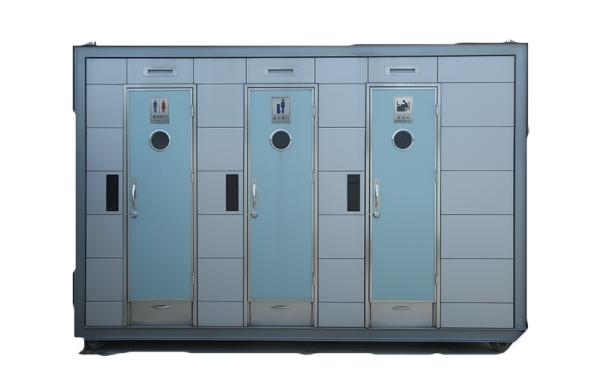
Large Mobile Public Toilets
Large mobile public toilets face a practical 2026 question: how can a unit deliver a reliable 1L flush when conventional toilets still use 3.5–7 gallons? As the global portable toilet market is projected to grow from USD 22.1 billion in 2026 to USD 40.6 billion by 2034, with a 7.9% CAGR, procurement teams are paying closer attention to water efficiency. The answer combines air-mixed flush engineering, pressure-assisted delivery, and large-capacity tank design.
Core Technology: Air Mixed Flush Systems
Flush performance is not determined by water volume alone. In a well-engineered air-mixed system, air pressure helps increase water velocity, so a smaller water volume can still move waste effectively. The technology can be summarized in four steps:
1) Compressed Air Storage
Inside a sealed bladder, stored water pressure compresses the air. When the flush is activated, the stored pressure is released and pushes water into the bowl at high speed.
2) Air-Water Mixing Chamber
Before entering the bowl, flush water mixes with air in a chamber to create a high-speed jet. This gives the flush more force than a gravity-assisted system using the same or a greater water volume.
3) High-Velocity Bowl Cleaning
The high-speed jet clears the bowl surface and can push waste up to 50% farther than gravity flush models. This is why a 1L pressure-assisted flush can perform closer to older 6L systems while using much less water.
4) Reduced Need for Double Flushing
Fewer repeat flushes mean less water waste, and fewer blockages mean fewer maintenance calls.
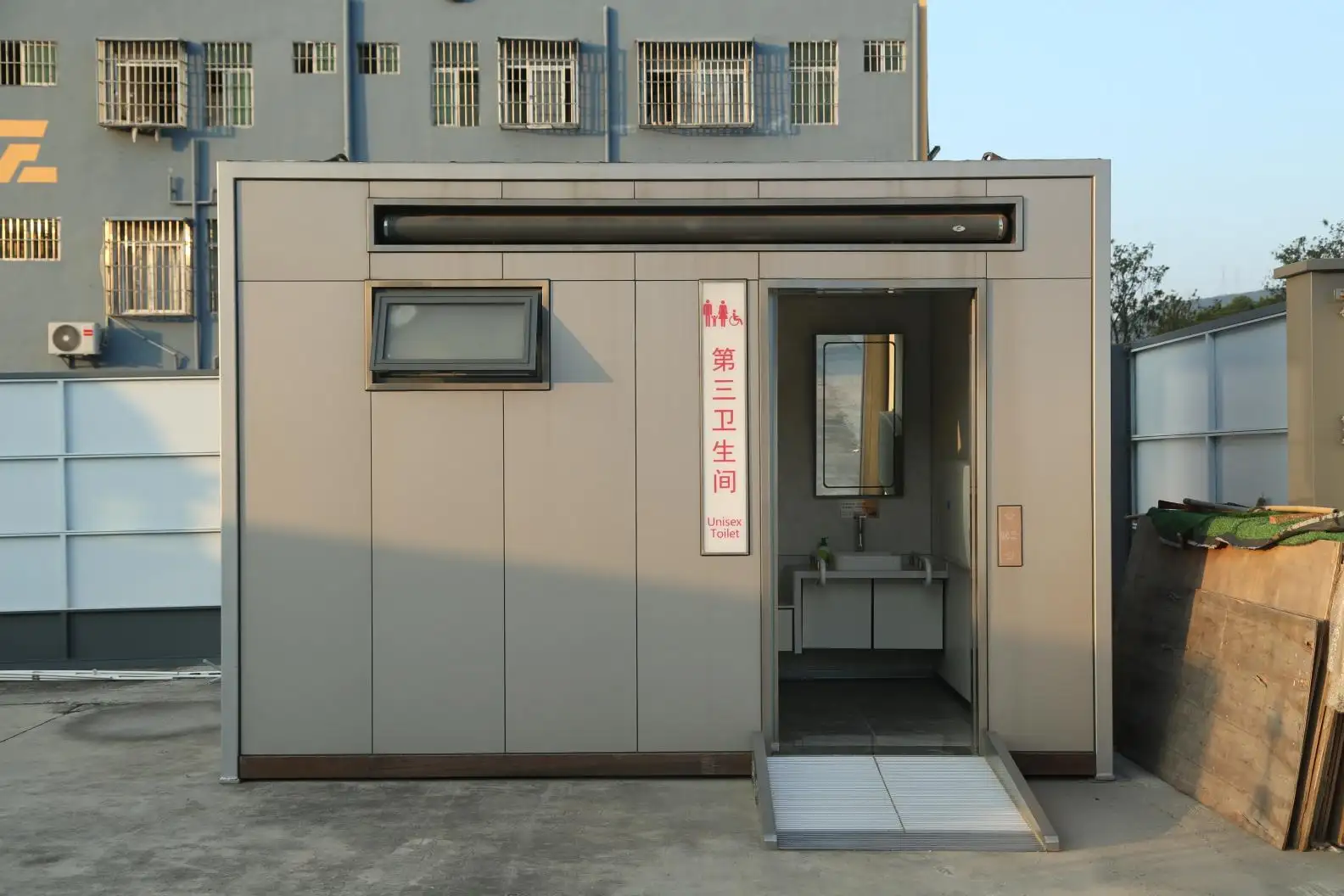
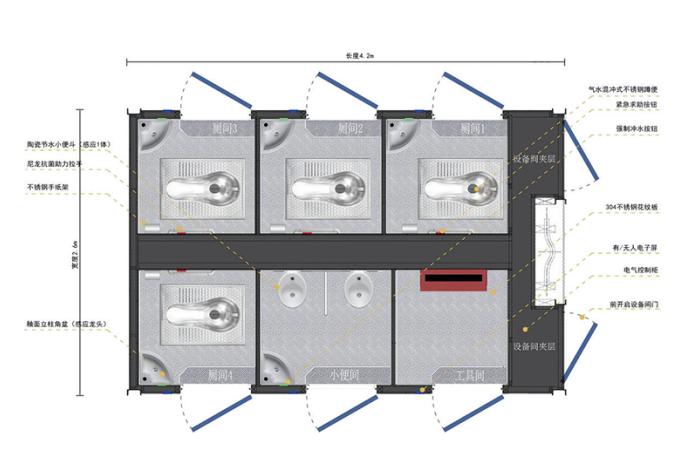
For a product like the TBOX RS-S4U1E1, a large public toilet with a 1.8 m³ septic tank and a 1.2 m³ water tank, air-mixed engineering supports up to 1,200 uses per cycle at only 1 litre per flush while reducing clog risk.
Why Clogging Happens and How Pressure Assist Reduces the Risk
Clogging in a public sanitation system is not only caused by poor user behaviour. It is often linked to weak drainline propulsion, incomplete bowl coverage, and waste settling in low points of the plumbing system.
1) Insufficient Gravity Drainage System Design
In a typical gravity drain toilet, water is used to establish a siphoning effect. With a water volume of only 1 litre, a gravity-only flush may not create enough suction to move waste through horizontal drain lines, which can lead to frequent stoppages.
2) Incomplete Bowl Coverage
With insufficient water coverage, some areas of the bowl may not rinse completely. Waste residue can build up on these surfaces and increase the risk of drain blockage.
3) Insufficient Drainline Propulsion
Even if waste clears the bowl, it may not move fully through the plumbing system. In mobile toilets with extended drain runs, weak propulsion can cause waste to collect at low points and create blockages.
Pressure-assist technology is designed to reduce these failures by increasing flush velocity and improving waste movement through the bowl and drainline. A high-velocity drain system can clear the bowl and move the waste load more effectively on the first attempt. The pressure-vacuum flush system also reduces reliance on traditional parts such as flappers and fill valves, using a sealed, corrosion-resistant structure for more consistent long-term flushing performance.
System Integration: Large Tanks And Smart Sizing
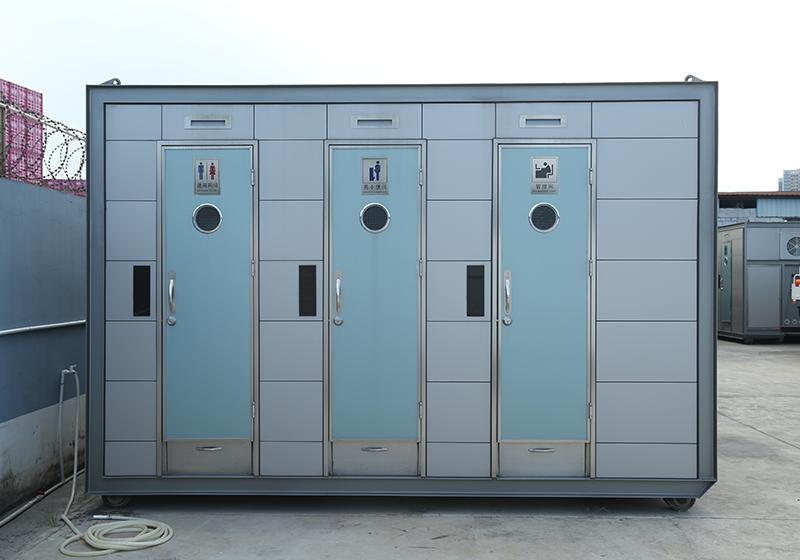
Air-mixed flush technology is only one part of the solution. Large mobile public toilets also need water and waste tanks sized around the flush cycle. The TBOX RS-S4U1E1 combines the flush system, fresh water capacity, and waste tank capacity into one integrated design.
1)1.2m³ Fresh Water Tank and 1.8m³ Waste Tank
The ratio of waste tank capacity to fresh water tank capacity is 3:2, giving the waste tank more capacity during high-demand use and helping prevent premature tank saturation.
2) 1L Per Flush
The system is designed to support 1,200 flushes, allowing approximately three days of operation in a high-traffic area before service pumping is required.
3) Protection by Heating Cable
Heating cables are installed in the tanks, plumbing, and faucets to help the flushing system operate reliably throughout the year.
4) Sensor-Controlled Fixtures
Five sensor-controlled faucets help reduce unnecessary water use and extend the practical service capacity of the tank system.
Industry Outlook: Why 1L Flush Systems Are Gaining Attention
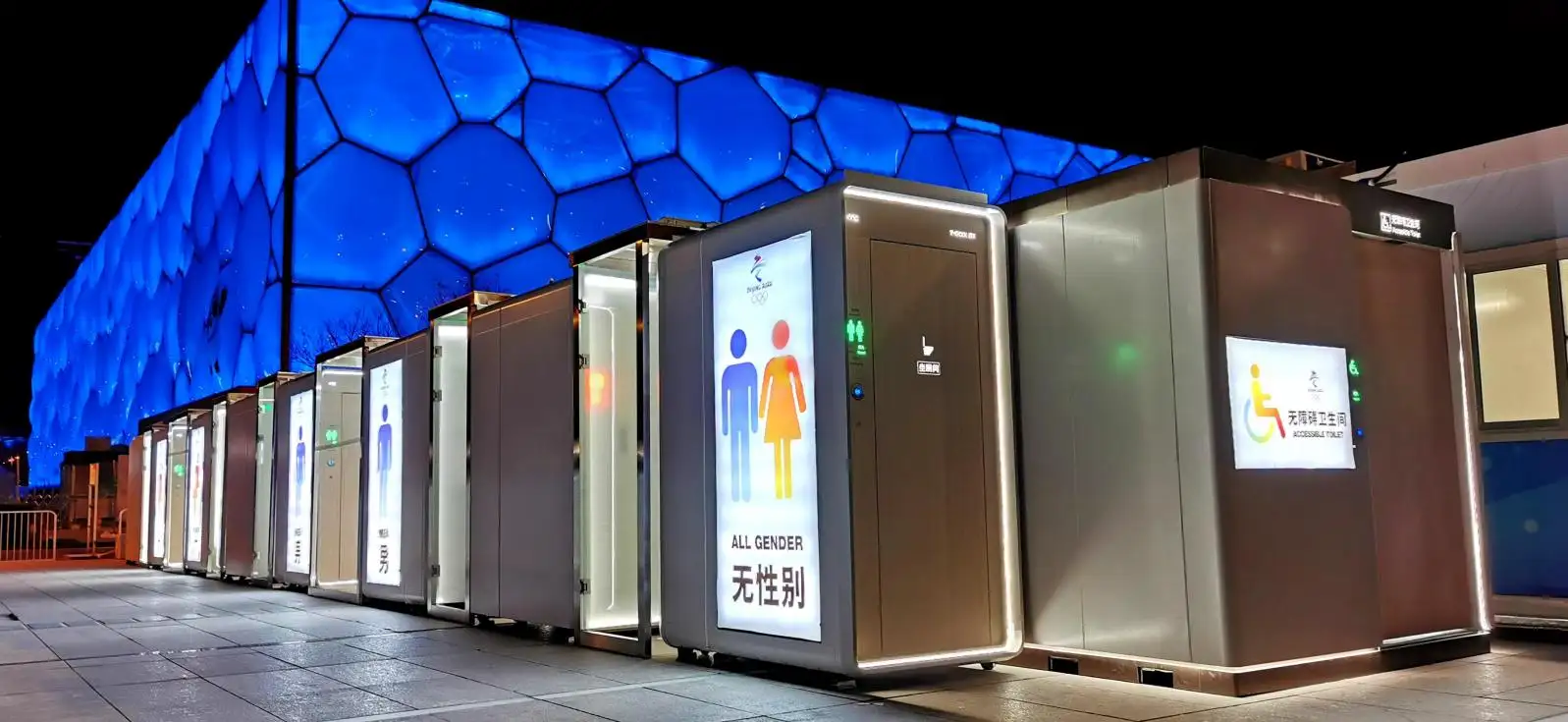
The move toward ultra-low-flow sanitation is becoming more important. The global portable toilet market is expected to reach USD 40.6 billion in 2034, and public-sector buyers are paying closer attention to water efficiency. By 2026, planners will look for vendors that can prove not only a 1L flush volume, but also real-world systems that flush reliably without frequent clogging.
For procurement officers evaluating large mobile public toilet suppliers, the key engineering question is shifting from “How much water does it save?” to “How does it maintain drainline integrity at ultra-low flush volumes?” Air-mixed pressure-assisted technology, properly scaled tank systems, and sealed-component durability provide the practical answer.
SAUDIND’s TBOX RS-S4U1E1 brings this engineering approach into production: a 1L flush, pressure-assisted delivery, large tank capacity, and a design built for high-use public sanitation projects.
FAQ
Q: Does the 1L flush system require special maintenance?
A: No special maintenance is required beyond routine inspection. The system is designed to reduce wear compared with standard gravity toilets, while the pressure vessel and sensor faucets should still be checked regularly.
Q: Can the large mobile public toilets operate in freezing temperatures?
A: Yes. The TBOX RS-S4U1E1 can include heating cables for water storage, the septic tank, and waste flush lines to support cold-weather operation.
Q: How many flushes can the system handle before needing a pump-out?
A: With a 1.8 m³ septic tank and a 1L flush, the system needs pump-out after approximately 1,200 flushes, making it suitable for large crowds and high-use public sites.
Q: Is the 1L flush system compatible with standard portable toilets and RV waste hoses?
A: Yes. The outlet connections are standard, so pump-out is compatible with most service equipment.
Q: What if the pressure-assist mechanism fails?
A: The system is designed with a gravity backup mode. However, pressure-assist failure is uncommon because the corrosion-resistant pressure vessel has no moving parts.
Written by
admin