

Updated 2 weeks ago
Smart Portable Toilet | AC, Fresh Air, Deodorization for Comfort at Events
contact
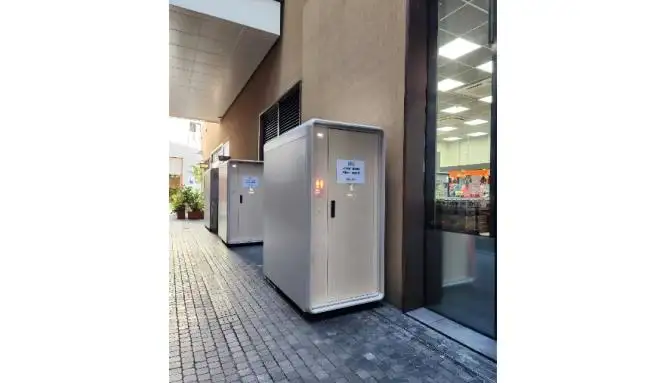
Smart Portable Toilet
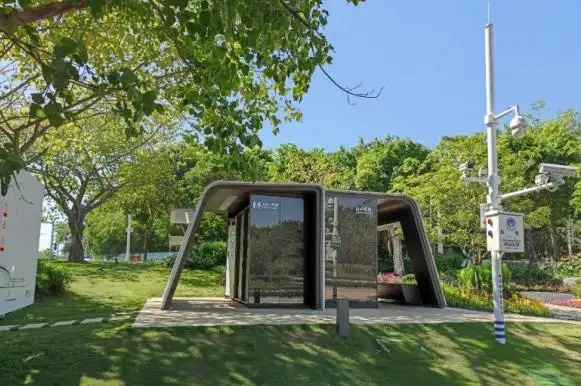
Temporary venues - from park concerts and street fairs to construction compounds and pop-up hospitality - share a stubborn challenge: giving people a restroom that feels clean, cool, and reliable when permanent utilities aren't available. If the cabin heats up, if odors linger, or if accessibility is poor, satisfaction drops fast. A Smart Portable Toilet solves that by pairing air conditioning with managed fresh air exchange and active deodorization, then wrapping it all in water-efficient fixtures and a true plug-and-play setup. Built from durable, easy-to-clean materials and designed for rapid placement, it brings the feel of a modern restroom to places that used to compromise. Whether you're elevating amenities at a premium event or supporting crews at a remote worksite, this new class of smart public restroom improves flow, raises hygiene standards, and makes the overall experience more welcoming.
What Is a Smart Portable Toilet?
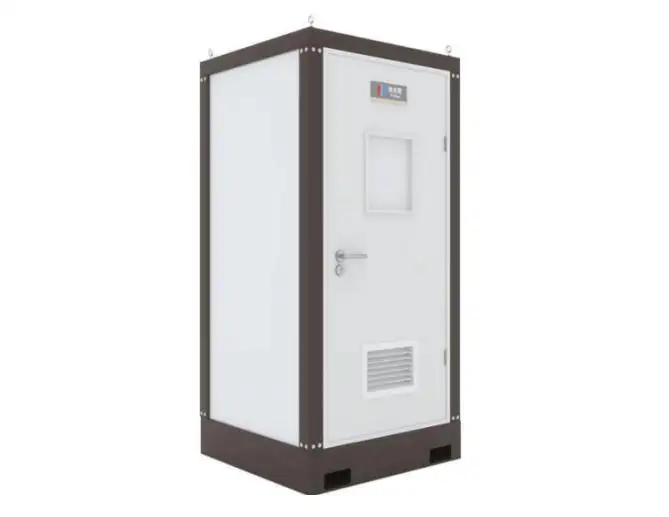
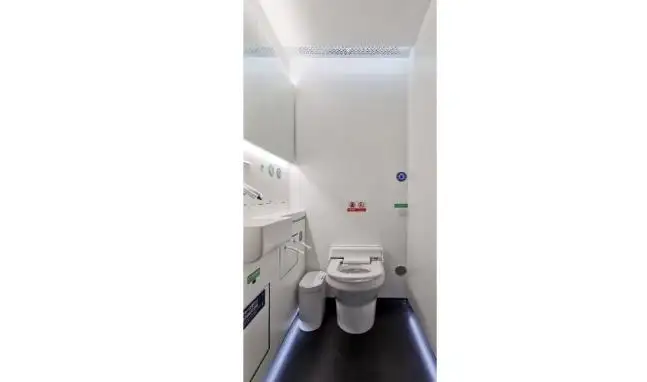
Think of a Smart Portable Toilet as a self-contained mobile restroom engineered for comfort, cleanliness, and reliability. Practically, this means a climate-controlled interior with purposeful ventilation, low-flush fittings, neutral 4000K LED light, and clear safety indicators, all contained in a resilient shell. Typical construction pairs corrosion-resistant aluminum panels inside and out with a stainless steel chassis and Toli flooring for slip resistance and easy cleaning. Cabins come in sitdown or squat formats, each equipped with water-saving and low-flush technology.
Power use is modest. A typical unit draws about low power consumption 0.6 kW at 220V, 50Hz, can be powered by a standard generator; suitable for outdoor use, with roughly 0.4 kW dedicated to the AC. The fresh air system works in tandem with deodorization media to continually exchange air and keep the cabin temperate and odor-free. Many models add a help button and an occupancy indicator to support safety and throughput during peak periods. Compared with standard chemical porta-potties, the difference is obvious: cooled air replaces stuffiness, active ventilation disperses odor, and smooth wipe-clean surfaces make maintenance simpler. With a weight near 350 kg and an electrical need, smart models provide a rigid, whisper-quiet interior that mirrors permanent facilities - ideal in heavy foot-traffic settings.
Why Choose a Smart Portable Toilet
•Comfort and climate control: AC plus managed air exchange avoids heat buildup and stale pockets, creating a cool, airy feel during peak periods.
•Hygiene and odor control: Continuous ventilation and powered deodorization reduce smells and airborne contaminants. Smooth, non-porous surfaces and bright, neutral light make daily sanitation swift and thorough.
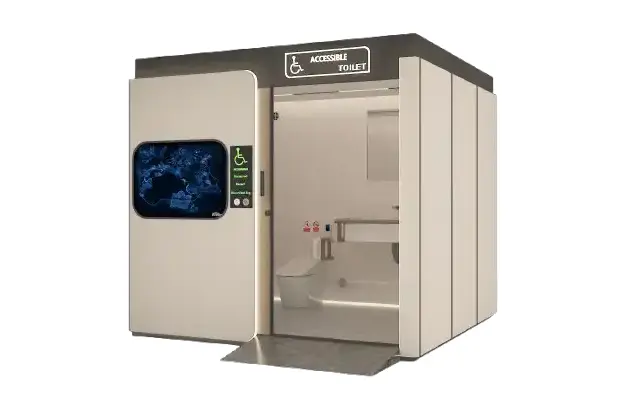
•Accessibility and safety: Handrails, a clearly visible occupancy indicator, and a help button improve usability for a wide range of guests. Thoughtful proportions support efficient user flow, keeping lines moving at busy events.
•Water efficiency: Using only 3.5 L per flush, saving RMB 5,000 in water costs per year, the flush fixtures lowers water usage with no loss of performance, easing operational demands and aligning with sustainability goals.
•Rapid deployment: Plug-and-play designs bring high-spec restroom capability to places without municipal services, ideal for festivals, short-term worksites, and emergency deployments.
•Durability and aesthetics: Aluminum cladding and a stainless steel frame with pro-grade finishes resist damage from transport and rigorous sanitation, projecting a clean, modern aesthetic consistent with corporate standards.
•Versatility across applications: A Smart Portable Toilet adapts to concerts, urban parks, construction sites, relief operations, and pop-up retail - wherever comfort, cleanliness, and reliability are non-negotiable.
Introducing Our Smart Portable Toilets
Different sites call for different utility strategies.
•T-BOX-A1 is designed for venues with reliable municipal services, connecting to external water and sewage to operate like a compact, high-efficiency permanent restroom.
•T-BOX-A2 is a plug-and-play Smart Portable Toilet that can optionally tie into water and sewage; its external operation and maintenance module helps crews service the unit quickly between peak periods.
•T-BOX-A3 is purpose-built for off-grid deployments, bringing full plug-and-play functionality to remote projects and pop-up venues without any utility hookups.
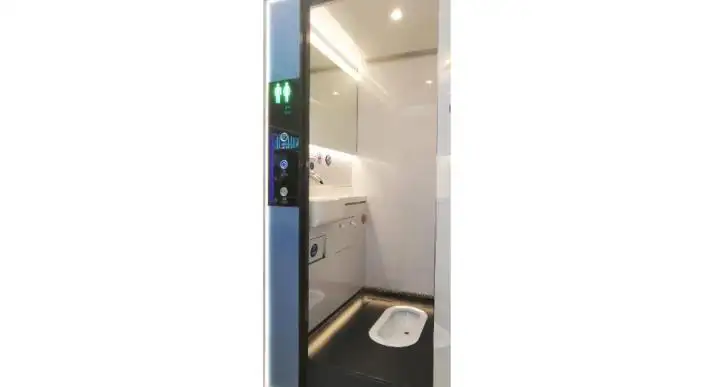
Cabin formats match user preference and regulation.
•The sitdown cabin's indoor dimensions are approximately 1065 mm (L) x 900 mm (W) x 2150 mm (H), offering a comfortable seated layout.
•The squat cabin measures about 1065 mm (L) x 900 mm (W) x 1960 mm (H), preserving ergonomics for squat use. Across models, climate and air quality are handled by an integrated AC (about 0.4 kW within a 0.6 kW total), a fresh air system, and active deodorization.
•User-centric details include a help button, occupancy indicator, neutral 4000K LED strips, a tissue box, an integrated storage table, and a sturdy handrail. Water-saving performance is standard, with flush volumes at or below 3.5L.
Consider the TBOX GE-S1 as a representative technical profile. It weighs roughly 350 kg and draws about 0.6 kW at 220V, 50Hz. The exterior and interior use aluminum for durability and cleanability; inside, Toli flooring and a stainless steel chassis add resilience. Outdoor dimensions are approximately 1450 mm (L) x 970 mm (W) x 2300 mm (H) without insulation, and around 1500 mm (L) x 1070 mm (W) x 2350 mm (H) with insulation. Depending on the chosen T-BOX model, units can integrate with municipal pipeline networks or operate independently, ensuring a Smart Portable Toilet can be matched to your site's utility realities.
How to Choose the Right Smart Portable Toilet
Start with throughput. Estimate peak users per hour and daily totals to right-size the fleet and decide on sitdown, squat, or a mix of cabins. Next, plan power. Confirm access to 220V, 50Hz, and allocate roughly 0.6 kW per unit. For off-grid sites, specify generators and safe distribution equipment from the outset.
Map water and sewage early. If connections are straightforward, T-BOX-A1 is a smooth fit. For mixed or uncertain utilities, T-BOX-A2 offers plug-and-play flexibility plus optional hookups and an external O&M module that speeds servicing. For fully off-grid use, T-BOX-A3 is the most independent option.
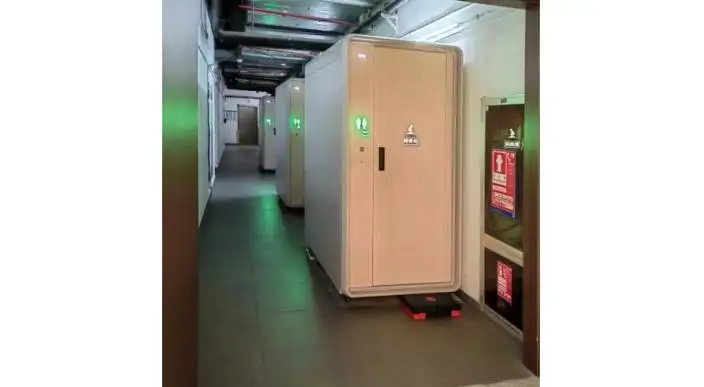
Site layout matters. Verify clearances based on outdoor dimensions, include door swing and queue lines, and ensure level, stable ground for installation. Local climate should influence selection: in hot regions, prioritize AC performance and strong ventilation; in colder seasons, choose insulated versions for thermal comfort and better energy efficiency. Accessibility and safety features - handrails, indicators, and a help button - should align with local codes and event standards. Finally, review materials for durability and brand fit, then build a practical budget that covers transport, installation, utilities, routine servicing, and consumables. A Smart Portable Toilet often lowers complaint volume and elevates perception, offsetting higher upfront or rental costs.
- Maintenance and Cleaning Tips
A disciplined maintenance routine keeps performance high and guests happy.
•Disinfect high-touch points, the toilet bowl, and floors on a set schedule; restock tissue, soap, and sanitizer before peak periods, and keep the storage table neat to streamline attendant tasks.
•Airflow and odor control stay consistent when fresh-air filters and deodorization media are inspected routinely and replaced on schedule.
•AC care: clean intake screens and coils, then verify the condensate drain to protect cooling performance.
•Clog prevention: carry suitable tissue and regularly check flush valves and water supply lines; fix slow flushes immediately to prevent downtime.
•Structured troubleshooting: for odor complaints, confirm fans and deodorization media; for indicator issues, test sensors and power; for electrical loss, check the 220V supply and breakers.
Smart Portable Toilet vs. Traditional Porta-Potty
Traditional units rely on chemicals and passive vents, which can create stagnant air and hygiene variability, particularly in summer.
Smart Portable Toilets offer climate control, fresh air intake and exhaust, and active deodorization, producing a superior environment. Water-efficient flushing and smooth, wipe-clean materials outperform basic setups, while features such as handrails, occupancy indicators, and help buttons improve accessibility and safety. Plug-and-play setup offers flexible deployment in both on-grid and off-grid scenarios. Note that smart units are heavier and need electricity due to their sturdy construction and AC systems.
On the sustainability front, low-flush solutions save water and lessen chemical needs, while robust materials increase longevity. Though costs can be higher at the outset or in rentals, the return is fewer hassles, happier users, and a premium brand impression - made for busy venues.
For short runs with tight budgets, traditional units are fine; for comfort-first environments, a Smart Portable Toilet is the clear winner.
Conclusion
By combining AC, managed fresh air, deodorization, and water-saving technology in a resilient plug-and-play package, a Smart Portable Toilet turns temporary sanitation into an amenity people genuinely appreciate - no permanent infrastructure required. For organizers and site managers who care about comfort and brand perception, these smart public restrooms provide a practical, scalable answer that fits everything from summer festivals to remote work camps. When guests step into a cool, clean, well-ventilated cabin and exit quickly, the whole event flows better - and that's the kind of improvement people notice and remember.