

Updated 2 months ago
How a Self-Cleaning Portable Toilet Cuts Odors: Filters, Paste, Catalysts (2026)
contact
Self-Cleaning Portable Toilet
Self-Cleaning Portable Toilet hygiene is only half the story—odor control is what decides whether a site feels professional or neglected in 2026.
Why Odor Control Matters More in 2026 Temporary Facilities
In construction sites, scenic areas, events, and temporary work zones, people judge the restroom experience in seconds. A Self-Cleaning Portable Toilet can look clean, yet still feel "dirty" if ammonia and mixed odors linger in the air. That is why modern odor control should be designed as a system, not a fragrance mask.
At Junhan Technology, we see a clear shift in buyer expectations. Users want a solution that removes odors at the source, stays stable in changing conditions, and remains easy to operate for on-site teams. The goal is simple: reduce complaints, improve comfort, and protect the reputation of the venue or project.
The 3-Step Odor-Cutting Logic: Filters, Paste, and Catalysts
A practical Self-Cleaning Portable Toilet odor strategy follows a beginner-friendly sequence: capture, break down, and stabilize.
First, airborne particles and odor carriers must be captured so they do not keep circulating. Next, stubborn molecules such as ammonia need chemical or catalytic treatment to reduce them, not just "cover" them. Finally, the space needs consistent airflow management so that performance remains predictable day after day.
This logic is also why "one single method" often disappoints. Ventilation alone can spread smell. Fragrance alone can mix with odor and make it worse. A layered approach is more reliable, especially in high-use environments.
How TBOX KS-S1(Ceramics) Builds a Cleaner Air Path in Small Rooms
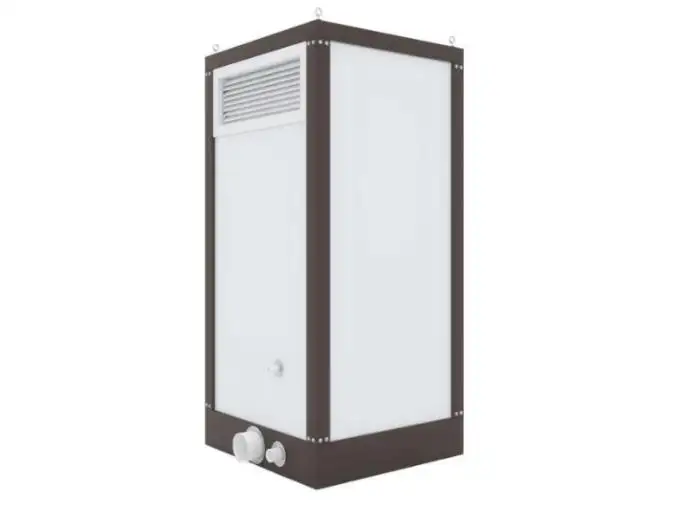
To support odor control around Self-Cleaning Portable Toilet applications, Junhan Technology developed the TBOX KS-S1(Ceramics) deodorizing unit as a compact, wall-mounted air treatment solution for enclosed spaces.
It delivers a maximum airflow of 120 m³/h, designed for an effective deodorizing area of about 10–12 m². This size target matters. Many restroom rooms, waiting-room corners, or small utility spaces fall into this range, where air can become stagnant quickly. With steady airflow, the unit helps pull odor-heavy air into treatment layers instead of letting it sit near the source.
Noise also affects real-world adoption. If a deodorizer is loud, teams turn it off. TBOX KS-S1(Ceramics) is designed to operate at ≤ 46 dB, which supports continuous use in spaces where people work, rest, or wait nearby.
What "Removal" Means: Ammonia Reduction and Sterilization Basics
Odor control improves most when performance is measurable. In many restroom and waste-related environments, ammonia is a key driver of sharp, irritating smell. TBOX KS-S1(Ceramics) targets ≥ 95% ammonia removal efficiency, along with ≥ 90% removal for other odors under specified conditions. For facility managers, that translates into fewer peak "odor spikes," especially after high traffic periods.
At the same time, air hygiene is not only about smell. In crowded or enclosed spaces, basic sterilization performance can support healthier perception and better comfort. The unit is designed for a ≥ 95% sterilization rate, giving users a stronger sense of cleanliness, not just "a nicer scent."
To help beginners understand the mechanism, the system includes several working layers:
• Medium-efficiency filter to capture particles that carry odor and contaminants
• Plasma catalytic net to help break down complex odor molecules
• High-energy ion purification tube to improve purification effects in treated airflow
• Natural plant deodorization paste to support steady deodorizing and reduce harsh "chemical" smell
This is why the experience feels different from typical sprays. Instead of adding scent into the room, the system focuses on reducing the compounds that create odor in the first place.
Pairing Odor Control With an Integrated Flushing Mobile Restroom
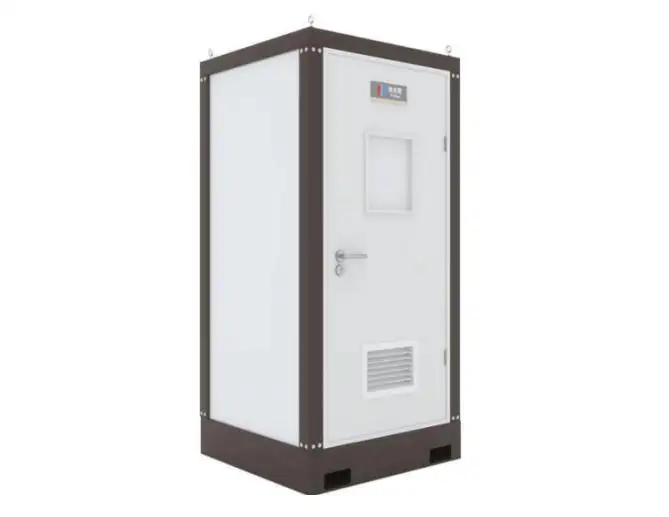
Odor control works best when it is part of a complete Self-Cleaning Portable Toilet deployment. Junhan Technology also provides an Integrated Flushing Mobile Restroom solution designed for temporary installations that need durability and a more "built" feel than basic plastic units.
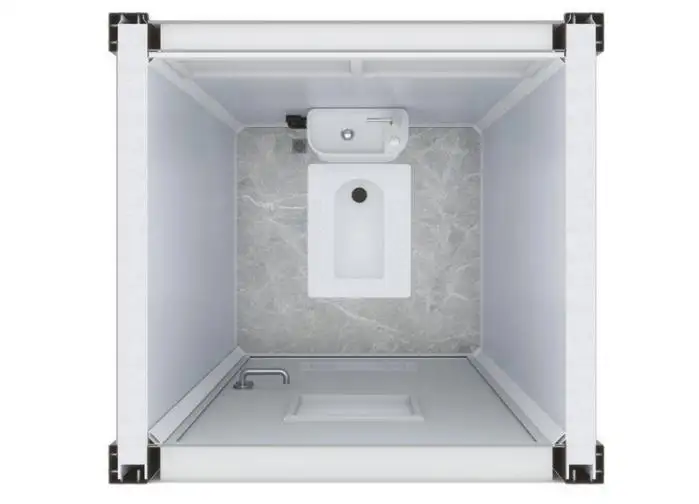
A representative single-unit configuration uses an electrostatic spray-painted steel frame, color steel foam board wall panels, and a marble floor for a cleaner, more solid interior impression. This package combines a ceramic squat toilet with a ceramic integrated wash basin and flushing tank to enhance hygiene and cut odors associated with poor rinsing or limited water access.
Key functional details are designed for field practicality:
• Steel door with louver to support airflow and reduce stuffiness
• Top-hung restroom window for ventilation and daylight support
• Ceiling-mounted sensor light for safer night use and lower energy waste
• Stainless steel faucet and flush gun for durable, easy cleaning routines
In real projects, a Self-Cleaning Portable Toilet system is rarely "one product." It is a combination of airflow, flushing reliability, cleaning convenience, and material choices that reduce odor buildup over time.
Simple Deployment Tips and a Practical CTA for Buyers
To get stable performance, keep the plan simple and repeatable. Whether you are managing a scenic site, a construction project, or a temporary facility, focus on consistency more than "one-time cleaning."
Here are practical starting points:
• Match room size to treatment ability (10–12 m² is a useful reference zone)
• Keep airflow paths clear so treated air can circulate, not get trapped
• Use continuous operation when possible, since on/off cycles reduce stability
• Combine flushing reliability with deodorizing support to cut odors at the source
If you are planning a 2026 upgrade, Junhan Technology can help you select a Self-Cleaning Portable Toilet setup that fits your traffic level, space size, and installation needs—from integrated flushing mobile restrooms to wall-mounted deodorizing modules like TBOX KS-S1(Ceramics).
CTA: Reply with your application scenario (construction site, scenic area, warehouse, hospital ward, or other), estimated room size, and daily user volume. Junhan Technology will recommend a solution-focused configuration and matching accessories to enhance air quality, cut complaints, and elevate the restroom experience.