

Updated 2 months ago
What Modular Toilet Benefits Transform Parks and Tourism?
contact
Modular Toilet
City planners and venue operators today face a simple but stubborn problem: how to deliver clean, dependable restrooms without years of construction, sprawling budgets, or daily management headaches. JUNHAN's Modular Toilet portfolio was built for that reality. These prefabricated, urban-ready cabins drop into place fast, connect to IoT dashboards for everyday oversight, and sip energy and water rather than waste them. Whether you need grid-connected models or fully self-contained units, a Modular Toilet from JUNHAN raises hygiene and accessibility while giving teams better control over costs and user satisfaction.
Why Traditional Approaches Fall Short
Conventional restroom builds can drag on for months, reroute foot traffic, and glue you to a fixed capacity that rarely matches real-world demand. During peak hours, cleanliness and odor control become headline issues. Meanwhile, operations teams must juggle compliance, safety, and sustainability in high-use environments where every failure is public.
It's a familiar pattern:
-Long, disruptive build cycles and complex permitting
-Uneven cleanliness and odor control when crowds surge
-High maintenance and utilities with limited visibility into problems
-Vandalism and wear that shorten service life
-Capacity that can't flex for events or tourism waves
-Ongoing pressure to lower water, energy, and carbon while staying code-compliant
What a Modular Toilet Actually Is
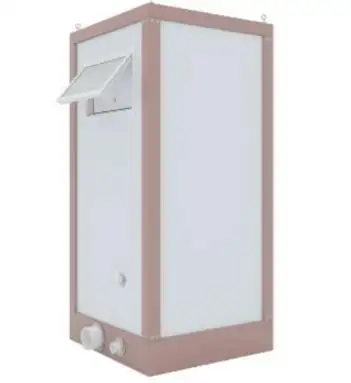
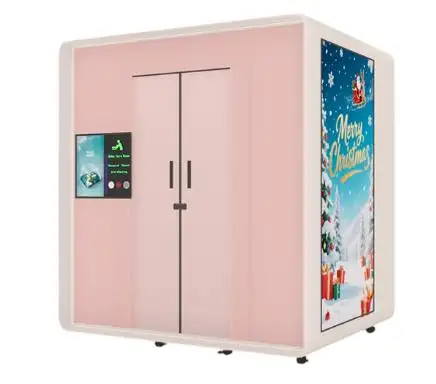
A Modular Toilet is a prefabricated restroom cabin engineered for rapid setup and straightforward relocation. JUNHAN designs single-unit pods, multi-stall blocks, and integrated modules that can include nursing spaces, aid points, or compact staff areas. You get factory precision, touch-free fixtures for better hygiene, and IoT connectivity for monitoring and remote control. The result: an asset you can deploy in days, move when patterns shift, and manage alongside the rest of your smart-city infrastructure.
✅ The portfolio at a glance
Different sites demand different solutions. JUNHAN's range covers municipal connections through fully off-grid operation:
-Self-Contained Mobile Toilet G1: Autonomy via onboard water and waste tanks; optional solar support and treatment equipment.
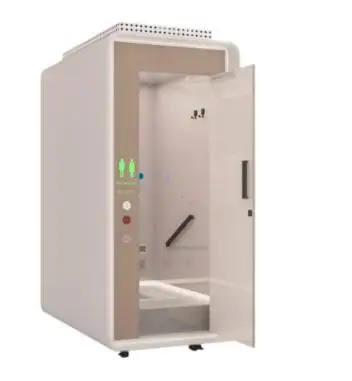
-Smart Public Toilet T-BOX (A1/A2/A3): Compact, grid-ready to fully plug-and-play variants with air conditioning, fresh-air systems, deodorization, and accessibility features.
-Squatting Mobile Toilet: A vacuum-based, water-saving unit for markets that prefer squatting bowls, designed for robust off-grid use.
✅ Standout features that matter day-to-day
•Speed and flexibility underpin the value proposition. Most installations complete in one to two days with minimal ground works.
•Redeployable units let you scale up for seasonal peaks, relocate during site works, and optimize coverage across parks and transit.
•Hands-free entry, flush, and wash stations cut bacterial spread.
•Intelligent ventilation and odor abatement elevate comfort.
•Anti-vandal materials and graffiti-resistant finishes extend lifespan.
•Smart lighting, water-saving flushes, and optional solar make sustainability seamless, not a comfort trade-off.
✅ Materials and technical architecture
•Made for hard use and rapid sanitation.
•Stainless steel and aluminum chassis components offer high strength and corrosion resistance.
•Interior panels use compact laminate or aluminum that wipes down quickly and stands up to high traffic.
•Lighting is anti-glare at a comfortable 4000K color temperature.
•Fresh-air systems maintain odor control and humidity balance.
•Occupancy indicators help with queueing, and help buttons provide assistance.
•Optional digital signage and external ad panels can support wayfinding or generate revenue.
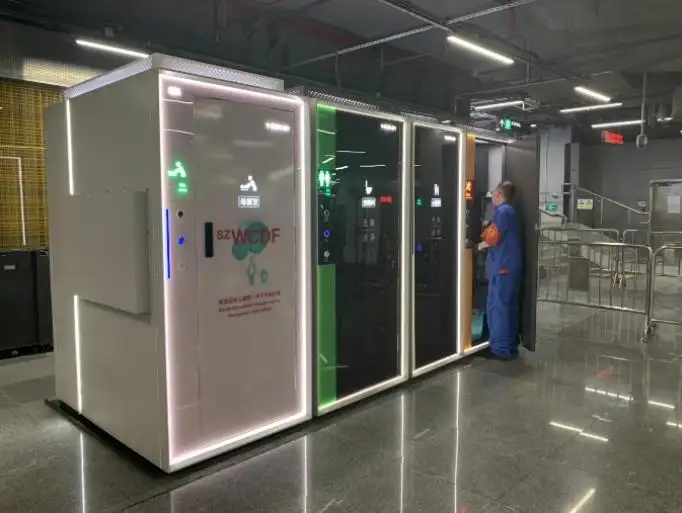
Model Highlights and Dimensions
Self-Contained Mobile Toilet G1: Built for sites without reliable utilities.
•The footprint is approximately 1.72m L x 1.11m W x 2.33m H, with a weight around 1000kg.
•It features a sintered stone floor, fluorocarbon-painted aluminum exterior, laminated tempered glass, one smart toilet, a ceramic wash basin, fresh-air ventilation, and soft lighting.
•A built-in smart speaker supports announcements; an external advertising screen is optional.
•Sewage can be handled via vacuum suction or direct discharge, with optional treatment equipment.
•A rooftop photovoltaic module is available for renewable power.
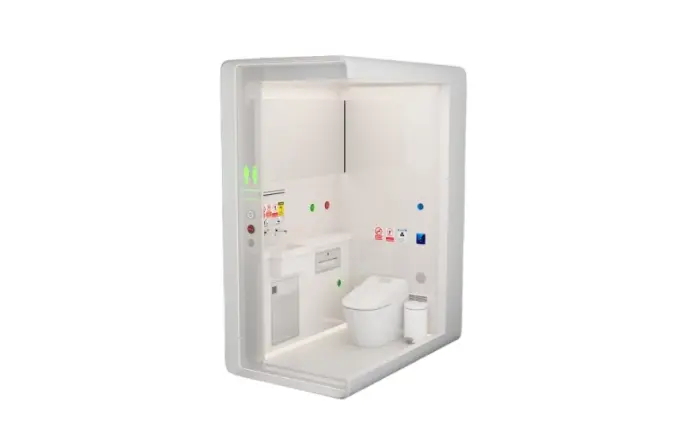
Smart Public Toilet T-BOX (A1/A2/A3): Urban-friendly and plug-and-play by design.
•Approximate weight is 350kg with rated power at 0.6kW (including about 0.4kW for air conditioning) on 220V/50Hz.
•Dimensions are 1450mm L x 970mm W x 2300mm H (non-insulated) or 1500mm L x 1070mm W x 2350mm H (insulated).
•Interiors feature aluminum panels, Toli flooring, and a stainless-steel chassis.
•A water-saving toilet (≤3.5L per flush), handrail, hook, flush button, tissue holder, and storage table come standard, along with air conditioning, a help button, occupancy indicator, fresh air, and deodorization.
•A1 connects to municipal water/sewer; A2 offers plug-and-play with optional connections; A3 operates fully plug-and-play without external utilities.
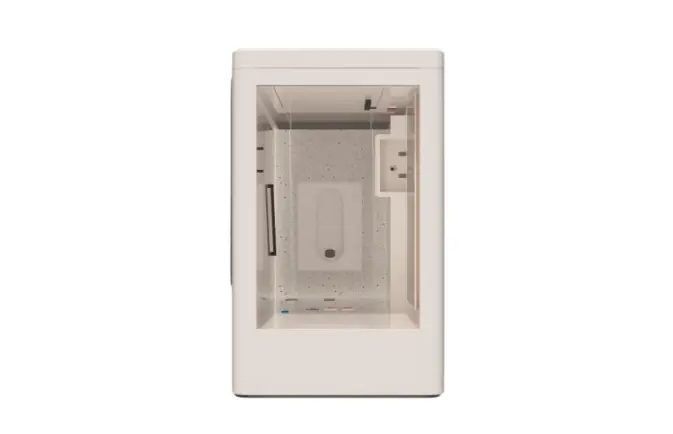
Squatting Mobile Toilet: For squatting preferences, each set weighs around 400kg (excluding the bowl) and runs on 220V/50Hz.
•The load-bearing aluminum alloy case uses thermal transfer surface processing.
•Insulated dimensions are about 1900mm L x 1110mm W x 2330mm H.
•Expect electric induction doors, vacuum sewage, water-saving fixtures, and a washbasin with mirror.
Smart Management and IoT
A connected Modular Toilet becomes more than a fixture - it's a manageable node in your urban network. Monitor occupancy, air quality, consumables, and equipment health via live dashboards. Remotely control lighting, ventilation, locks, and PA announcements, and use predictive maintenance to schedule cleaning and parts replacement before failures occur. Connect through APIs to municipal systems and CMMS for unified reporting and smarter dispatch.
- Energy and Water: Savings by Design
Efficiency is built in. Optional solar and hybrid power cut reliance on the grid. Demand-driven lighting and flushing reduce waste. Vacuum sewage and low-flow fixtures deliver major water savings. For drought-prone or remote deployments, optional water recycling modules help extend autonomy. These measures translate into lower OPEX and measurable progress toward low-carbon goals - data that your sustainability team can actually document.
- Where Modular Toilets Fit Best
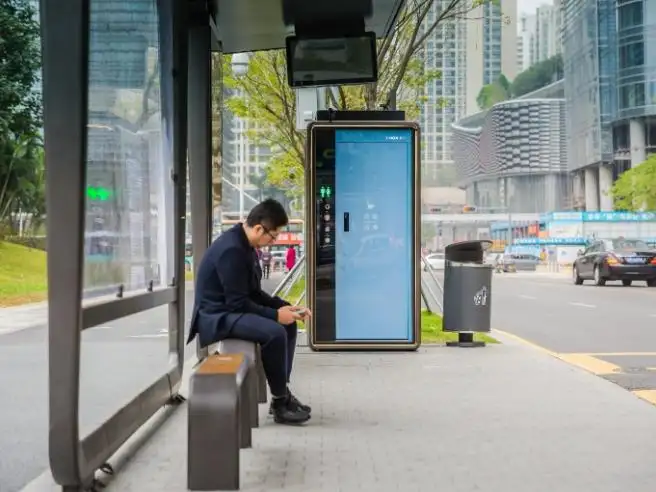
These units excel in places where visitor volumes fluctuate: city parks and waterfronts, metro stations and bus terminals, scenic sites, museums, cultural districts, construction zones and temporary field offices, stadiums, festivals, and pop-up events. Corporate campuses and mixed-use developments also benefit from flexible capacity and consistent hygiene standards.
- Customization, Tailored to Your Site
Every location is different. Built for the setting and your standards: JUNHAN adapts each Modular Toilet to culture, climate, and code, with accessibility in focus. Layouts include single pods, multi-stall blocks, and integrated modules, plus sit-down or squatting bowls and all-gender configurations. Exterior finishes and palettes can blend in; interiors can feature touchless entry, air cleaning, digital signage, and payment/access control. Power is available via solar, grid, or hybrid, sized to your load. Documentation - compliance submittals, accessibility plans, climate adaptations - comes standard.
- Installation, Relocation, and Operations
A short site survey and utility check precede minimal ground works. Units arrive ready to place by crane, and commissioning - IoT onboarding included - typically completes within 1 - 2 days. When demand shifts, quick-connect interfaces make relocation fast and repeatable, preserving uptime. During operations, IoT alerts flag refills and anomalies. Remote diagnostics shorten troubleshooting. Modular subassemblies simplify repairs, and regional service plans include training to keep performance steady.
- Safety, accessibility, and code alignment
Designs align with relevant sanitation and building codes. Accessibility is built in, with thoughtful handrails, clearances, and intuitive wayfinding. Materials and insulation are selected for climate resilience. Anti-vandal features help in tough urban conditions. Help buttons, occupancy lights, and smart ventilation bolster user safety and comfort.
Designed for Sustainability, Reported with Precision
Long-life materials, renewable power, and water-efficient technologies deliver real savings. Analytics provide clear, auditable metrics for ESG - lower energy and water consumption, renewable integrations, and finishes that extend replacement cycles.
- Deployment examples
•Parks: Hands-free entry and fresh-air supply keep facilities pleasant during peaks.
•Transport hubs: Occupancy data enables dynamic cleaning and queue control.
•Tourist sites: Exterior options blend with heritage settings while staying fully modern.
•Construction: Off-grid units relocate as phases change, cutting downtime.
•Events: Rapid setup/teardown simplifies operations and helps control costs.
- Common questions
•How fast is installation?
Most deployments go live in one to two days with minimal prep.
•Can units be moved?
Yes - every model is engineered for safe, repeatable relocation.
•Are off-grid options available?
G1 and the squatting units support solar and integrated tanks; T-BOX A3 is fully plug-and-play without external utilities.
•Are they compliant?
JUNHAN provides code alignment, accessibility layouts, and approval documentation.
•What about maintenance?
IoT alerts, modular components, and regional service plans streamline upkeep.
Why JUNHAN
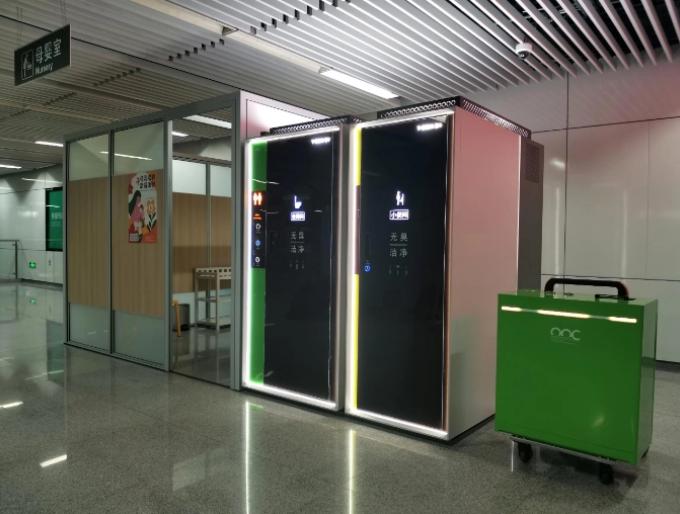
Smart, modular, and durable, JUNHAN is designed around users and operators alike. It scales from a single install to a citywide program, delivering fast deployment, predictable OPEX through operational data, touchless and ventilated hygiene, vandal-resistant construction, and local code and context alignment.
Next steps
Work with us through a clear path: needs assessment and site survey, custom design and permitting documentation, a pilot to prove performance and user response, then training and ongoing support for dependable operations.
Conclusion
Public restrooms should be clean, accessible, and simple to run. JUNHAN's Modular Toilet lineup - G1, T-BOX A1/A2/A3, and squatting variants - delivers rapid deployment, smart management, and lower resource use. If you're planning capacity for parks, stations, tourist corridors, construction sites, or events, request technical specifications, book a consultation, or schedule a pilot. Bring smarter, low-carbon sanitation to your location with a Modular Toilet engineered for modern cities.