

Updated 2 months ago
Eco-Friendly Modular Toilet: Smarter, Faster, and Cleaner Public Restrooms
contact
Eco-Friendly Modular Toilet
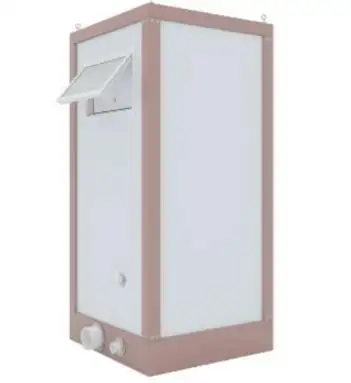
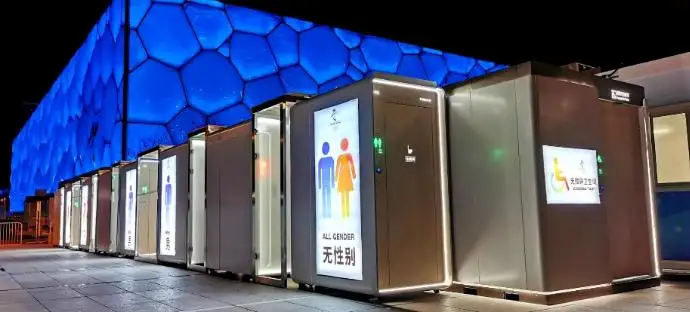
An Eco-Friendly Modular Toilet rethinks how cities, campuses, and event venues deliver sanitation. Instead of long construction timelines, variable workmanship, and high utilities, these prefabricated restroom cabins arrive complete, plug in quickly, and perform predictably. Built with durable, low-impact materials and guided by IoT-enabled controls, a modular portable restroom delivers clean, accessible facilities where people actually need them - parks, promenades, rail stations, universities, and remote worksites - without sacrificing comfort or compliance. The result is a sustainable public toilet that feels modern and welcoming, and that is easier to operate over its lifecycle.
What is an Eco-Friendly Modular Toilet?
With a durable envelope, integrated smart fixtures, well-resolved airflow, and efficient waste management, the compact module supports relocatable and expandable restroom layouts for evolving sites. It is purpose-built for steady public use, not occasional events, so it holds up under daily traffic while keeping maintenance simple. Deployed solo or in banks, it maintains consistent standards and adapts smoothly to demand. In typical public-duty service (around 200 - 300 uses per day), a single module can deliver measurable sustainability benefits: annual water saving up to 80% and carbon reduction around 500 kg CO2e per unit per year versus conventional brick-built restrooms.
Core Features
•Durable envelope: Corrosion-resistant structure, insulated walls, and a solar-ready roof. Designed for a 20+ year service life, with 70 - 90% recyclable content and 20 - 40% lower embodied carbon than brick-built equivalents.
•Touchless, well-lit interior: Intelligent toilet, ceramic sink, sensor-based taps and soap, and soft, glare-free lighting. Sensor taps reduce hand-wash water use by 50 - 70% and cut consumable waste by 30 - 50%.
•Clean air and odor control: Balanced intake, strong exhaust, and automated scent management. Provides 6 - 10 air changes per hour; odor events reduced by 50 - 80% compared to non-ventilated stalls.
•Resilient power: Solar PV with batteries, direct grid supply, or hybrid power options. A typical 4 - 6 kWp array with 10 - 20 kWh storage can offset 70 - 100% of annual electricity demand, avoiding roughly 300 - 700 kg CO2e per unit per year (grid mix dependent).
•Water-efficient waste: Vacuum-flush technology, sewer tie-in where feasible, or onsite treatment/composting off grid. Vacuum flush uses about 0.5 - 0.8 L per flush versus 6 - 9 L for conventional systems, cutting flush water by 85 - 90%; onsite treatment can enable 50 - 80% greywater reuse for cleaning or irrigation.
•Safe, inclusive access: Contactless entry, clear occupancy signals, voice prompts, and emergency call support. Touchpoint reduction lowers cross-contact by 60 - 80%, improving hygiene while reducing cleaning frequency.
•Smart oversight: IoT-enabled monitoring for remote checks, restocking, and service alerts with privacy safeguards. Optimized servicing reduces site visits by 20 - 40% and cuts cleaning water and chemicals by 30 - 50%.
Compared to brick-built facilities, an Eco-Friendly Modular Toilet accelerates deployment, standardises outcomes, and scales without heavy works. Efficiency features, robust anti-vandal finishes, and water-saving systems simplify cleaning and reduce lifecycle costs. Typical results include 50 - 70% faster installation, 20 - 35% lower lifecycle operating costs, and 30 - 50% less cleaning water and chemicals. Materials - coated aluminium exteriors, antimicrobial interior laminates, composite or stone floors, and stainless steel hardware - ensure longevity across climates.
- Note: Figures are indicative and depend on configuration, usage intensity, climate, and local grid carbon intensity.

Benefits of Choosing an Eco-Friendly Modular Toilet
Sustainability is built into every decision. Solar PV roofs, efficient LEDs, and low-water vacuum flush systems cut consumption, while greywater strategies or composting packages further reduce utility demand. Smart airflow and insulation improve energy performance without compromising comfort.
- Hygiene improves with touchless interaction. In high-density settings, sensors cut touchpoints on entries, flushes, and faucets. Controlled ventilation, automated deodorization, and antimicrobial surfaces help facilities hold cleanliness through peak periods.
- Accessibility is standard. ADA-compliant modular toilet layouts include wider doorways, grab bars, and level thresholds so wheelchair users, parents with strollers, and visitors with mobility challenges can move comfortably.
- On urban sites, schedule and flexibility are everything. Offsite build shifts work off the critical path, and plug-and-play setup trims site time. When usage spikes, we increase capacity by inserting additional stalls, ADA units, or service pods without changing the overall layout.
- Durability and security suit public environments. Anti-vandal restroom cabin construction resists graffiti and impacts, preserving finishes and extending life.
- Smarter operations reduce downtime. An IoT-enabled restroom system can surface occupancy patterns, supply levels, and maintenance alerts, enabling targeted cleaning and predictive servicing rather than fixed rounds.
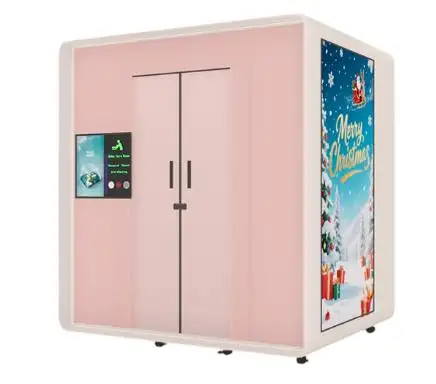
- Design still counts. Clean lines, customizable cladding, and balanced lighting help a sustainable public toilet blend into parks, plazas, and modern transit architecture.
- Versatility ensures fit. Parks, heritage sites, stations, construction zones, campuses, festivals, and humanitarian programs benefit from modular portable restrooms that adapt to place and purpose.
TBOX GI-W1: A Compact Example of an Eco-Friendly Modular Toilet
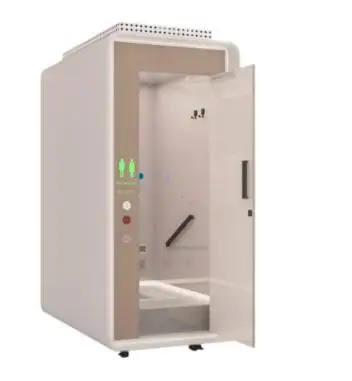
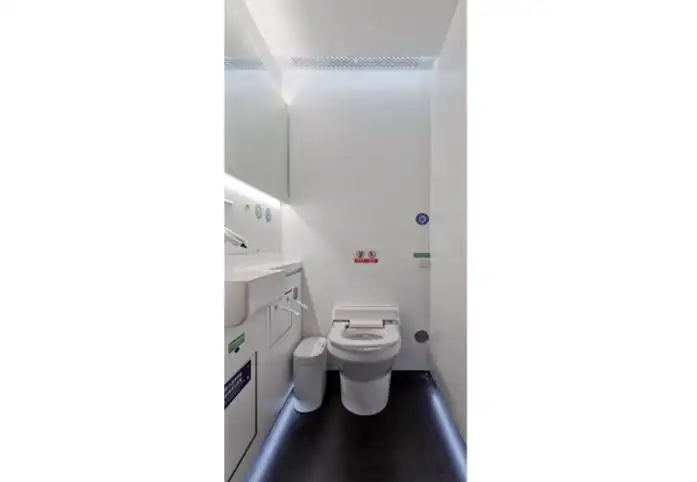
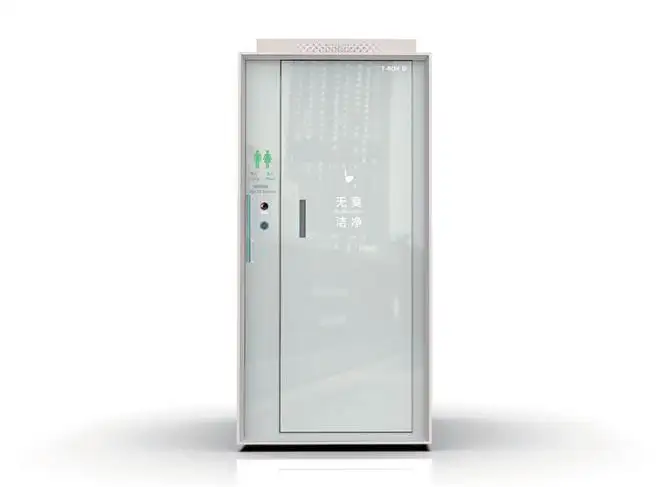
The Indoor Modular Single Toilet TBOX GI-W1 shows how a small footprint can deliver full-featured performance. At approximately L 1.64 m x W 1.11 m x H 2.17 m, it fits tight urban pockets yet can be combined into multi-stall blocks or integrated pods for larger deployments, including first-aid or storage modules.
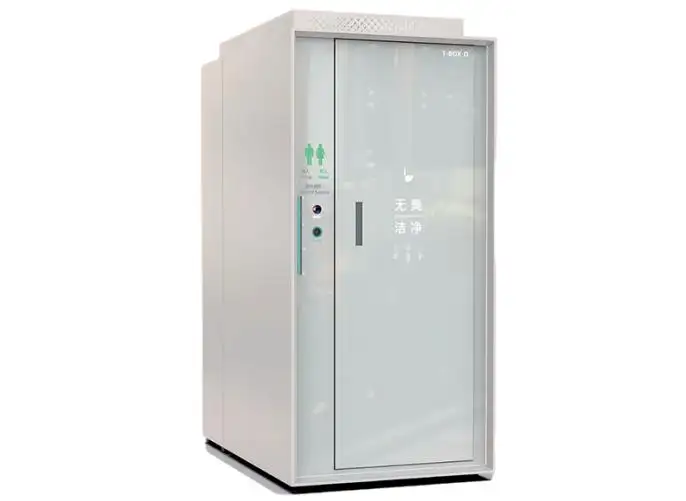
Materials are chosen for durability and easy care. Fluorocarbon-coated aluminum exterior panels withstand weather and graffiti. Compact laminate interior boards support rapid cleaning. Stone slab or composite floors tolerate heavy foot traffic. Double-layer laminated tempered glass enhances safety and clarity. Stainless steel fixtures and hardware fight corrosion and simplify maintenance - ideal for low-maintenance public restrooms.
•Wherever you build, choose flexible power: grid, hybrid, or off-grid with solar PV and batteries.
•Waste handling: Choose the path that fits the place - vacuum flush for lean water use, direct sewer discharge where infrastructure exists, or packaged treatment and composting for remote sites - so the Eco-Friendly Modular Toilet can serve today and adapt tomorrow.
•User-friendly features: Frictionless access, unmissable occupancy cues, simple voice prompts, sensor-driven soap, gentle fresh-air movement, glare-softened lighting, and an emergency call button reduce staff workload and improve user experience. When policies allow, discreet monitoring improves safety and keeps maintenance ahead of issues.
Choosing Your Eco-Friendly Modular Toilet: Key Engineering Criteria
•Capacity/throughput: Set stall count, storage, and service schedule by peak PPH/PPD; for busy venues, select multi-stall arrays with speedy fit-outs.
•Water strategy: Optimize WUI with vacuum fixtures, low-flow taps, and greywater recovery; deploy composting systems in water-limited/off-grid scenarios.
•Waste handling: Choose sewer interconnect, holding tanks, or onsite treatment/composting; develop pump-out routing and frequency for remote contexts.
•Power/HVAC: Model solar yield, battery autonomy, and grid resilience; set design ACH, filtration class, and seasonal heating/cooling.
•Site/footprint: Validate crane picks, pad/anchor design, clearance envelopes, and service corridors; maintain ADA-compliant turning circles and door widths.
•Materials/durability: Select anti-vandal coatings, corrosion-resistant alloys, and antimicrobial laminates to suit coastal, high-UV, or freeze - thaw environments.
•Compliance/privacy: Conform to building/plumbing/electrical codes and accessibility; implement data minimization and signage for any sensors/cameras.
•Brand and user experience: Customize cladding, colors, signage, and lighting to fit municipal or campus guidelines, making the Eco-Friendly Modular Toilet feel integrated rather than temporary.
•Lifecycle costs: Compare capital, installation, servicing, consumables, and utilities. Factor energy-saving restroom controls into total cost of ownership.
- Modular toilet maintenance and cleaning:
•Daily routines: Standardize cleaning for floors, fixtures, and touchpoints. Smooth interior boards and stainless hardware speed turnaround times.
•Servicing and consumables: Schedule tank pump-outs where used; refill soap and paper; inspect seals, traps, and gaskets to prevent leaks and odors.
•Ventilation and filtration: Clean or replace filters, verify intake and exhaust paths, and test sensors to sustain airflow and odor control.
•Odor prevention: Ensure proper venting, timely waste removal, and functioning deodorization systems. Enzyme treatments can assist with organic odors where compatible.
•Seasonal care: Winterize with insulation and heat tracing in cold climates; in coastal or high-sun regions, use UV-protective routines and conduct periodic corrosion checks.
•Remote monitoring: Use IoT dashboards to track occupancy, supplies, power status, and environmental metrics for predictive maintenance.
•Troubleshooting: Address slow ventilation with fan or filter service, sensor misfires with recalibration or lens cleaning, access faults with power or actuator checks, and vandalism with panel repair and coating refresh.
Eco-Friendly Modular Toilets vs. Traditional Restrooms
•Open faster: prebuilt restrooms come online in days, not weeks or months.
•Flexible capacity: craneable, stackable modules scale to guest flow beyond fixed facilities.
•Thoughtful efficiency: match solar power with vacuum/low-flow fixtures on the Eco-Friendly Modular Toilet to reduce usage.
•Cleaner experience: Touchless controls and managed ventilation keep hygiene levels steady throughout the day.
•Lower OPEX: Efficient energy and water use, plus scheduled servicing, reduce lifetime costs.
•Access for all: ADA-compliant modular toilet designs ease approvals and improve inclusivity.
•Resilient and secure: Durable, anti-vandal construction and discreet monitoring protect uptime and users.
•Off-grid expansion: Self-sufficient restroom solutions with onsite treatment or composting reach areas without services.
•Environmental impact: A sustainable public toilet designed as an Eco-Friendly Modular Toilet optimizes materials and operations to cut its footprint across the lifecycle.
Conclusion
An Eco-Friendly Modular Toilet blends practical engineering with sustainability, turning sanitation from a slow, capital-intensive build into a fast, well-managed service. For cities, campuses, and event operators, it offers a clear path to cleaner facilities, lower resource use, and a better experience for every visitor. With the right configuration - from solar power and vacuum flush to ADA-compliant layouts and smart monitoring - these modular portable restrooms deliver reliable performance wherever people gather.