

Updated 2 months ago
Dedicated Toilet Unit for People with Disabilities | Guide
sidrahafeez
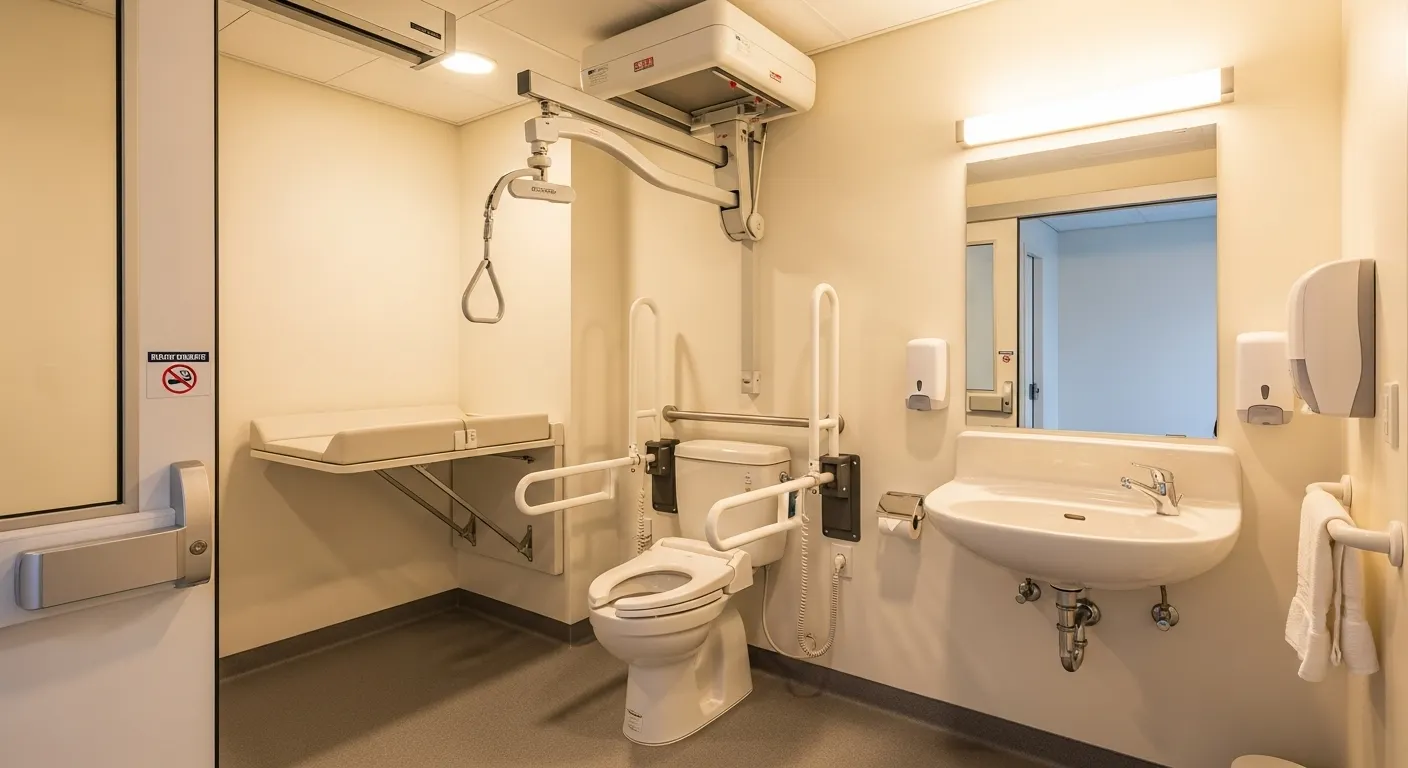
dedicated toilet unit for people with disabilities
What is a Toilet Unit really Accessible?
Inclusive planning has led to a universal access toilet unit as opposed to retrofitting. It has its basis in universal design sanitation, which involves designing spaces that can be used by all people, without any form of adaptation.
Some of the accessibility factors of a dedicated toilet unit for people with disabilities are:
- Accessible restroom designs (wheelchair-accessible).
- Toilets in wheelchair-accessible toilets.
- Toilet units’ entry doors are wide.
- Step-free toilet access
- Toilet systems that are supported by grab-bars.
Such a solution leads to accessibility-compliant sanitation units that address functional and emotional requirements.
Complete Guide to Inclusive, Smart, and Accessible Sanitation
An inclusive infrastructure is the beginning of building a society where dignity, comfort, and independence are assured to all. Sanitation is one of the most important but neglected factors of both public and private spaces. The separate toilet unit for people with disabilities has become not only a luxury but also an option feature not many years ago, but nowadays it is a compulsion influenced by human rights, and legislating of accessibility legislation, and contemporary design philosophy. The current available toilet units are smart and sustainable, and are designed with consideration for users with varied mobility and physical abilities.
The Rationale Behind the Dedicated Toilet Unit for Disabled Persons
Individuals with disabilities go through all-day struggles, something that the majority of the population is oblivious to. Small door holes, floors covered with slippery floors, unreachable fittings, and inadequate designs can make an ordinary need a cause of stress. The design of a toilet unit of a disabled person should be empathetic, technically accurate, and the one that is compliant.
A Disability Friendly Toilet Unit has the Following Advantages:
- Safe and step-free access
- Self-administered usability.
- Comfort during transfers
- Trust and integrity in social places.
The current inclusive toilets are designed with a human-centric design in the toilets, which optimizes the accessibility of sanitation and is respectful and intuitive to all.
Accessibility & Compliance: Global Standards Compliance
Adherence is an important aspect of planning sanitation for the people. A toilet unit that is accessible with a wheelchair should be in accordance with the international accessibility level, such as ADA standards.
A typical ADA-compliant toilet unit has:
- Correct wheelchair turn radius.
- Toilet seat systems that are low height.
- Toilet units with handrails that are safety improved.
- Obvious, clear spots to make transfers.
The accessible restroom, which is designed to serve people, is not only legally correct but also empowering in practice.
Modular and Portable Solutions: Accessibility Meets Flexibility
Contemporary sanitary systems are changing rapidly. The units of modular disabled toilets are easy to install, relocate, and customize. Its installation is suited for urban areas, construction sites, events, and areas impacted by disasters.
Advantages include:
- Factory-controlled quality
- Special disability toilet units.
- Space-saving available toilets.
- Minimal on-site construction.
The portable toilet for the disabled should be as comfortable and dignified as the permanent ones. The current mobile toilets used by disabled persons have been carefully planned with ergonomic structures, sanitary surfaces, and supportive mechanisms.
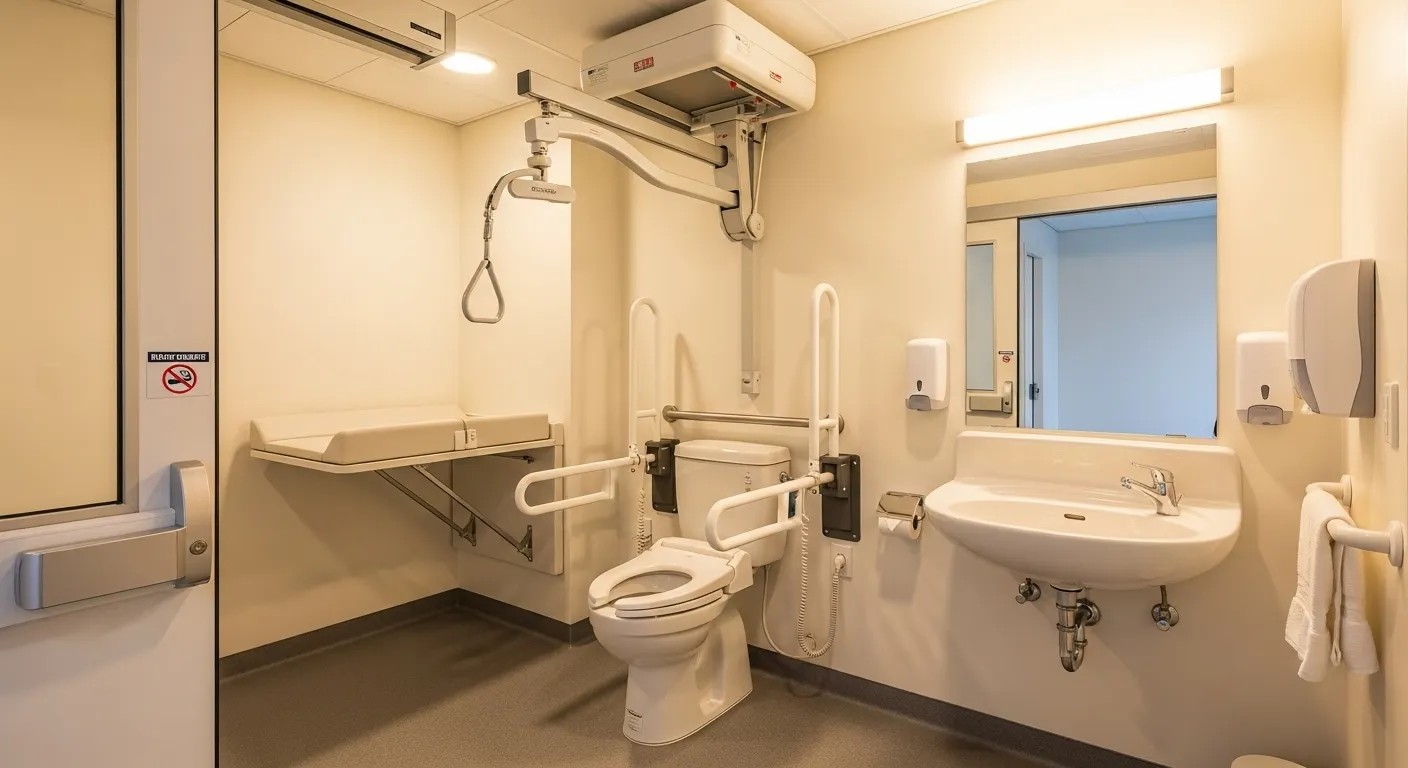
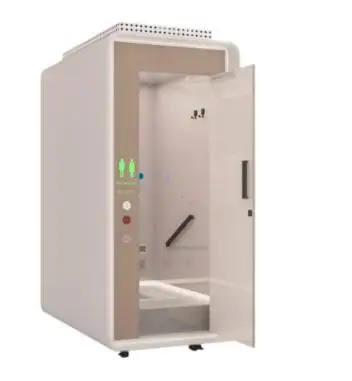
Highlight: Portable Toilet, Model TBOX GS-A1
The TBOX GS-A1 is the next generation of affordable sanitation products being offered as a specific solution to be used in public areas and events.
The unit features:
- Stone flooring to give stability.
- Durable aluminum panels
- Wall systems of high-quality laminate.
- A small, convenient toilet unit design that utilizes the interiors to the fullest.
This mobile-friendly toilet system provides a relaxing and safe place despite the crowded place.
Interior Accessibility Characteristics
Within the TBOX GS-A1, the users enjoy:
- A sanitary with flexible movements.
- Integrated nursing table
- Ergonomic reach wash basin made of ceramics.
- Safety. Baby-lock hot water supply.
These characteristics render it a special needs toilet unit that can be used by physically disabled users, caregivers, and their families.
Smart Abilities That Re-Define Availability
The TBOX GS-A1 is also upgraded to a smart accessible toilet system with smart features, making the system more independent and safer.
Smart capabilities comprise:
- Voice-cast guidance
- Air-cooling system
- Low-key light to make the visual comfortable.
- Occupancy indicators in real-time.
- Emergency telephone access
- Sewerage monitoring system
- Outside advertising presentation.
These inventions serve assisted units of toilets without infringing on the privacy of the user.
Hygiene, Safety, and Comfort of the User
The hygienic toilet unit for the disabled should ensure that physical strains are reduced and that it is clean. The major hygiene characteristics are:
- Touch-free hand hygiene systems.
- Easy-clean toilet surfaces
- Odor-controlled lavatory units.
- Anti-slip restroom flooring
All these are what add to the dignity-based sanitation solution, and provide the user with a sense of safety, respect, and comfort.
Environmentally Friendly Sanitation Solutions
Sustainability is not a choice anymore. An accessible toilet that consumes less water is also accessible with a performance that is not compromised.
Environmentally friendly characteristics are:
- Flushing systems that are sensor-based.
- Low-flow water fixtures
- Eco-friendly restroom units.
A dedicated toilet unit for people with disabilities that is eco-friendly complies with the sustainability objectives of the world and minimizes the expenses on the long-term operations.
Public and Commercial Inclusive Toilet Infrastructure
The solution is a publicly accessible toilet unit that is needed in:
- Transportation hubs
- Healthcare facilities
- Shopping centers
- Parks and recreational areas.
- Construction sites
- Events and exhibitions
Such universal solutions in urban spaces offer equal access to restrooms.
Business & High-Intent Applications
The cost of durability, compliance, and smart functionality is usually the priority of the organizations that want to sell a dedicated toilet unit to people with disabilities.
Commercial applications, such as high demand, are:
- Available toilet units for construction sites.
- Event and public toilet disabled units.
- Disabled commercial toilets.
The collaboration with a trusted producer of convenient toilet units will guarantee the high value over time and adherence to the regulations.
The Importance of Human-Centered Design
Empathy is the key to designing a toilet that is inclusive of the disabled. An independent toilet is useful in promoting autonomy and dignity. The human-based sanitation design concerns:
- Ease of movement
- Intuitive layouts
- Emotional comfort
- Respectful aesthetics
This philosophy is the way of making sanitation not a functional need but something meaningful.
Selecting the Appropriate Dedicated Toilet Unit
In choosing a handicap-accessible toilet unit, take into account:
- Adherence to the rules of accessibility.
- Requirement: modularity or portability.
- Intelligent technology integration.
- Sustainability features
Conclusion
The provision of a special toilet facility to individuals with disabilities is not just a building, but a declaration of unity, respect, and development. Modern sanitation is also developing with intelligent designs, such as the TBOX GS-A1, to cater to the real human needs with universal access toilet designs, smart technology, and sustainable engineering. To invest in the available toilet units is a human investment- an investment where everyone is going to be able to move through the public spaces with confidence, safety, and without being looked down upon. Visit Junhan Technology.